
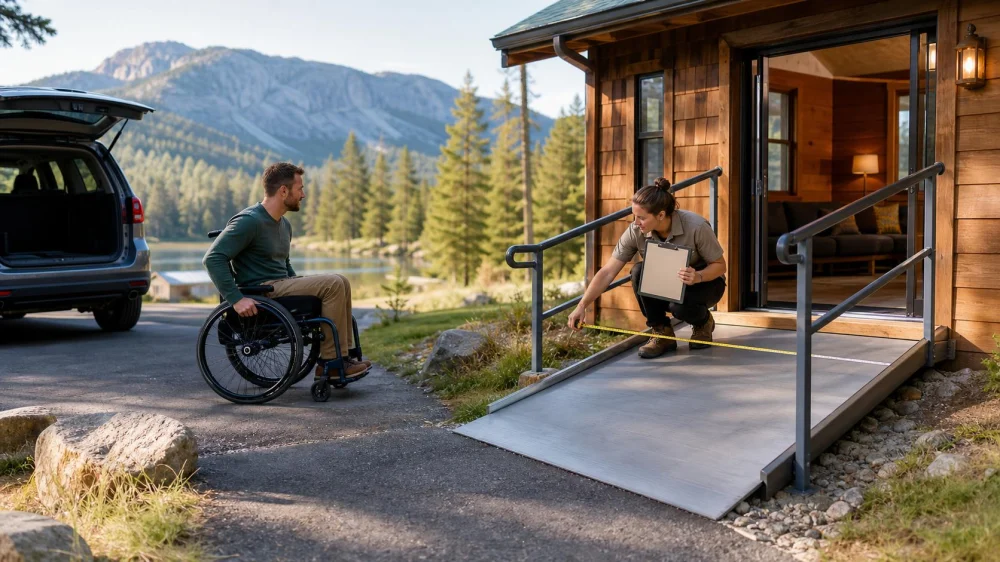
Camping Cabin Accessibility: Verify the Full Route
Table of contents
Quick answer
Do not book a camping cabin based only on an “accessible” filter. Describe the traveller’s specific mobility, sensory, communication, and personal-care needs, then verify the entire route from parking to entry, bed, toilet, shower, cooking area, and shared facilities. Request current measurements and photos, confirm what equipment is fixed or movable, and save the answers in writing. Build an after-hours and weather backup plan before arrival.
Define your actual needs
Accessibility is individual. One guest may need a step-free path and transfer space; another may need visual alerts, a quiet setting, fragrance controls, refrigeration for medication, or communication by text. Write a short must-have list before searching so decorative features do not distract from essential details.
- Mobility device type, width, turning needs, and transfer direction
- Maximum acceptable slope, distance, surface, and step height
- Bed height and space beside or beneath the bed
- Toilet, shower, grab-bar, and sink requirements
- Electrical outlet, charging, oxygen, or refrigeration needs
- Service-animal relief area and route
- Hearing, vision, lighting, and emergency-alert requirements
- Allergy, scent, cleaning-product, and bedding concerns
Parking and arrival route
Verify where the vehicle stops, not just whether parking exists. Ask for the distance to the door, space beside the vehicle, surface material, slope, curb, drainage, lighting, and whether another car can block access. Gravel, sand, mud, tree roots, snow, and standing water can change a route that looks level in a listing photo.
Confirm who maintains the route during rain, ice, or snow and whether assistance is available after office hours. If a shuttle is required, ask about lift capacity, securement, operating hours, and advance booking.
Atlantic Shore Pines Campground- Jersey Shore Camping at its finest!
TuckertonBurlington CountyNew Jersey
450 Ishmael Rd, Tuckerton, NJ 08087, USA
Entry and interior
- Request the number and height of all steps and threshold lips.
- Ask for clear door width with the door fully open.
- Confirm ramp width, slope, landings, handrails, and weight limits.
- Check door hardware and closing force.
- Measure the route to the bed, table, kitchen, and exit.
- Verify bed height, mattress movement, and transfer clearance.
- Ask whether rugs, furniture, and doorstops can be safely moved.
- Confirm reachable switches, outlets, controls, and window locks.
A portable ramp is not automatically suitable. It must match the rise, landing, doorway, device, user, and safe-load instructions. Do not improvise with boards or loose platforms.
Bathroom and bathing
“Accessible bathroom” can describe very different layouts. Request measurements and current photos showing the approach, door swing, toilet sides, grab bars, sink clearance, shower entry, seat, controls, and drainage. Ask whether a shower seat is fixed, folding, freestanding, or unavailable and whether it has a stated weight limit.
Confirm hot-water controls, slip-resistant surfaces, towel placement, and emergency communication. If the cabin uses a separate bathhouse, verify the outdoor route, access hours, privacy, key or code, and whether an accessible stall remains available rather than used for storage.
Shared site facilities
- Office and check-in counter or alternative process
- Food store, fire ring, picnic table, and water point
- Trails, viewpoints, docks, and activity areas
- Waste and recycling stations
- Laundry and shared kitchen
- Storm shelter or evacuation assembly point
- Mobile signal, Wi-Fi, and emergency call method
Separate what is essential from what is optional. A cabin can work even if a trail does not, but only if the traveller knows this before booking.
Questions for the host
- When were the accessibility photos and measurements last verified?
- Has construction, weather, or furniture changed the route?
- Which features comply with a specific standard, and which are informal accommodations?
- Can staff reserve the required parking and keep the route clear?
- What happens if equipment is missing or broken on arrival?
- Who is available overnight, and how are they contacted?
- What refund or relocation terms apply if a confirmed feature is unavailable?
Send a concise recap and ask the host to confirm it in writing. Save screenshots because listings can change.
Build a backup plan
Identify another suitable cabin, nearby lodging, equipment repair option, pharmacy, fuel or charging point, and medical facility. Pack spares for essential device parts and weather protection. Keep medication and critical equipment with the traveller, not in a vehicle that may be inaccessible.
On arrival in daylight, inspect the route before unloading. Report mismatches immediately and document them. Do not attempt a risky transfer or slope because travel plans feel difficult to change.
Limits and urgent issues
This guide cannot determine legal compliance or suitability for an individual. In the United States, accessibility obligations depend on the operator, facility, and applicable law. Contact the property and, if needed, a qualified accessibility professional. Call emergency services for a fall with serious injury, equipment failure that traps someone, fire, severe weather danger, or inability to evacuate safely.
Frequently asked questions
Is an accessible-filter result enough?
No. Filters can be incomplete or self-reported. Verify the features that matter with measurements and current evidence.
Should I request photos or video?
Both can help. Ask for a continuous view of the full route plus close photos with measurements.
Can a host move furniture for wheelchair space?
Possibly, but confirm what can move safely and whether the clear route will remain usable after setup.
What if the confirmed cabin is not usable?
Do not take a dangerous workaround. Contact the operator, document the mismatch, and use the written relocation or refund process.
Sources
Use the property’s current measurements, photographs, policies, and written confirmation as trip-specific evidence. In the United States, the Department of Justice provides official ADA lodging guidance and the U.S. Access Board publishes accessibility standards and resources. Applicability requires case-specific review.
Next steps
Create a one-page must-have list, request current measurements for the entire route, and save the host’s response. Reserve only after essential features and the weather backup are clear.

 Colonial Meadows Family Campground4.0 (114 reviews)
 Seabreeze Park3.0 (5 reviews)
 Camp Aura5.0 (26 reviews)
 Zenfulcove5.0 (43 reviews)
 Deubler's Mobile Homes3.0 (20 reviews)
 Ponderosa Campground4.0 (470 reviews)
 Why Winter is the Best Time for a Camping Cabin Getaway
 Best Remote Camping Cabins for Stargazing and Night Adventures in the U.S.
 The 10 Must-Have Amenities for a Comfortable Stay in Your Camping Cabin
 Winter Camping Cabins: How to Stay Cozy and Warm in the Cold
 Best Camping Cabins with Stunning Views of National Parks and Forests
 How to Create the Ultimate Outdoor Experience with a Camping Cabin