
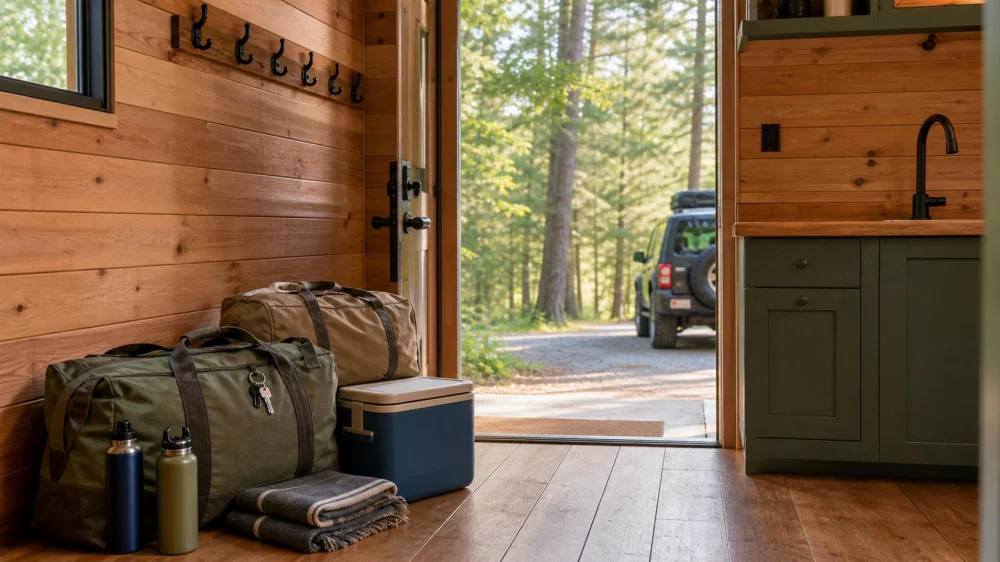
Camping Cabin Checkout Checklist Before You Leave
On this page
Quick answer
Start with the property's current checkout instructions, not a generic list. Pack room by room, remove food and waste as directed, extinguish fires completely, return equipment, check doors and windows, report damage, and photograph the final condition when appropriate. Leave enough daylight and travel time for a slow walkthrough; rushing is when chargers, medication, food, keys, and safety steps are most often missed.

Prepare the night before
Find the official checkout message, rental agreement, campground rules, or host instructions before the final morning. Confirm departure time, key return, vehicle access, trash location, linens, dishes, food, thermostat, fire equipment, windows, doors, and any inspection process.
Do not rely on instructions remembered from another cabin. A rustic campground shelter, privately managed rental, park cabin, and off-grid hut can have very different expectations. If two documents conflict, ask the property which current instruction controls.
Complete low-risk tasks the night before:
- Charge essential devices and set aside chargers where they remain visible.
- Collect personal items into one designated packing area.
- Separate travel food from items that must be discarded or taken home.
- Check the weather, road status, fuel or charging plan, and daylight window.
- Confirm every guest's medication, identification, wallet, keys, and mobility equipment.
- Review fire, water, and utility shutdown steps without operating unfamiliar controls early.
Pack and inspect by zone
A zone-by-zone method is more reliable than walking randomly through the cabin. Assign one person to inspect and another to confirm packed items when traveling as a group.
- Sleeping area: Check bedding folds, under beds, between mattresses and walls, shelves, outlets, hooks, and window ledges. Look for sleep masks, earplugs, chargers, and children's items.
- Bathroom: Check the shower, towel hooks, sink, medicine storage, and outlets. Pack prescriptions and personal care items. Do not remove property-provided dispensers or linens.
- Kitchen: Inspect refrigerator, freezer, cabinets, drying rack, coffee area, microwave, and outlets. Keep food cold during loading and follow dish instructions.
- Living area: Check seating cushions, tables, games, fireplace area, and charging points. Return furniture only if the host requests it and it can be moved safely.
- Porch and outdoors: Collect footwear, towels, toys, pet gear, camp chairs, and cooking items. Inspect the fire area only when safe and permitted.
- Vehicle: Load valuables and temperature-sensitive items deliberately. Keep keys outside the locked cabin until the final exit.
Use a phone flashlight for dark corners, but never crawl under unstable furniture or reach into wildlife habitat, mechanical spaces, woodpiles, or inaccessible voids.

Handle food, waste, and wildlife attractants
Food, trash, recyclables, scented products, grease, and pet food can attract wildlife. Follow the site's exact storage and disposal system. Use designated animal-resistant containers when provided and secure them as instructed.
- Remove opened food unless the property specifically asks guests to leave approved items.
- Do not pour grease, food scraps, coffee grounds, or solids down a sink or toilet.
- Sort recycling only according to local labels; wish-cycling can contaminate the stream.
- Bag trash securely and take it to the designated location at the allowed time.
- Clean visible food residue using provided or approved products.
- Never burn trash, cans, glass, foil, plastic, food packaging, or treated material.
If the waste station is full, locked, damaged, or being used by wildlife, keep a safe distance and contact staff. Do not leave bags beside the container.
Secure fire, water, power, and equipment
Fire and utility steps are safety-critical. Follow property-specific directions and do not improvise.
- Fireplace or wood stove: Stop adding fuel well before departure. Follow instructions for dampers, doors, ashes, and cooling. Never place warm ashes in ordinary trash or carry them in a combustible container.
- Outdoor fire: Extinguish it using the site's approved method. A fire should be cold and fully out before it is left. Observe bans and staff instructions.
- Cooking equipment: Turn off approved appliances and fuel sources as instructed. Do not disconnect unfamiliar gas equipment or move hot grills.
- Water: Turn off taps and report leaks. Drain or winterize systems only when the owner provides explicit steps.
- Electricity: Switch off guest-operated lights and appliances listed in checkout directions. Do not shut down refrigerators, alarms, pumps, heaters, or breakers unless specifically instructed.
- Thermostat: Set the requested departure temperature. Avoid an extreme setting that could contribute to frozen pipes, humidity, or equipment damage.
Complete only the required cleaning
Checkout cleaning should match the written agreement. Common requests include washing or loading dishes, wiping obvious spills, sweeping, placing used towels in a stated location, and removing trash. Some properties ask guests to strip beds; others specifically ask them not to.
Use only provided or approved cleaners. Do not mix cleaning products, use strong chemicals in a septic system, treat stains without permission, or attempt repairs. Photograph damage or an unusual mess and notify the host. Transparent reporting is safer than hiding a problem.
Do not sacrifice travel safety to perform an undocumented deep clean. If an illness, injury, weather event, utility failure, or other serious issue prevents normal checkout, contact the property and explain the situation.
Run a final walkthrough
- Gather everyone outside or in one checked area so rooms stay complete.
- Walk the cabin in one direction and inspect every zone once.
- Confirm taps are off, approved appliances are off, and no active leak or smoke is present.
- Check windows, screens, blinds, and doors according to instructions.
- Verify waste, food, dishes, linens, thermostat, and fire steps.
- Return remotes, games, tools, outdoor equipment, and furniture to required places.
- Photograph the final condition and any reported issue when appropriate.
- Lock up and return physical or digital access exactly as directed.
- Before driving away, count people, pets, bags, keys, and essential documents.
Do not place a key inside and lock the door until every person is out and the vehicle key is confirmed. Review the departure route from a safe parked position rather than while driving.
Limitations, safety, and evidence notes
This checklist reflects common vacation-rental and campground departure practice. It does not replace the property's contract, park regulations, fire rules, equipment manuals, wildlife guidance, or emergency instructions. Requirements vary across the United States and can change with season and conditions.
Do not delay evacuation for cleaning or packing when wildfire, flooding, severe weather, gas odor, carbon monoxide alarm, structural danger, or another emergency requires immediate departure. Take people, essential medication, and emergency items only when safe, follow official directions, and notify the property afterward.
A checkout photograph documents visible condition but does not prove compliance with every requirement. Keep relevant messages, receipts, and reports through the period specified by the booking process.
Frequently asked questions
Should I strip the beds before leaving?
Only if the checkout instructions ask you to. Some housekeeping teams prefer linens left on beds so stains and lost items are easier to spot; others request a specific collection point.
Can I leave unopened food for the next guest?
Not unless the property explicitly permits it. Food-safety rules, allergens, pests, and housekeeping procedures may require removal even when packaging is sealed.
What if ashes are still warm at checkout time?
Do not put them in ordinary trash, spread them outdoors, or transport them in a combustible container. Keep the fire area secured and contact staff for the approved procedure. Plan earlier next time so fuel use stops well before departure.
Should I take checkout photos?
Photos can document visible condition, returned items, and reported damage. Take them without photographing private information or other guests, and follow any platform or property process for submitting evidence.
What should I do with a forgotten item?
Contact the property promptly with a precise description and location. Ask about retrieval, shipping, fees, and identity verification. Do not re-enter with an expired access code or travel back without authorization.
Conclusion and next steps
Build checkout around the cabin's own instructions: prepare the night before, pack by zone, manage food and waste, secure fire and approved utilities, complete required cleaning, and perform one deliberate walkthrough. Safety and official evacuation directions always outrank housekeeping. A calm, documented departure protects guests, property staff, wildlife, and the next cabin visitors.



 Hansel and Gretel Cottages4.0 (11 reviews)
 Indian Rock RV Park & Campground3.0 (205 reviews)
 Baiting Hollow Scout Camp- Boy Scouts of America4.0 (92 reviews)
 Country View Mobile Home Park3.0 (6 reviews)
 Pine Ridge at Crestwood3.0 (99 reviews)
 Philadelphia South / Clarksboro KOA Holiday4.0 (697 reviews)
 Why Winter is the Best Time for a Camping Cabin Getaway
 Best Remote Camping Cabins for Stargazing and Night Adventures in the U.S.
 The 10 Must-Have Amenities for a Comfortable Stay in Your Camping Cabin
 Winter Camping Cabins: How to Stay Cozy and Warm in the Cold
 How to Create the Ultimate Outdoor Experience with a Camping Cabin
 Best Camping Cabins with Stunning Views of National Parks and Forests