
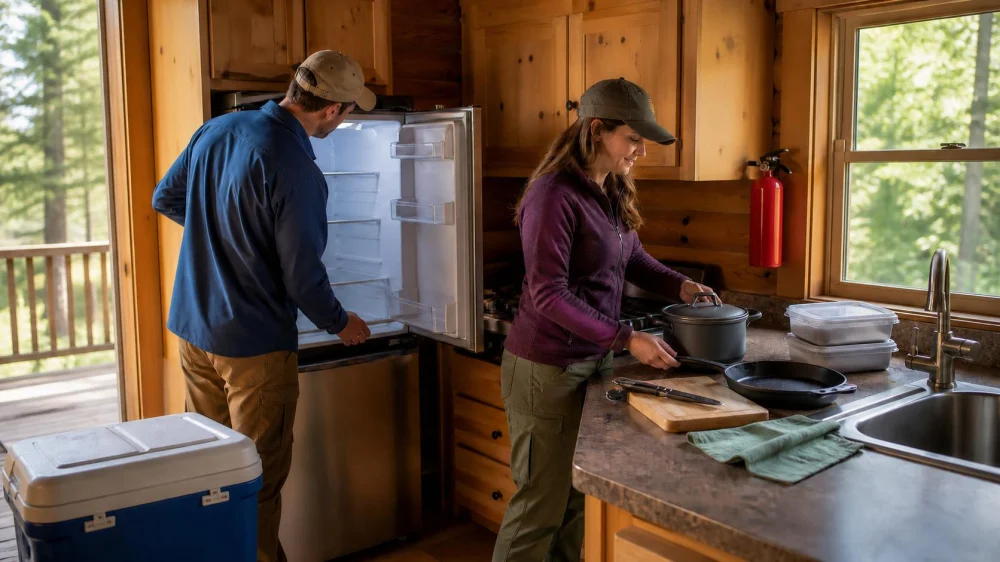
Camping Cabin Kitchen: Confirm Gear, Cooking, and Cleanup
On this page
- Quick answer
- Identify the kitchen type
- Confirm appliances and fuel
- Check cookware and utensils
- Plan refrigerator and cooler space
- Verify water and washing facilities
- Plan for allergies and shared surfaces
- Inspect the kitchen on arrival
- Cook safely in a small cabin
- Clean, store food, and check out
- Frequently asked questions
- Conclusion and next steps
Quick answer
Before booking a camping cabin, ask for the exact kitchen equipment list, appliance type, cooking location, fuel policy, refrigerator size, potable-water status, cookware, utensils, dishwashing setup, trash rules, and cleaning expectations. Bring only compatible gear and a simple backup meal. On arrival, inspect appliances and food-contact surfaces before use, keep combustibles away from heat, store food securely, and report damaged equipment instead of improvising a repair.
“Kitchen,” “kitchenette,” and “cooking area” do not guarantee the same equipment. The property’s current listing, rules, and direct confirmation should guide what you pack and use.

Gamler's Boat Yard Campgrounds
AirvilleYork CountyPennsylvania
211 Indian Steps Rd, Airville, PA 17302, USA
Identify the kitchen type
A full cabin kitchen may include a sink, refrigerator, range, oven, counters, and storage. A kitchenette might have only a mini-fridge, microwave, and coffee maker. A primitive cabin may prohibit indoor cooking and direct guests to an outdoor grill or shared facility.
Ask for a current photograph and itemized description. Confirm whether the kitchen is private, shared, indoors, screened, or outdoors and whether weather or seasonal closures can affect it.

East Hampton Village Manufactured Home Community
East HamptonSuffolk CountyNew York
105 Oakview Hwy, East Hampton, NY 11937, USA
Confirm appliances and fuel
Ask which appliances are installed and operational: refrigerator, freezer compartment, cooktop, oven, microwave, toaster, kettle, coffee maker, grill, or hot plate. Confirm whether the cooktop is electric or gas and whether guests must supply approved fuel for any outdoor equipment.
Do not bring a propane stove, charcoal grill, or other combustion appliance indoors or onto an enclosed porch. Follow property rules and manufacturer instructions. Never substitute an unfamiliar fuel, bypass a safety feature, or use an appliance with damaged wiring, controls, or hoses.
Check cookware and utensils
“Cookware included” may mean only one pot and one skillet. Ask about lids, sheet pans, knives, cutting boards, can opener, bottle opener, spatula, tongs, serving spoon, colander, measuring tools, plates, bowls, cups, and flatware.
Bring compact essentials when the inventory is uncertain, but avoid packing specialty appliances until you confirm outlet capacity and property approval. A simple menu requiring few tools reduces surprises.
Plan refrigerator and cooler space
Confirm whether the refrigerator is full-size or compact, whether it has a working freezer, and when it is turned on before arrival. A small unit may not safely cool a large load of warm food quickly. Bring an insulated cooler and enough clean ice or cold packs when appropriate.
Keep raw foods separated from ready-to-eat items, use closed containers, and avoid overpacking the refrigerator so cold air can circulate. Follow food-safety time and temperature guidance; appearance and smell alone cannot prove food is safe.
Verify water and washing facilities
Ask whether the cabin tap water is approved for drinking and cooking or whether guests should bring water. Confirm whether hot water, a sink, dish soap, a drying rack, towels, and a drain are available. Some cabins use seasonal systems or have conservation limits.
Follow any posted boil-water or do-not-use notice. Boiling does not address every possible contaminant, so use the exact instruction provided. Keep handwashing water and supplies available even if meals are simple.
Plan for allergies and shared surfaces
A shared cabin kitchen cannot be assumed free of allergen residue. Guests with food allergies should bring suitable tools, cutting surfaces, storage containers, and cleaning supplies based on their health plan. Contact the property about restrictions, but recognize that staff may not control previous guests’ food.
Label the group’s food, prevent cross-contact during preparation, and keep emergency medication accessible. Do not use an unknown leftover ingredient, unlabeled condiment, or opened package from a prior stay.
Inspect the kitchen on arrival
- Compare the room and inventory with the booking description.
- Check for visible pests, droppings, leaks, damaged cords, cracked cookware, and strong fuel or electrical odors.
- Verify that the refrigerator feels cool and review any thermometer provided.
- Locate the fire extinguisher and exit without removing or testing equipment unnecessarily.
- Check that smoke and carbon monoxide alarms appear present; report missing or damaged units.
- Photograph and report problems before cooking.
Do not attempt electrical, gas, appliance, or pest-control repairs. Ask the host for safe alternatives or another accommodation when a serious hazard cannot be corrected.
Cook safely in a small cabin
- Keep paper, towels, packaging, and curtains away from heat.
- Stay with active cooking and turn equipment off after use.
- Use stable cookware that fits the burner.
- Turn pot handles inward without placing them over another burner.
- Ventilate as instructed without disabling alarms.
- Keep children and pets away from hot surfaces and sharp tools.
- Never use an oven or grill to heat the cabin.
If you smell gas, see smoke, or observe sparking, stop using the equipment, leave the area, warn others, and contact the property or emergency services as appropriate.
Clean, store food, and check out
Wash dishes with safe water and the provided or approved products. Dry them before storage, wipe food-contact surfaces, seal food and trash, and follow wildlife-resistant storage rules. Do not leave grease, food scraps, or hot coals outside.
At checkout, remove personal food as required, empty trash into the designated container, confirm appliances are off, and report spills or breakage. Do not unplug the refrigerator, shut off fuel valves, or move large appliances unless the host specifically instructs you to.
Frequently asked questions
Does a kitchenette include a stove?
Not necessarily. It may include only cold storage and small electric appliances. Ask for the exact equipment list before planning meals.
Can I bring my camp stove inside?
No. Outdoor combustion equipment can produce fire and carbon monoxide hazards indoors. Use it only in an approved outdoor location and follow all rules.
Should I trust spices or condiments left in the cabin?
Avoid opened, unlabeled, expired, contaminated, or improperly stored items. Bring the ingredients you need in sealed containers.
What is a useful backup meal?
Choose shelf-stable food that fits dietary needs and can be eaten safely without the missing appliance. Keep adequate safe water available.
Conclusion and next steps
Request a current, itemized kitchen description before booking, then design a simple menu around the confirmed appliances, cold storage, water, cookware, and rules. Inspect the space on arrival, report damage rather than repairing it, cook only in approved areas, and leave food and equipment secured. A small backup meal keeps an equipment surprise from becoming an unsafe workaround.

 Winding Brook Mobile Homes Pk3.0 (21 reviews)
 Clifton Lisle5.0 (1 reviews)
 Riverwoods Mobile Home Community3.0 (88 reviews)
 Holly Acres Campground4.0 (132 reviews)
 Delaware Seashore State Park North Campground4.0 (168 reviews)
 Calvert Cliffs Campground4.0 (16 reviews)
 Why Winter is the Best Time for a Camping Cabin Getaway
 Best Remote Camping Cabins for Stargazing and Night Adventures in the U.S.
 The 10 Must-Have Amenities for a Comfortable Stay in Your Camping Cabin
 Winter Camping Cabins: How to Stay Cozy and Warm in the Cold
 Best Camping Cabins with Stunning Views of National Parks and Forests
 How to Create the Ultimate Outdoor Experience with a Camping Cabin