
Camping Cabin Porch and Step Safety After Rain
Table of contents
Quick answer
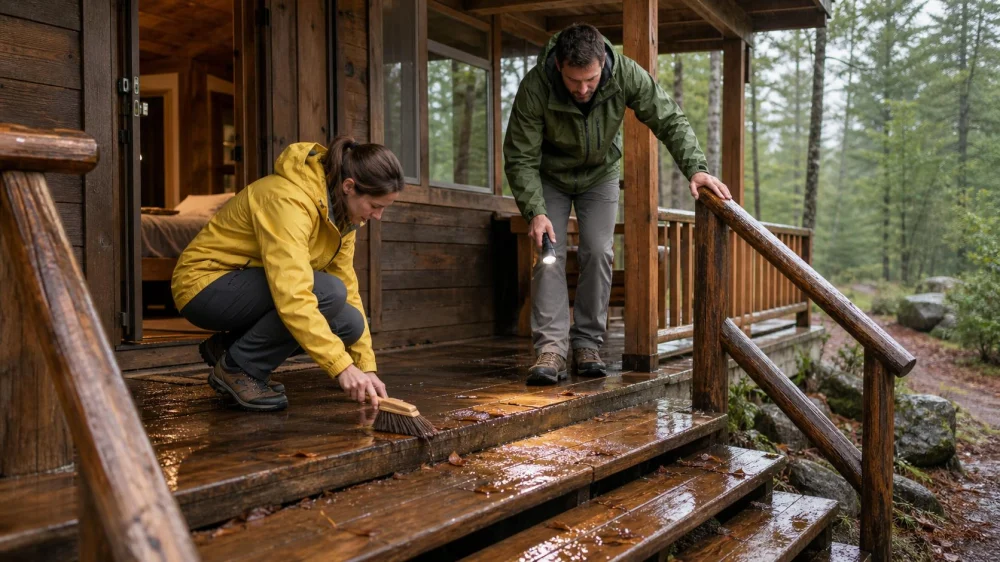
After rain, pause at the doorway and inspect the porch, steps, handrail, and path before walking out. Wet leaves, algae, mud, loose mats, and pooled water can make wood unexpectedly slippery. Wear shoes with good traction, use the rail, carry a light after dark, and take one step at a time. Report loose boards, unstable rails, damaged lighting, or washouts to the host.

Colonial Estates
MonroeGloucester CountyNew Jersey
1941 N Black Horse Pike, Williamstown, NJ 08094, USA
Wait for dangerous weather to pass
Do not begin a porch inspection during lightning, severe wind, hail, flash flooding, or falling branches. Stay in the property's designated safe area, monitor official weather information when available, and follow campground or host instructions. A wet step can wait; an active storm is the greater hazard.
When conditions calm, look through a window or from the open doorway without stepping onto the deck. Watch for water crossing the path, leaning trees, hanging limbs, damaged power lines, or debris against the stairs. If any of these appear, keep everyone inside or use an approved alternate exit and contact staff or emergency services as appropriate.

Singh Meadows
ClintonLower Connecticut River Valley Planning RegionConnecticut
10 Glenwood Rd, Clinton, CT 06413, USA
Inspect before stepping out
Use a flashlight even during gray daylight because shadows can hide a change in level. Check the entire route from the threshold to firm ground.
- Look for standing water, slick leaves, pine needles, moss, mud, and loose gravel.
- Confirm the doormat lies flat and has not shifted over a step edge.
- Scan boards for raised fasteners, new gaps, splintering, sagging, or movement.
- Visually follow the handrail and supports for separation or damage.
- Check that exterior lights work without touching wet fixtures or cords.
- Inspect the landing and path below the last step for erosion or a hidden puddle.
Test the first surface with a planted foot while keeping your weight supported inside and one hand available for the rail. Do not jump from the porch or step over a suspected weak board.
Clear only what is safe
If the cabin supplies a broom and the weather is calm, sweep loose leaves and small debris toward an area that does not block drains, stairs, or another cabin's path. Work from a stable position and avoid walking backward near an edge.
- Do not use soap, cooking oil, bleach, or improvised chemicals on a wet deck.
- Do not pressure-wash, sand, nail, pry, or reposition structural boards.
- Do not move a heavy waterlogged mat while standing on a slippery step.
- Keep runoff away from electrical equipment and neighboring sites.
- Ask staff to handle algae, ice, damaged drainage, and deep standing water.
A temporary warning to your own group can prevent a misstep, but do not create a new trip hazard with chairs, coolers, towels, or improvised barriers.
Use lighting and footwear
Closed-toe shoes with intact tread generally provide better control than smooth sandals, socks, or bare feet. Wipe mud from soles before walking on finished wood, and change shoes if the tread is packed with clay or wet leaves.
Keep one hand free for the rail. Use a headlamp or small flashlight instead of a phone screen when carrying gear at night. Face the stairs, step onto the center of each tread, and avoid rushing. Make two trips rather than carrying a cooler or luggage that blocks your view of the steps.
Exterior lighting does not guarantee a surface is safe. Glare on wet boards can hide puddles, while dark edges can obscure the last step. If a light is out, notify the host and use a safe alternate route rather than handling the fixture.
Guide children and pets
Ask children to wait indoors until an adult has checked the route. Hold a hand on the stairs, discourage running, and keep toys away from the landing. A deck rail is not a climbing structure, and wet furniture should not be moved beside it.
Leash pets before opening the door so they cannot pull someone onto a slick surface. Walk one animal at a time if the steps are narrow. Dry paws at the threshold to reduce slipping indoors, and keep water bowls where spills will not cross the walking route.
Report damage instead of repairing it
Guests should document and avoid structural problems rather than attempting repairs. Photograph the wider area and a close view without placing yourself near an unstable edge. Send the cabin number, exact location, time, and a description through the host's official contact method.
Stop using the porch or stairs when a rail moves, a board flexes or breaks, steps have shifted, the landing is undercut, a tree or branch threatens the route, or water flows rapidly across it. Request maintenance, an alternate entrance, or another cabin. In an immediate emergency, use the safest available exit and call local emergency services.
Post-rain checklist
- Severe weather and lightning have passed.
- The route has no fallen branches, lines, fast water, or washout.
- Threshold, mat, porch, steps, and landing are visible.
- Loose leaves and small debris are cleared only with approved tools.
- Handrails, boards, and step edges appear stable.
- Everyone wears footwear with useful traction.
- A flashlight is ready and one hand remains free.
- Children and pets wait until an adult checks the route.
- Damage and failed lighting are reported to the host.
Limitations
This guide supports a visual guest-level check after ordinary rain. It cannot determine structural strength, electrical safety, hidden rot, load capacity, or slope stability. Snow, ice, floodwater, severe storms, damaged trees, and suspected electrical hazards require different precautions and trained help. Property rules and local emergency guidance take priority.
Frequently asked questions
Can I put a towel on a slippery step?
A loose towel can slide, bunch up, or hide the step edge. Keep the route clear and ask staff for an approved traction mat or another safe route.
Should I use the handrail if it is wet?
First inspect whether the rail appears stable. A wet but secure rail may still provide support, while a loose rail should not be trusted. Report movement or damage immediately.
Are wet wooden steps always slippery?
Traction varies with finish, wear, algae, debris, footwear, and slope. Treat any wet surface cautiously even when it looks clean.
Can I sweep water off a rental porch?
Use only tools provided or approved by the host, work from stable ground, and avoid pushing water toward stairs, doors, outlets, or another site. Staff should handle drainage problems.
What if the only exit has damaged steps?
Keep people away from the damaged area and contact the host for an alternate safe route or urgent repair. If remaining inside creates immediate danger, call emergency services and follow their instructions.
Next steps
Pack traction-friendly shoes and a hands-free light where they are accessible before rain begins. Save the host's contact number, learn the alternate exit, and repeat the short threshold-to-path inspection after every storm. At checkout, report persistent drainage or surface problems even if nobody was injured.



 The Hornets Nest5.0 (2 reviews)
 Bogert's Ranch Estates Inc4.0 (57 reviews)
 Zenfulcove5.0 (43 reviews)
 Red Hill Mobile Park4.0 (12 reviews)
 Sea Grove Camping Resort4.0 (170 reviews)
 Driftwood Too! Camping Resorts4.0 (176 reviews)
 Why Winter is the Best Time for a Camping Cabin Getaway
 Best Remote Camping Cabins for Stargazing and Night Adventures in the U.S.
 The 10 Must-Have Amenities for a Comfortable Stay in Your Camping Cabin
 Winter Camping Cabins: How to Stay Cozy and Warm in the Cold
 Best Camping Cabins with Stunning Views of National Parks and Forests
 How to Create the Ultimate Outdoor Experience with a Camping Cabin