
Camping Cabin Screen Doors and Windows: Keep Bugs Out
Table of contents
Quick answer
Check every screen edge, door closer, and window latch before dusk. Keep unscreened openings closed, move bright indoor lights away from open screens, store food securely, and avoid holding the door open while unloading. For a rental cabin, photograph tears and ask the host before attaching anything. Use only removable, non-damaging barriers; never block an exit or seal a required vent.

Inspect screens on arrival
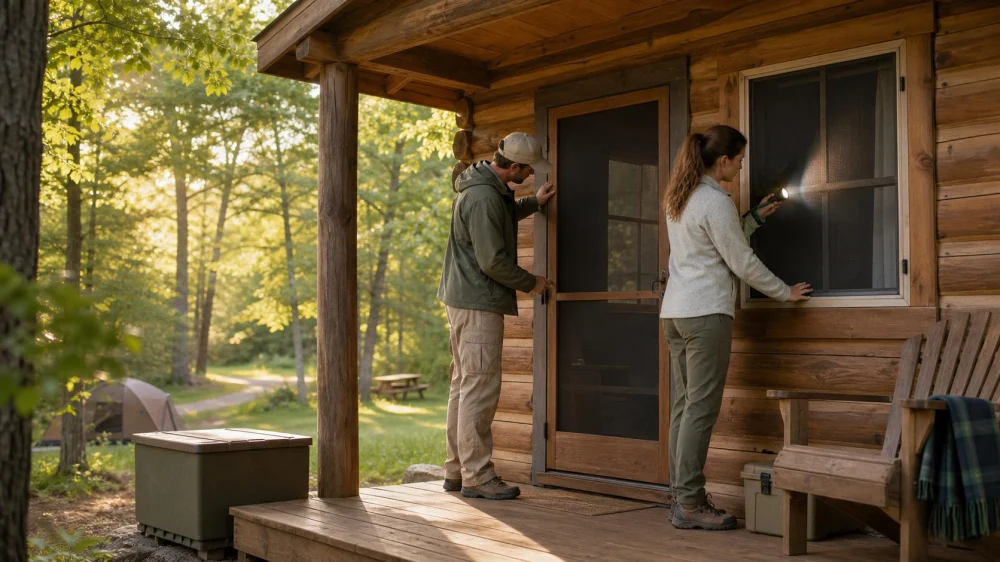
Daylight makes small gaps easier to find. Walk the inside and outside of the cabin while you can still contact staff and move luggage without attracting evening insects.
- Close each screen door gently and look for daylight along the top, sides, and threshold.
- Confirm the latch holds and the closer returns the door without slamming.
- Shine a flashlight at a shallow angle across window mesh to reveal tears or pulled edges.
- Check that the screen frame is seated and the window opens without pushing it loose.
- Look around cable, air-conditioner, and pipe openings for unsealed gaps.
- Photograph pre-existing damage before touching it.
Do not lean on a screen or test it with sharp objects. Mesh is designed to stop insects, not support body weight, children, or pets.
Creekside Estates
BristolNaugatuck Valley Planning RegionConnecticut
482 Broad St, Bristol, CT 06010, USA
Use better door habits
The most effective screen cannot help when the entry stays open. Organize the group before moving bags: one person opens the door, others pass through promptly, and the last person checks that it latched. Avoid propping open both the main and screen doors.
- Stage coolers and luggage on the porch before carrying them inside.
- Keep the threshold clear so the door can close fully.
- Teach children to wait for one door to close before opening another.
- Use the designated pet entry procedure and keep leashes from catching the closer.
- After every trip to the fire ring or vehicle, confirm the door did not rebound open.
A weak closer, warped door, or failed latch needs host attention. Do not bend hinges or adjust spring tension on a rental without permission.
Balance windows and airflow
Open only windows with intact, securely fitted screens. If a window has no screen, keep it closed even if another guest opened it earlier. Use ceiling fans or approved ventilation equipment to improve comfort without creating an unprotected opening.
Keep curtains and bedding away from mesh so they do not press it out of the frame. Close windows when wind-driven rain begins, when leaving the cabin, or whenever the host's instructions require it. Never cover smoke alarms, carbon monoxide alarms, fixed vents, combustion-air openings, or heating equipment in an attempt to stop insects.
Manage light, food, and moisture
Bright light near an open screen can draw more flying insects toward the mesh and increase the chance that they enter with a person. Use only the lighting provided or allowed by the property, and close doors before switching on bright entry lights. Turn off unnecessary lights when everyone settles in.
Food odors and spills can attract insects and other wildlife. Store groceries and trash according to campground rules, wipe counters, rinse recyclable containers if instructed, and remove garbage to the approved location. Do not leave pet bowls, sweet drinks, or open coolers on the porch overnight.
Dry wet towels and gear in the designated area. Standing water in buckets, cups, or toys should be emptied where the property permits, not dumped beside the cabin foundation.
Use renter-safe temporary fixes
Contact the host first. They may have a replacement screen, maintenance kit, or another cabin. If staff approves a temporary measure, choose something removable that does not puncture wood, peel paint, leave adhesive, interfere with a latch, or create a fire or trip hazard.
- A host-supplied screen patch can cover a small tear until repair.
- A removable draft barrier may help at a door bottom if it does not impede closing.
- A rolled towel can sometimes cover a minor floor-level gap while occupants are awake, but it must not obstruct an exit.
- Keep luggage closed rather than using fabric or clothing to stuff structural gaps.
Do not apply expanding foam, nails, staples, permanent tape, pesticides, or homemade chemical mixtures to a rental cabin. Use insect-control products only where the property allows and exactly as their labels direct.
Report damage and infestations
Send the host a clear photo, cabin number, affected door or window, and the size and location of the gap. Explain whether the door still locks and whether insects are already entering. Keep communication in the booking platform or the campground's official channel when possible.
Request another cabin or professional help when several screens are missing, the door cannot close or lock, stinging insects are nesting in the structure, a large number of insects are emerging indoors, or the proposed fix would block ventilation or an exit. Keep people and pets away from a nest rather than attempting removal.
Night checklist
- All exterior doors are fully closed, latched, and unobstructed.
- Only windows with intact screens remain open.
- Curtains, beds, and gear are not pressing against mesh.
- Food, pet supplies, and trash are stored under campground rules.
- Unneeded indoor and porch lights are off.
- Wet gear and standing water are handled in approved areas.
- Smoke alarms, carbon monoxide alarms, vents, and exits remain clear.
- Damage has been photographed and reported.
Limitations
Screens reduce insect entry but do not make a cabin insect-proof. Very small insects can pass through some mesh, and pests may enter through structural gaps or arrive in luggage. Cabin rules, local species, ventilation needs, and allowed products vary. This guide covers guest-level inspection and prevention, not pest identification, structural repair, or pesticide selection.
Frequently asked questions
Can I tape a torn screen in a rental cabin?
Ask the host first. Some adhesives damage mesh, finish, or paint. Use a host-supplied or explicitly approved removable patch and document the original tear.
Should I leave the porch light on for safety?
Follow property guidance. Use lighting needed for safe movement, close the door before turning on bright nearby lights, and switch off unnecessary lights after everyone is inside.
Can I spray bug killer inside the cabin?
Not without checking property rules and the product label. Sprays can affect people, pets, surfaces, alarms, and ventilation. Ask staff to address a significant insect problem.
What if the screen door will not latch?
Remove obstacles and try closing it gently. If the frame is warped or hardware fails, photograph the issue and contact the host. Do not alter hinges, latches, or closers yourself.
Do screens make an open window safe for children?
No. Screens are not fall-prevention devices. Follow cabin rules, use window guards or stops only if provided, and supervise children near open windows.
Next steps
Add a small flashlight, closable food containers, and the host's contact details to your cabin packing list. On arrival, perform the screen-and-latch check before unloading fully. Report problems while maintenance or a cabin change is still practical, then repeat the quick door and window check at dusk.

 The Hornets Nest5.0 (2 reviews)
 Bogert's Ranch Estates Inc4.0 (57 reviews)
 Zenfulcove5.0 (43 reviews)
 Red Hill Mobile Park4.0 (12 reviews)
 Sea Grove Camping Resort4.0 (170 reviews)
 Driftwood Too! Camping Resorts4.0 (176 reviews)
 Why Winter is the Best Time for a Camping Cabin Getaway
 Best Remote Camping Cabins for Stargazing and Night Adventures in the U.S.
 The 10 Must-Have Amenities for a Comfortable Stay in Your Camping Cabin
 Winter Camping Cabins: How to Stay Cozy and Warm in the Cold
 Best Camping Cabins with Stunning Views of National Parks and Forests
 How to Create the Ultimate Outdoor Experience with a Camping Cabin