
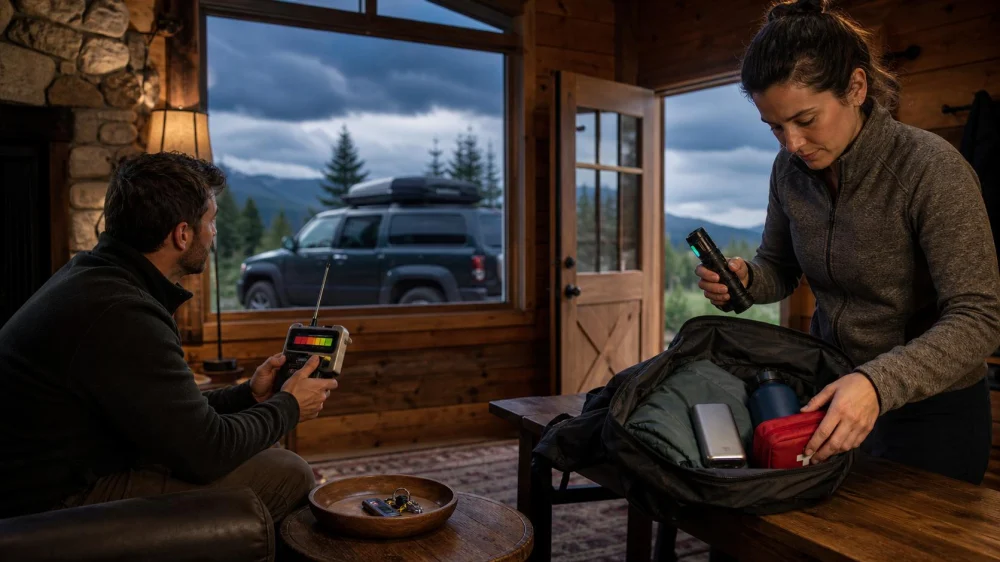
Camping Cabin Storm Plan: Alerts, Shelter, and Evacuation
A cabin provides comfort, but it is not automatically the right shelter for lightning, high wind, flooding, wildfire, or a tornado. The safest plan is made before clouds build: know which alerts you can receive, what the structure can protect you from, where the stronger shelter is, and when to leave.
Quick answer
Before arrival, check the forecast and official alerts, ask the operator about local hazards and the designated storm shelter, and save two exit routes. At the cabin, verify reception, keep a battery-powered alert source and lights ready, and park for a prompt departure. If thunder is heard, move immediately to a substantial enclosed building or a hard-topped vehicle with the windows closed. Follow evacuation orders without waiting to see the hazard.

Thousand Trails Chestnut Lake
Port RepublicAtlantic CountyNew Jersey
631 Chestnut Neck Rd, Port Republic, NJ 08241, USA
Check location-specific hazards
Weather risk changes with terrain and season. A creekside cabin may face flash flooding even when rain falls miles upstream. A ridge may be exposed to lightning and wind. A wooded property may have wildfire evacuation constraints, while winter access can deteriorate before the cabin itself becomes uncomfortable.
Ask the operator:
- Which hazards most often affect this exact property?
- Is the cabin itself a designated shelter, and for which hazards?
- Where is the nearest substantial building or public storm shelter?
- Which roads flood, close, or become impassable first?
- How are guests notified about evacuation, fire restrictions, or park closure?
- Where is the safe interior area if sudden high wind arrives?
Download maps and written instructions before losing service. A pin on a map is not enough; learn the route, travel time, gate schedule, and backup destination.
Nomoco Activity Area
Freehold TownshipMonmouth CountyNew Jersey
143 Nomoco Rd, Freehold Township, NJ 07728, USA
Build a reliable alert plan
Enable official emergency alerts on every compatible phone, but do not depend on a single device or carrier. Add a battery-powered weather radio or another alert source appropriate to the location. Charge power banks before the trip and keep spare batteries dry.
Set a schedule for checking forecasts, especially before hikes, paddling, or sleeping. Assign one adult to monitor conditions, but make sure everyone knows what an alert means and what action follows. Distinguish a watch, which means conditions are possible, from a warning, which means the hazard is occurring or imminent; follow the exact language issued for your area.
Write the cabin address, coordinates, operator number, ranger or park contact, and local emergency number on paper. Share the itinerary with someone away from the site and specify when they should raise concern if the group misses a check-in.
Verify shelter instead of assuming
A rustic cabin, screened shelter, pavilion, porch, small shed, and tent do not offer the same protection. Construction, anchoring, utilities, surrounding trees, and the hazard all matter. Ask the property manager or responsible agency whether the cabin is approved for the conditions expected.
Walk the path to the designated shelter in daylight. Check whether it is unlocked, accessible to everyone in the group, and reachable in the time available. If a hard-topped vehicle is the lightning backup, keep its keys in a fixed place and avoid parking beneath weak trees or near rising water.
For high wind or tornado guidance, identify the lowest suitable interior location away from windows, but follow local instructions because some cabins have no safe interior option. Do not choose a location that can flood.
Act early for thunder and lightning
The National Weather Service says there is no safe place outdoors when a thunderstorm is in the area. Its lightning safety overview recommends moving to a substantial building or hard-topped vehicle before conditions become threatening. Tents, picnic shelters, open vehicles, and isolated trees are not safe lightning shelter.
If you hear thunder, stop outdoor activity and go to the verified shelter immediately. Do not wait for rain or attempt one more trail segment. Once inside a substantial building, stay away from windows, exterior doors, plumbing, corded phones, and plugged-in equipment. Do not unplug devices during the storm.
Wait for the interval recommended by current official guidance and local alerts before resuming outdoor activity; the National Weather Service commonly advises 30 minutes after the last thunder. Recheck the sky and alerts rather than relying on a patch of blue.
High wind, flooding, and wildfire
High wind or tornado
Move to the designated shelter immediately when warned. Stay away from glass and protect heads and necks. Do not shelter in a vehicle during a tornado when a sturdy approved shelter is available, and never park under an overpass.
Flash flooding
Leave low areas early if instructed. Never walk or drive through floodwater, and do not return for equipment. Water depth, road damage, and current are difficult to judge, especially at night. If a route is flooded, turn around and use the confirmed alternative.
Wildfire
Monitor official fire and air-quality notices. Keep vehicles fueled, facing the exit, and free of gear that slows departure. Evacuate when told; smoke, falling debris, traffic, and road closures can remove options quickly. Do not fly a drone near firefighting operations.
Prepare to evacuate
Keep a small go-bag near the exit with essential medicines, identification, keys, water, headlamps, weather radio, power bank, sturdy footwear, warm layer, and basic first aid. Add supplies for children, pets, or access needs. Do not bury critical items beneath recreational gear.
Choose a primary and secondary driver and two routes to a known destination. Keep vehicles within their operating range and avoid blocking other guests. Decide who accounts for each person and pet. If the group separates, use a predetermined meeting point outside the hazard area.
When an official evacuation order arrives, leave using the directed route. Photographing the storm, packing every item, or waiting for a second message can cost the margin built into the warning.
Limits and emergency notes
This article is general preparedness information, not a forecast or a substitute for instructions from emergency managers, park staff, law enforcement, fire officials, or the property operator. Conditions can change quickly. Call emergency services for immediate danger, lightning injury, entrapment, serious trauma, breathing difficulty, or suspected carbon-monoxide exposure. Do not enter damaged buildings, downed-wire areas, floodwater, or active fire zones.
Frequently asked questions
Is any wooden cabin safe from lightning?
Do not decide from appearance alone. The strongest lightning shelter is a substantial enclosed building with wiring and plumbing, or a hard-topped vehicle with windows closed. Confirm the property-specific plan.
Will a weather app work without cell service?
Some downloaded information may remain visible, but live alerts may not arrive. Carry a backup alert source and check conditions before entering a dead zone.
Should I shelter under a large tree?
No. Isolated tall trees are dangerous during lightning and can shed limbs in wind. Move to the verified substantial shelter or hard-topped vehicle.
When should I cancel the trip?
Reconsider when official forecasts, closures, evacuation notices, access conditions, or the operator’s instructions show that safe shelter and travel cannot be assured.
Next steps
Save the forecast area, official alert channels, cabin coordinates, shelter location, and two exit routes before departure. On arrival, test reception, walk the shelter route, place keys and go-bags by the exit, and review roles with the group. The goal is not to predict every storm; it is to make the first safe action obvious before stress and darkness arrive.

 Delsea Woods Mobile Home Park3.0 (77 reviews)
 Lakeview Terrace Mobile Home Park4.0 (3 reviews)
 Huguenot Estates Manufactured Home Community3.0 (69 reviews)
 Sittler's Mobile Homes4.0 (15 reviews)
 Watch Hill Fire Island Campground & Safari Tent Glamping4.0 (56 reviews)
 Taylors Island Family Campgrounds4.0 (107 reviews)
 Why Winter is the Best Time for a Camping Cabin Getaway
 Best Remote Camping Cabins for Stargazing and Night Adventures in the U.S.
 The 10 Must-Have Amenities for a Comfortable Stay in Your Camping Cabin
 Winter Camping Cabins: How to Stay Cozy and Warm in the Cold
 Best Camping Cabins with Stunning Views of National Parks and Forests
 How to Create the Ultimate Outdoor Experience with a Camping Cabin