
Camping Cabin Water: Verify the Source and Pack Backup
On this page
Quick answer
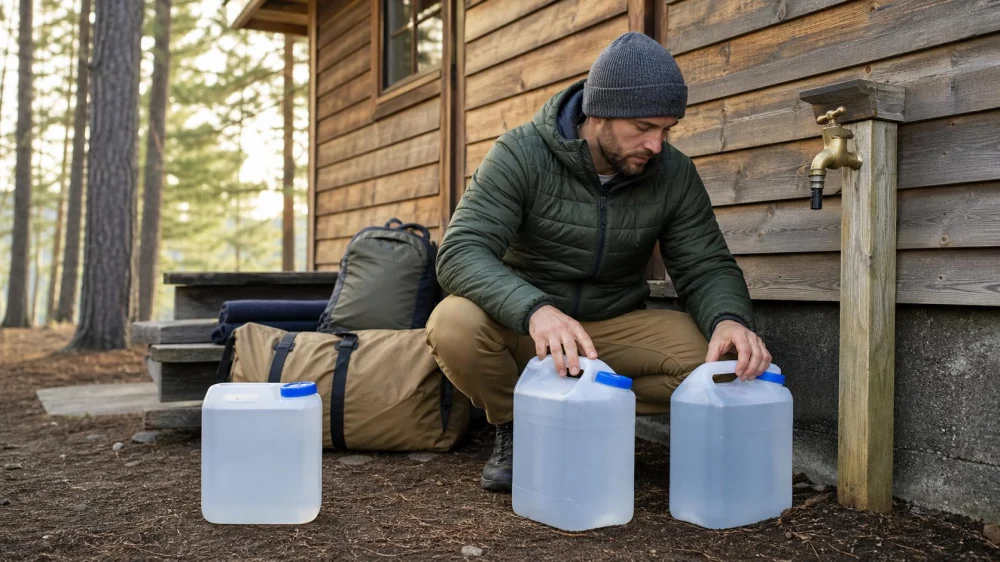
Do not assume a cabin tap, pump, or nearby spigot provides drinking water. Check the land manager or host's current notice for potability, seasonal shutdowns, testing, and boil or do-not-use advisories. Carry enough known-safe backup for drinking, medicines, cooking, and hygiene, plus a treatment method appropriate to the source and trip if qualified guidance supports it.
Why a clear tap is not proof of safe water
Potable water is water considered suitable for drinking under the responsible authority's current system and guidance. Appearance, taste, and a flowing tap cannot confirm microbiological or chemical safety. Remote systems may be seasonal, privately maintained, affected by power or weather, or subject to temporary advisories that change after a reservation was made.
This guide is for cabin campers in the United States planning routine trips. It does not replace current land-manager, public-health, or water-system instructions. Infants, pregnant people, older adults, and people with immune or medical conditions may need additional precautions from a qualified healthcare professional.
Vineland Hills Manufactured Home Community
VinelandCumberland CountyNew Jersey
1301 NE Blvd, Vineland, NJ 08360, USA
Practical checklist
- The exact water source at the reserved cabin: indoor tap, shared spigot, hand pump, delivered tank, well, or no provided water.
- Current official status, testing or treatment description, seasonal dates, outage history, boil advisory, and do-not-drink or do-not-use instructions.
- Distance and route to the source, opening hours, accessibility, required key or payment, and whether containers can be filled safely.
- A realistic quantity of known-safe backup based on people, pets, duration, heat, altitude, cooking, medicine, and travel delays.
- Clean food-grade containers with intact caps, separated from fuel, chemicals, rubbish, grey water, and untreated-water equipment.
- A source-appropriate treatment method, backup, fuel or power, contact time, and limits, used only according to authoritative guidance.
- A stop or exit plan for unavailable water, leaking containers, illness, heat, fire restrictions, road closure, or a new advisory.
Step-by-step plan
- Check the host or land manager close to departure and again on arrival. Ask specifically whether the water is currently potable, not only whether a tap exists.
- Pack known-safe water before leaving reliable services. Divide it among more than one container so one leak or contamination event does not remove the whole supply.
- Inspect the source area without touching the outlet to a bottle. Follow flushing, filling, or treatment instructions and keep caps and container mouths off the ground.
- Label untreated and treated containers distinctly before the trip. Prevent hands, scoops, pet bowls, or dirty hoses from contaminating stored drinking water.
- Follow boil, treatment, or do-not-use notices exactly. Boiling does not remove every chemical contaminant, so a do-not-use advisory is not solved by extra boiling.
- Monitor consumption and weather early enough to leave or resupply safely. Do not ration drinking water to preserve a trip plan during heat or illness.
- Clean, dry, and inspect containers after the trip according to their instructions, and record any source problem for the host without assuming the next visitor has been warned.
Save the official water notice, date checked, contact, source location, status on arrival, treatment used, and any outage or illness. Keep health details private and report suspected water-related illness to a healthcare professional and the responsible authority with the relevant dates and source.
Limits and important notes
Common filters, purifiers, chemicals, and boiling have different capabilities and do not address every microorganism, toxin, heavy metal, salt, or fuel contamination. A product marketed for outdoor use is not automatically suitable for a specific source. Do not drink from decorative, fire-control, hose, drain, stream, or unknown outlets.
Use emergency or medical guidance for severe dehydration, confusion, fainting, persistent vomiting or diarrhoea, blood in stool, breathing difficulty, or rapid decline. Stop using water with fuel or chemical odour, unusual contamination, an official do-not-use notice, or suspected sewage exposure. Leave or obtain verified safe water before supplies become critical.
Frequently asked questions
If the cabin has plumbing, is the water potable?
Not necessarily. Plumbing may serve washing or seasonal systems. Confirm the current status with the responsible host or authority.
Does clear water need treatment?
Clarity does not show safety. Follow the source's current official guidance and use a method appropriate to the identified risk.
Can I boil any questionable water?
No. Boiling can address some biological hazards but not all chemicals or toxins, and do-not-use advisories may prohibit any use.
How much backup water should I pack?
Base it on people, pets, conditions, duration, cooking, hygiene, medicine, and delays, using current authoritative outdoor guidance.
Can I refill a disposable bottle repeatedly?
Use containers designed for repeated food contact and cleaning. Inspect caps and surfaces and retire damaged or hard-to-clean containers.
Sources and evidence
Use current notices from the land manager, cabin host, water-system operator, and public-health authority, plus treatment-device instructions and authoritative outdoor hydration guidance. The responsible source notice takes priority over reviews, old photos, and past visits.
Conclusion and next steps
Verify the exact source and current status, then pack enough known-safe backup that the trip does not depend on an uncertain tap. Keep untreated and treated water separate, follow advisories precisely, and leave early if safe supply fails. Water planning is a trip requirement, not an amenity to confirm after arrival.
 Amelia Beach4.0 (14 reviews)
 Lake Fairfax Park Campground4.0 (142 reviews)
 Grove Beach4.0 (6 reviews)
 Woodlynne Trailer Park3.0 (43 reviews)
 Urban Acres4.0 (18 reviews)
 Bayshore Campgrounds4.0 (289 reviews)
 Why Winter is the Best Time for a Camping Cabin Getaway
 Best Remote Camping Cabins for Stargazing and Night Adventures in the U.S.
 The 10 Must-Have Amenities for a Comfortable Stay in Your Camping Cabin
 Winter Camping Cabins: How to Stay Cozy and Warm in the Cold
 Best Camping Cabins with Stunning Views of National Parks and Forests
 How to Create the Ultimate Outdoor Experience with a Camping Cabin