
Pet-Friendly Camping Cabin Checklist Before Booking
On this page
Quick answer
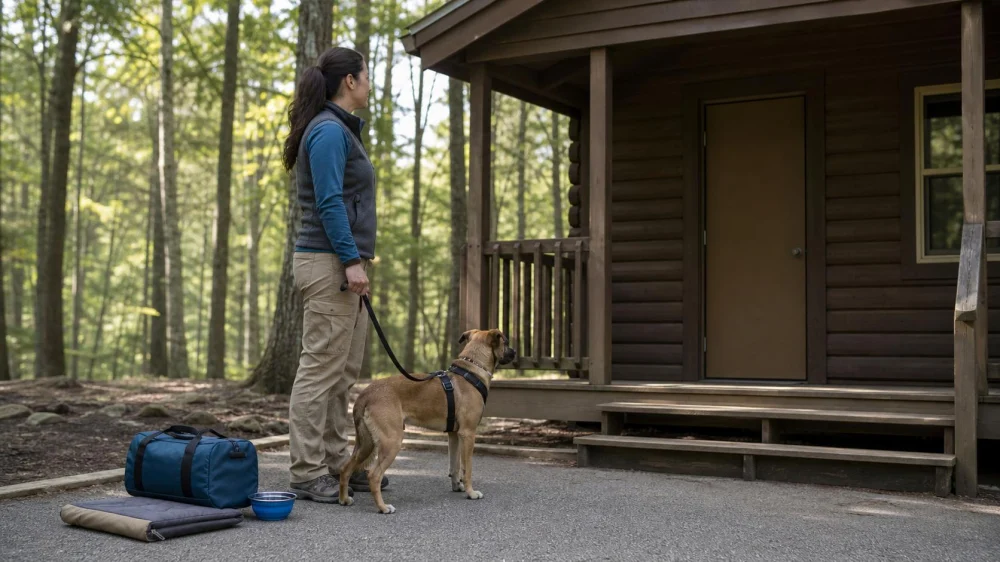
Confirm the specific cabin allows your pet's species, number, size and breed, then check fees, deposits, furniture rules, unattended-pet policy, leash length, waste disposal and restricted areas. Make sure your planned trails and activities also allow pets. Bring identification, records, food, water, restraint, bedding, waste bags and a veterinary contact, and never leave a pet in a hot vehicle.
This guide is mainly for U.S. travellers bringing a dog to a camping cabin. Cats and other animals may have different housing, escape, temperature and travel needs. “Pet-friendly” does not mean every pet will enjoy the setting or that every park facility and trail permits animals.

Land O Pines Mobile Home Park
Jackson TownshipOcean CountyNew Jersey
135 W Commodore Blvd, Jackson Township, NJ 08527, USA
Verify the exact pet policy
A pet-friendly camping cabin is lodging that permits certain animals under stated conditions. The label is not a universal standard. One property may allow two dogs in designated cabins, while another permits only one pet, excludes sleeping lofts or applies seasonal restrictions.
Before paying, ask the booking service or property:
- Is this exact cabin pet-friendly, not just the campground?
- Which species, number, size, age or breed restrictions apply?
- What nightly fee, cleaning fee, refundable deposit or damage hold applies?
- Must the pet be declared before arrival?
- Are vaccination records, licence, ID or health documents required?
- May pets use beds, furniture, porches or common buildings?
- Can a pet be left alone in the cabin, crate or vehicle?
- What leash or tether length is allowed?
- Where must waste be disposed?
- What noise, nuisance, damage or aggressive-behaviour rule can end the stay?
Save the policy with the reservation. A directory listing, photo of a dog or “pets welcome” filter may omit fees and restrictions. Call again close to the trip if management or park rules may have changed.
Service animals are not pets and may be covered by different law and policy. Contact the property about the access needed without treating a service animal as part of a pet package.

Four Seasons Family Campground
PilesgroveSalem CountyNew Jersey
158 Woodstown Daretown Rd, Pilesgrove, NJ 08098, USA
Check whether the cabin and site fit your pet
Review the complete space, not only the sleeping area. A secure door, intact screens and a simple entry can matter more than decorative pet amenities.
Ask about:
- Distance from parking to the cabin and whether gear must be carried.
- Steps, steep paths, open decks, loft ladders and slippery floors.
- Heating, cooling, ventilation and power reliability.
- Door closers, screen doors and gaps where an animal could escape.
- Nearby roads, water, cliffs, livestock, wildlife and other cabins.
- Shared porches, off-leash areas or dog-washing stations.
- Where food, rubbish and pet food must be stored.
- How far the nearest toilet or water point is from the cabin.
A fenced area is useful only when its height, gate and gaps suit the pet, and it does not replace supervision. Inspect before unclipping a lead. Wildlife can enter some fenced spaces, and a frightened dog may climb, dig or squeeze through.
Consider noise. Nearby dogs, wildlife, generators, children and late arrivals can make a cabin difficult for a sound-sensitive pet. Ask about cabin spacing and quiet hours. If barking cannot be managed, another lodging plan may be kinder to the pet and neighbours.
Confirm trails and activities allow pets
A pet-friendly cabin can sit inside or beside a park where pets are restricted from trails, beaches, boardwalks, lakes, backcountry routes, shuttles or buildings. Map each planned activity against the current pet rules.
The National Park Service advises campers to check site regulations and notes that many parks restrict pets from particular facilities, waterways, trails and backcountry. Review the NPS camping with pets guidance, then open the page for the exact park.
For every activity, confirm:
- Whether pets are permitted on the route or at the destination.
- The required leash length and whether retractable leads are suitable.
- Surface, elevation, shade, water and temperature.
- Wildlife, livestock, hunting, ticks, snakes, toxic plants or water hazards.
- Whether transport, boat, shuttle or tour providers accept pets.
- Where waste can be packed out and disposed.
If most of the trip is not pet-friendly, do not plan to leave the animal alone in a cabin unless the written policy permits it and the animal can be safe and calm. Consider a qualified boarding or pet-care arrangement instead.
Health preparation and packing list
Ask your veterinarian whether the pet is fit for the planned travel, elevation, temperature, trail length and regional disease risks. Confirm required vaccination and parasite-prevention decisions early enough for them to take effect.
Pack:
- Secure collar or harness, ID tag and a standard lead plus backup.
- Current microchip registration details.
- Food for the trip plus a reasonable delay buffer.
- Water and stable bowls; do not assume streams are safe to drink.
- Prescribed medicines in original packaging and written instructions.
- Carrier or vehicle restraint for transport.
- Familiar bedding and towels.
- Waste bags and a sealed way to carry them out.
- Pet first-aid supplies recommended by the vet.
- Recent photo and copies of relevant health records.
- Veterinary, emergency clinic and property contact details.
Do not start a new sedative, supplement, flea product or home remedy solely for the trip without veterinary guidance. Never give human pain medicine unless a veterinarian specifically prescribes the substance and dose for that pet.
Arrival and stay routine
Keep the pet restrained while you inspect the cabin. Check doors, screens, floor, furniture gaps, porch, rubbish, dropped food, pest bait, cleaning products, hot surfaces, fire equipment and evidence of previous animals.
- Set up water, bedding and a calm resting place away from the entrance.
- Store human food, pet food, treats, bowls and scented items according to wildlife rules.
- Walk the pet on lead around the immediate area before dark.
- Locate waste bins, quiet-hour boundaries and the emergency exit route.
- Introduce the space gradually rather than allowing free running.
- Check paws, coat and skin after outdoor activity for cuts, burrs and ticks.
Keep doors controlled when carrying luggage. Use one person to manage the pet while another opens the cabin. Do not tether the animal outside unattended. A tether can wrap around furniture or trees and does not protect against wildlife or other dogs.
Maintain normal feeding and medication schedules when possible. Watch for unusual panting, vomiting, diarrhoea, weakness, limping, inability to settle or other changes. Contact a veterinarian when you are concerned rather than waiting until the trip ends.
Important limits and wildlife safety
Keep the pet on the required lead even when recall is reliable. Wildlife can trigger pursuit, and a leashed dog can still attract or provoke an animal. Increase distance when wildlife changes behaviour because of your presence. Never allow chasing, feeding or contact.
Pet food, bowls, treats, waste and scented products can attract wildlife. Follow the property's storage rules exactly. Do not leave food or water unattended outside, and do not store scented items in sleeping areas when local rules require another method.
Never leave a pet in a closed vehicle. Temperature can become dangerous rapidly. A cabin can also overheat or lose power; supervision and a backup plan matter.
Seek veterinary help for breathing difficulty, collapse, severe bleeding, suspected poisoning, snakebite, heat illness, repeated vomiting, inability to stand or another urgent condition. Know the route before an emergency occurs.
Frequently asked questions
Does pet-friendly mean dogs can stay alone in the cabin?
No. Many properties prohibit unattended pets or require crating. Confirm the written rule and decide whether your activities allow continuous supervision.
Are all trails near a pet-friendly cabin open to dogs?
No. Trail and park rules are separate from lodging policy. Check each planned trail, boardwalk, beach, shuttle and backcountry area.
Can I let my dog off lead at the cabin?
Only in a designated area where current rules permit it and conditions are safe. A remote location does not remove leash requirements or wildlife risk.
Should I bring my dog's normal food?
Yes. Sudden diet changes can cause digestive problems. Bring enough familiar food plus a buffer and store it under the same wildlife rules as human food.
What if the cabin policy changed after booking?
Contact the property with the saved reservation and policy. Ask for available pet-permitted alternatives or cancellation options in writing before travelling.
Sources and evidence notes
The pet, leash, trail, vehicle and wildlife boundaries align with general National Park Service camping guidance. Rules vary by park and property, so the exact reservation terms and current local regulations take priority. This article does not claim that any cabin or trail accepts pets.
Conclusion and next steps
Book a pet-friendly camping cabin only after confirming the exact animal, cabin, fees, unattended rule and activity access. Match the terrain, climate and wildlife setting to the pet's health and behaviour, then pack identification, restraint, food, water, records and emergency contacts. On arrival, inspect before releasing the pet, follow leash and storage rules, and keep the animal supervised throughout the stay.
 Vineland Hills Manufactured Home Community3.0 (55 reviews)
 Bodine Field Campground4.0 (110 reviews)
 Naugatuck Pines5.0 (2 reviews)
 Safety Park1.0 (2 reviews)
 Deluxe Cabin 3065.0 (1 reviews)
 Country Club Estates3.0 (2 reviews)
 Why Winter is the Best Time for a Camping Cabin Getaway
 Best Remote Camping Cabins for Stargazing and Night Adventures in the U.S.
 The 10 Must-Have Amenities for a Comfortable Stay in Your Camping Cabin
 Winter Camping Cabins: How to Stay Cozy and Warm in the Cold
 Best Camping Cabins with Stunning Views of National Parks and Forests
 How to Create the Ultimate Outdoor Experience with a Camping Cabin