
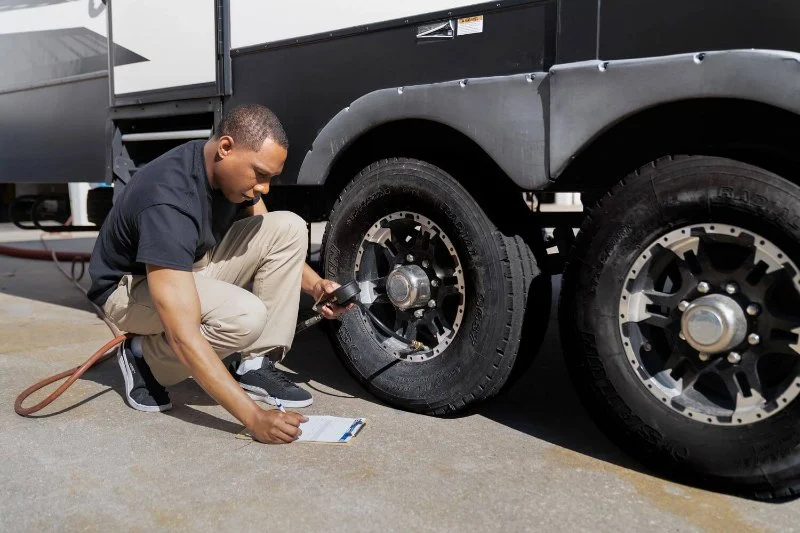
1. Why RV Tire Pressure Is More Critical Than You Think
For RV owners in the United States, tire pressure is not just a maintenance detail—it is a safety issue that directly affects every mile on the road. RVs are heavier, wider, and more complex than standard vehicles, which puts significantly more stress on tires. Even a small drop in pressure can lead to overheating, uneven wear, and sudden failure.
Unlike passenger cars, RV tire problems are often harder to detect by feel alone. A slow leak may go unnoticed until it becomes a dangerous blowout at highway speeds. This is why experienced RV travelers pay close attention to tire pressure before and during every trip.

2. How RV TPMS Works and What It Monitors
2.1 Real-Time Pressure and Temperature Tracking
An RV Tire Pressure Monitoring System continuously measures both tire pressure and temperature while you drive. Sensors installed on each tire send real-time data to a display inside the RV, allowing drivers to spot problems immediately rather than after damage occurs.
This real-time feedback is especially valuable on long trips, where changing weather, altitude, and road conditions can all affect tire performance.

2.2 Early Warnings Before Problems Escalate
One of the biggest advantages of a TPMS is early warning. If a tire begins to lose pressure or overheat, the system alerts the driver right away. This early notice can prevent catastrophic blowouts and give drivers time to pull over safely.
For many RV owners, that peace of mind alone makes a TPMS worth the investment.
3. Hidden Risks of Driving Without a TPMS
3.1 Blowouts, Damage, and Unexpected Costs
Tire blowouts on RVs often cause more than just tire damage. They can tear into wheel wells, damage plumbing or electrical systems, and lead to costly repairs. These incidents frequently happen without warning when pressure drops go unnoticed.
Without a TPMS, drivers rely on visual checks and guesswork, which are rarely enough for early detection.
3.2 Stress and Fatigue on Long Trips
Driving an RV already requires focus and planning. Constantly worrying about tire condition adds unnecessary stress. Many RV owners report that installing a TPMS significantly reduced driving anxiety, especially during long highway stretches or in remote areas.
4. Real-World RV Stories That Show the Value of TPMS
A widely shared RV forum story described a family traveling through Arizona when their TPMS alerted them to rising temperature in one rear tire. They pulled over to find a nail causing a slow leak. Because they stopped early, the tire was repaired instead of destroyed, and the trip continued with minimal delay.
Another RV owner recalled driving for years without a TPMS and experiencing two blowouts within one season. After installing a monitoring system, they reported no tire-related incidents over thousands of miles. These stories highlight how small alerts can prevent big problems.
5. Choosing the Right TPMS for Your RV Lifestyle
Not all RV Tire Pressure Monitoring Systems are the same. Factors such as the number of tires, towing setups, signal range, and ease of installation all matter. A system that works well for a small travel trailer may not suit a large motorhome with multiple axles.
RV owners who travel frequently or venture off main highways often prioritize reliability and clear alerts. Those newer to RVing may look for simpler systems that are easy to set up and understand.
For anyone researching suitable products, expert guidance, or RV-related safety upgrades, Camping Cabins can be a useful place to explore options tailored to different travel styles and experience levels.
In the end, an RV TPMS is not about adding another gadget—it is about protecting your investment, your travel plans, and everyone on board. Understanding why you need one helps ensure safer, smoother, and more confident journeys wherever the road leads.





 Campsite J380.0 (0 reviews)
 Camp Gateway: Wiley Post A4.0 (17 reviews)
 Balantre Lane Estate0.0 (0 reviews)
 Milltown Landing Campsite4.0 (3 reviews)
 Pleasant Valley Family Campground4.0 (134 reviews)
 Eastern Dawn Inc4.0 (32 reviews)
 Why Winter is the Best Time for a Camping Cabin Getaway
 Best Remote Camping Cabins for Stargazing and Night Adventures in the U.S.
 The 10 Must-Have Amenities for a Comfortable Stay in Your Camping Cabin
 Winter Camping Cabins: How to Stay Cozy and Warm in the Cold
 How to Create the Ultimate Outdoor Experience with a Camping Cabin
 Best Camping Cabins with Stunning Views of National Parks and Forests