
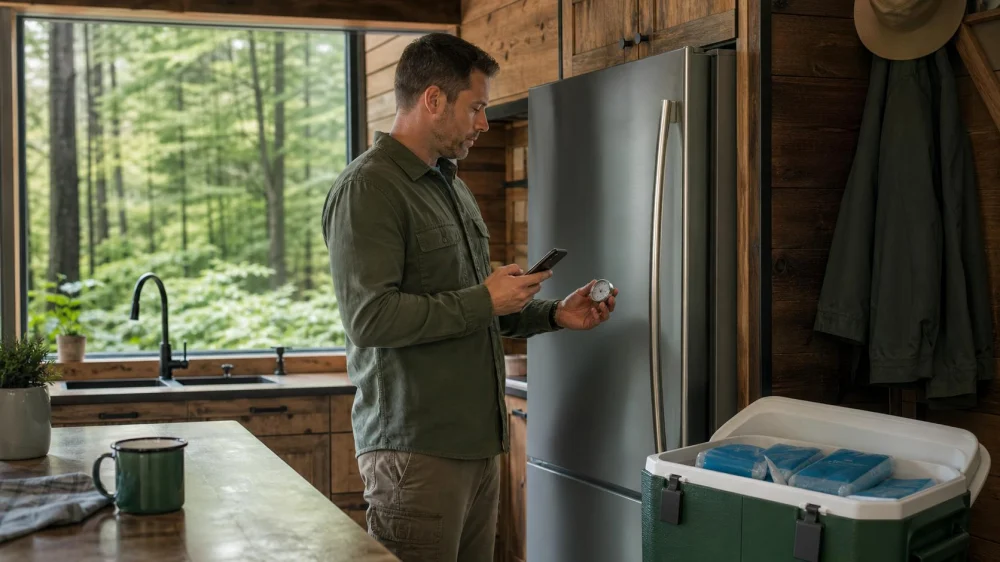
Cabin Power Outage: Decide What Food in the Fridge Is Safe
Quick answer: Record when power failed, keep refrigerator and freezer doors closed, and contact the cabin host. USDA guidance says an unopened refrigerator keeps food safely cold for about four hours. After that, discard refrigerated perishables unless you can verify they stayed at 40°F or below. Never taste food to test safety; evaluate each item with time, temperature, and the official food-safety chart.
A remote cabin may lose power during wind, a storm, utility work, or an equipment problem. The safest decisions begin before anyone repeatedly opens the appliance “to check.”
1. Start a Reliable Outage Clock
Note the last time power was known to be on and the first time you confirmed it was off. Ask the host or utility whether the outage start and estimated restoration are known. A blinking appliance clock may show that power changed, but it may not establish the full timeline.
If you arrived after an unknown outage, ask whether the refrigerator was continuously powered before check-in and read an appliance thermometer if one is present. Do not assume cold-feeling packaging proves the food remained safe.

2. Keep Appliance Doors Closed
Make one plan before opening anything. An unopened refrigerator holds cold air far better than one checked every few minutes. USDA says a refrigerator generally keeps food safe for up to four hours with the door closed. A full freezer can maintain temperature for about 48 hours, and a half-full freezer for about 24 hours, if unopened.
Post a note or tell the group not to open the doors. Use shelf-stable snacks and drinks stored outside the appliance while you decide the next step.
Pine Cone Resort
Freehold TownshipMonmouth CountyNew Jersey
340 Georgia Rd, Freehold Township, NJ 07728, USA
3. Use a Thermometer, Not a Guess
An appliance thermometer can show the refrigerator or freezer air temperature during and after an outage. Safe targets are 40°F or below for the refrigerator and 0°F or below for the freezer during normal operation. A food thermometer can help evaluate an individual item when official guidance calls for it.
Do not use an outdoor thermometer, phone weather reading, or how cold the cabin feels as a substitute. Outside temperature changes and does not reliably protect food. If no trustworthy time or temperature record exists, choose the safer decision.
4. Apply the Refrigerator Four-Hour Rule
When power has been off no more than four hours and the refrigerator stayed closed, refrigerated food should generally remain safe under USDA guidance. If the outage lasts longer, move perishables to a cooler before the four-hour point and keep them at 40°F or below, or discard them.
Refrigerated perishables include meat, poultry, seafood, eggs, leftovers, milk, yogurt, soft cheese, cut fruits and vegetables, cooked vegetables, opened creamy dressings, and many prepared foods. Food held above 40°F for more than two hours should be discarded. Use the FoodSafety.gov item-by-item chart because shelf-stable condiments, hard cheeses, butter, and whole produce may have different guidance.
5. Evaluate Frozen Food Separately
Do not apply the refrigerator’s four-hour limit to a closed freezer. Check after power returns or when transfer is necessary. USDA says food that still contains ice crystals or is 40°F or below can be safely refrozen or cooked, although quality may decline.
Evaluate each package. Discard food contaminated by leaking raw meat, poultry, or seafood juices. Do not refreeze an item merely because another package beside it remains frozen. When the timeline, temperature, or contamination status is uncertain, throw it out.
6. Move Food to a Cooler Safely
If the outage is expected to exceed four hours, prepare an insulated cooler with enough ice or frozen gel packs to keep food at 40°F or below. Put a thermometer inside. Group cold items, separate raw animal products in leakproof containers, and keep ready-to-eat food above or apart from them.
Open the refrigerator once, transfer priority items efficiently, and close the cooler. Add ice as it melts. Keep meltwater from contacting food. Follow safe handling instructions for dry ice—never touch it with bare skin, seal it in an airtight space, or use it in an unventilated occupied area.
7. Discard Without Tasting
Never taste food to decide whether it is safe. Harmful bacteria may not change smell, appearance, or flavor. Do not rely on cooking to rescue food that exceeded safe time and temperature guidance.
Seal discarded food to limit leaks and wildlife attraction, then follow the property’s trash and bear-safe storage instructions. Do not put food outside, burn prohibited waste, or leave it in an unsecured bin. Clean spills using cabin instructions and keep raw juices away from surfaces and other food.
8. Coordinate With the Cabin Host
Report the outage, cabin number, start estimate, appliance temperature, and any property-supplied food affected. Ask about restoration, approved ice sources, cooler availability, drinking-water pumps, electric cooking, and trash handling. Keep booking messages and receipts for necessary replacement food if you plan to request reimbursement.
Do not repair the refrigerator, reset electrical panels, or move appliances unless the host specifically directs a safe user action. A warm refrigerator after power returns may need service; do not reload it until it can maintain 40°F or below.
9. Avoid Outage and Generator Hazards
Use flashlights instead of open flames near curtains, bedding, or gas appliances. Do not use a charcoal grill, camp stove, or fuel-burning heater inside the cabin for cooking or warmth. Never run a generator in a cabin, porch, garage, or near doors, windows, or vents; carbon monoxide can be fatal.
Do not touch wet electrical equipment or enter standing water around outlets. Report sparks, burning odor, damaged lines, gas odor, or a carbon monoxide alarm immediately and follow emergency and property instructions.
10. Pack a Cabin Food-Safety Kit
Bring a refrigerator/freezer appliance thermometer, food thermometer, insulated cooler, frozen gel packs, leakproof bags, handwashing supplies, flashlight, can opener, and shelf-stable meals. Store emergency contact numbers and the booking address offline.
At arrival, confirm the refrigerator is 40°F or below before stocking it. Freeze gel packs, group freezer items, and learn the property’s outage, trash, and emergency procedures. People at higher risk from foodborne illness—including pregnant people, very young children, older adults, and those with weakened immune systems—should be especially cautious and follow clinician-specific advice.
Outage checklist: note the time; keep doors shut; notify the host; read a proper thermometer; use the four-hour refrigerator rule; keep cooler food at 40°F or below; assess freezer items separately; never taste-test; discard uncertain perishables securely; and avoid indoor fuel-burning equipment.
Evidence notes: The FoodSafety.gov power-outage chart provides item-level keep-or-discard guidance and says never to taste-test. USDA’s emergency food-safety guidance supplies the four-hour refrigerator, 48/24-hour freezer, 40°F, ice-crystal, and cooler rules summarized here.
This article provides general U.S. food-safety information. Follow current USDA/FoodSafety.gov guidance, local emergency instructions, product labels, and medical advice for your group.




 Keystone Courts3.0 (5 reviews)
 G & R Recreation Campground4.0 (329 reviews)
 Hampden Village4.0 (44 reviews)
 YMCA Hallmark Cabin5.0 (2 reviews)
 Taylors Island Family Campgrounds4.0 (107 reviews)
 Ecology Village4.0 (16 reviews)
 Why Winter is the Best Time for a Camping Cabin Getaway
 Best Remote Camping Cabins for Stargazing and Night Adventures in the U.S.
 The 10 Must-Have Amenities for a Comfortable Stay in Your Camping Cabin
 Winter Camping Cabins: How to Stay Cozy and Warm in the Cold
 Best Camping Cabins with Stunning Views of National Parks and Forests
 How to Create the Ultimate Outdoor Experience with a Camping Cabin