
Camping Cabin Check-In: Inspect, Photograph, and Report
On this page
Quick answer
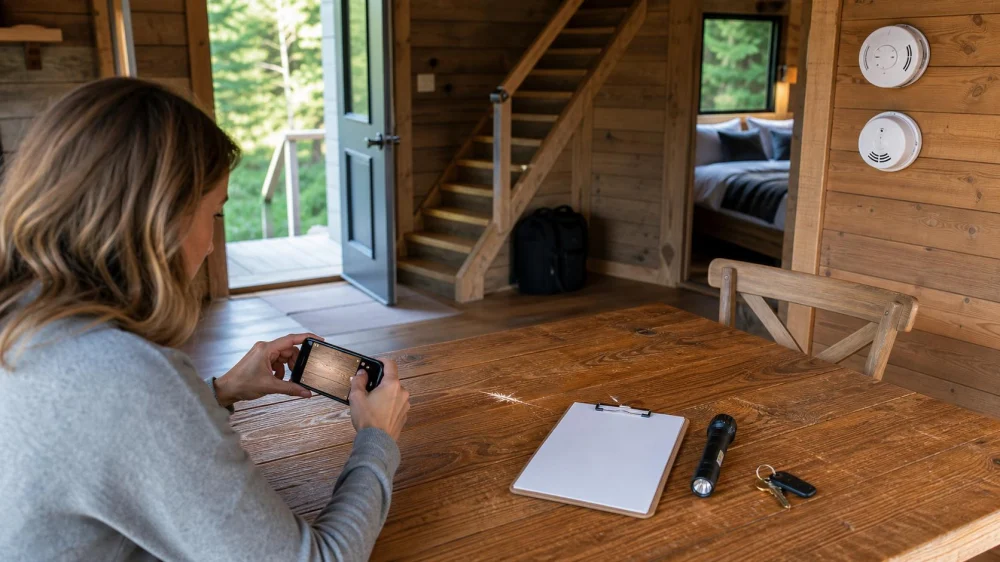
Before unpacking, walk through the camping cabin in daylight if possible. Photograph existing damage, cleanliness, locks, windows, furniture, appliances, and included equipment. Test smoke and carbon monoxide alarms only with their buttons, confirm exits are clear, and report problems through the property’s official contact channel.
Do not enter or remain for a gas smell, active electrical arcing, fire, severe structural movement, exposed live wiring, uncontrolled water leak, wildlife inside, or a sounding CO alarm. Move to safety and call the appropriate emergency service and property operator.

Start outside
Check the assigned cabin number without publishing access codes. Look at steps, rails, porch boards, roof debris, low branches, exterior lights, and the path from parking. Note ice, mud, holes, loose gravel, and drop-offs.
Confirm the door closes and locks normally. Inspect screens and windows for damage before opening. Do not disturb nests, animals, electrical boxes, propane equipment, or locked service spaces.
Patapsco Valley State Park- McKeldin Area Youth Camping Parking Lot
EldersburgCarroll CountyMaryland
Eldersburg, MD 21104, USA
Inspect the interior
- floors for water, trip edges, broken glass, or pests;
- bunks, ladders, rails, mattresses, and furniture stability;
- windows, curtains, doors, and emergency egress;
- bathroom surfaces, hot-water controls, and leaks;
- kitchen surfaces, refrigerator condition, and included utensils;
- heaters, fireplaces, and stove areas for posted instructions;
- odour, visible mould, droppings, or unusual staining; and
- inventory items promised by the booking.
Do not sweep rodent droppings or handle unknown powder, needles, chemicals, or sharp waste. Isolate the area and contact staff.
Check utilities and safety devices
Locate exits, fire extinguisher, smoke alarm, CO alarm, breaker access for emergencies, and water shutoff information if provided. Press alarm test buttons only as directed; never use flame or smoke. Report missing, damaged, expired, or non-responsive devices.
Test taps gently and check beneath sinks for active leaks. Plug in no high-load appliance until you understand cabin rules. If outlets are damaged, hot, sparking, or wet, stop and report them.
Create a useful photo record
Take wide images of each room, then close views of existing damage with an object for scale when useful. Photograph appliance interiors, meter or fuel level only when included in the agreement, and the condition of rented linens or equipment.
Keep original timestamps and avoid photographing other guests or private information. A short narrated video can show locks, lights, or a moving loose part. Photos document condition but do not replace immediate reporting.
Report problems promptly
Use the booking platform, official phone number, or onsite desk. State cabin number, exact location, severity, whether utilities are affected, and whether anyone is at risk. Attach clear photos and request written acknowledgement.
Ask whether to relocate, avoid an area, shut something off, or wait for maintenance. Record the staff member, time, instructions, and work completed. For a serious unresolved hazard, leave and contact emergency or local authorities as appropriate.
Do not make unsafe repairs
Do not reset a repeatedly tripping breaker, open gas equipment, climb the roof, move heavy appliances, bypass alarms, or repair structural parts. Do not use tape to make a bunk rail, stair, lock, or electrical item “safe.”
Only use fireplaces, heaters, grills, generators, and appliances permitted by the property and their instructions. A discount or promise of later repair is not a reason to stay with an immediate hazard.
Check-in checklist
- Inspect path, steps, porch, rails, door, and windows.
- Check floors, bunks, bathroom, kitchen, and inventory.
- Locate exits, extinguisher, smoke alarm, and CO alarm.
- Photograph existing damage before unpacking.
- Report through an official channel and keep acknowledgement.
- Keep children and pets away from hazards.
- Leave for gas, CO, fire, electrical, or structural danger.
Frequently asked questions
Should I photograph everything?
Capture wide room condition and anything damaged, missing, dirty, or unsafe.
Can I test a smoke alarm?
Use only its test button and follow property instructions.
What if we arrive after dark?
Use torches, inspect essential safety items, and repeat the exterior check in daylight.
Should I clean existing damage?
Report first. Do not disturb droppings, mould, chemicals, glass, or unknown waste.
Can I fix a loose step?
No. Block access and ask qualified maintenance to repair it.
What if staff do not respond?
Leave an immediate hazard and use emergency or booking-platform escalation as appropriate.
Sources and evidence notes
The booking agreement, cabin inventory, posted safety instructions, property rules, and equipment manuals define what is supplied and how it may be used. Save them offline before travel.
Local fire, building, health, park, and emergency authorities govern safety requirements. Do not rely on a general checklist where an official closure, evacuation, or site instruction applies.
Conclusion and next steps
Inspect before unpacking, photograph existing conditions, test alarms correctly, and report defects immediately through an official channel. Keep people away from hazards and do not attempt electrical, gas, structural, wildlife, or alarm repairs. Leave and call for help when the cabin is not safe to occupy.
 McKinney Falls State Park Campground4.0 (12 reviews)
 Mountain View Mobile Home4.0 (38 reviews)
 Cape Henlopen State Park Campground4.0 (13 reviews)
 Deep Branch Family Campground4.0 (170 reviews)
 Hidden Valley Estates3.0 (47 reviews)
 Coastal Woodland escape0.0 (0 reviews)
 Why Winter is the Best Time for a Camping Cabin Getaway
 Best Remote Camping Cabins for Stargazing and Night Adventures in the U.S.
 The 10 Must-Have Amenities for a Comfortable Stay in Your Camping Cabin
 Winter Camping Cabins: How to Stay Cozy and Warm in the Cold
 Best Camping Cabins with Stunning Views of National Parks and Forests
 How to Create the Ultimate Outdoor Experience with a Camping Cabin