
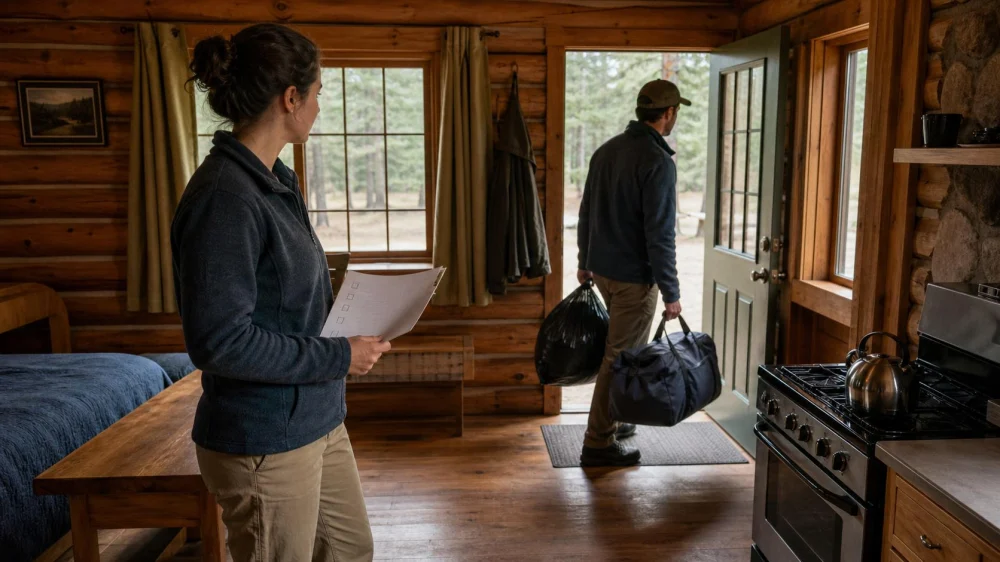
Camping Cabin Checkout: Clean Up and Leave Safely
On this page
Quick answer
For a smooth camping cabin checkout, start before the deadline and follow the property's written list. Pack food, sort trash, confirm fires and appliances are off, complete only required cleaning, photograph the final condition, and report damage promptly. Lock up and return keys exactly as instructed without leaving wildlife attractants behind.
Sunny Waters Mobile Home Park
NorwichSoutheastern Connecticut Planning RegionConnecticut
252 Old Canterbury Turnpike, Norwich, CT 06360, USA
Prepare the night before
A rushed departure makes it easy to miss medication, leave food behind, or overlook a hot appliance. Read the checkout instructions the evening before. Confirm the deadline, key-return method, trash location, linen rules, cleaning expectations, vehicle gate hours, and any inspection process.
Pack items that will not be needed overnight and place departure essentials together. Keep flashlights, weather layers, water, medication, keys, and route information accessible. If roads or weather may be difficult, check official alerts and allow extra daylight.

Murray Manor Manufactured Home Community
WilmingtonNew Castle CountyDelaware
5600 Old Capitol Trl, Wilmington, DE 19808, USA
Follow the cabin rules
Cabins vary widely. One operator may ask guests to strip beds and sweep; another may prohibit guests from handling linens or cleaning products. The booking agreement and posted instructions should control the routine.
- Do not invent chores that could damage surfaces or equipment.
- Use only approved cleaners and tools.
- Do not move heavy furniture back alone.
- Never enter locked owner, electrical, mechanical, or utility spaces.
- Ask the operator when two sets of instructions conflict.
Remove food and trash
Food scraps, grease, pet food, scented toiletries, and unsecured trash can attract wildlife. Pack out everything the operator requires and use designated waste and recycling containers. Never burn trash or leave bags beside a full bin.
- Check the refrigerator, freezer, cabinets, drawers, grill area, and porch.
- Seal trash before carrying it outside.
- Separate recycling only where the campground accepts it.
- Clean small spills with the approved method.
- Secure the waste enclosure or wildlife-resistant latch.
Follow local guidance for food you do not want. Do not leave it “for the next guest” unless the operator expressly allows that practice.
Check fire and utilities
Extinguish any permitted fire completely according to campground instructions. A fire pit should be cold before it is left unattended. Never place warm ashes in trash, and do not remove ashes unless directed.
Turn off cooking equipment, portable heaters, and approved appliances as instructed. Confirm stove controls are off. Do not close a fuel valve, reset a breaker, drain plumbing, adjust a thermostat, or unplug essential equipment unless the operator specifically requires it. If something smells like gas, avoid flames and switches, leave the area, and contact emergency services and the operator from a safe location.
Clean without creating hazards
Complete the stated cleaning tasks using ventilation and product directions. Do not mix cleaning products. Chlorine bleach combined with ammonia or acids can release dangerous gases. Keep children and pets away from supplies and wet floors.
- Wash or load dishes as instructed.
- Wipe food-preparation surfaces with approved products.
- Sweep only where requested and avoid stirring suspected rodent droppings.
- Place used towels and linens in the designated location.
- Return supplies without sealing wet cloths in an unventilated pile.
Search for belongings
Use a consistent room-by-room sweep. Check under beds, between cushions, outlets, hooks, showers, drawers, porches, fire rings, and vehicle parking areas. Look for charging cables, medication, glasses, keys, children's items, and pet gear.
One person can inspect while another checks items against the packing list. Avoid reaching blindly into dark gaps; use a flashlight and watch for sharp objects or wildlife.
Final walkthrough checklist
- All people and pets are accounted for.
- Food, trash, and scented items are removed or secured.
- Required dishes, linens, and surfaces are handled.
- Permitted fires are fully extinguished and cold.
- Appliances and utilities match checkout instructions.
- Windows and doors are closed or positioned as directed.
- Damage, leaks, pests, or maintenance concerns are documented.
- Photos show the general final condition without exposing access codes.
- Doors are locked and keys are returned by the approved method.
- The vehicle route and all passengers are ready before departure.
Report damage or problems
Accidents happen. Report a broken item, leak, appliance fault, pest evidence, or safety issue promptly. Give the cabin identifier, time, factual description, and photos when safe. Do not attempt a repair involving gas, electricity, plumbing, structures, or wildlife unless authorized and qualified.
Keep copies of messages, receipts, and final-condition photos until any deposit is resolved. If an immediate danger exists, leave the area and call emergency services before dealing with checkout administration.
Important limitations
This checklist is general guidance, not a substitute for a rental agreement, campground rules, fire restrictions, or emergency directions. Requirements differ by property and jurisdiction. Weather, wildfire, flooding, or another evacuation order may require leaving immediately without completing routine chores.
Sources and evidence notes
- National Park Service: Leave No Trace and wildlife-safe food-storage guidance for visitors.
- U.S. Forest Service: campfire safety and responsible recreation information.
- U.S. Environmental Protection Agency: household chemical safety, ventilation, and warnings against mixing cleaners.
- FEMA and local emergency agencies: evacuation and hazard guidance that takes priority over normal checkout routines.
Frequently asked questions
Should I leave unopened food for the next guest?
Only if the operator explicitly permits it. Otherwise, remove it so it does not become waste, a sanitation issue, or a wildlife attractant.
Do I need to photograph every room?
A few time-stamped overview photos may document condition, but follow the agreement and respect privacy. Never photograph or share lockbox combinations or access codes.
What if the trash enclosure is full?
Do not leave waste outside. Contact the operator for an approved alternative or pack it out securely.
Should cleaning continue during an evacuation order?
No. Follow official instructions and leave promptly. Personal safety takes priority; notify the operator when safely able.
Conclusion
A good camping cabin checkout protects guests, workers, wildlife, and the next visitors. Follow the property list, remove attractants, verify fire and appliance safety, complete only authorized cleaning, document concerns, and lock up correctly. Build in enough time that the final walkthrough is deliberate rather than rushed.



 Pines at West Penn LLC4.0 (8 reviews)
 Trails End.4.0 (191 reviews)
 monterrey5.0 (1 reviews)
 Johnny Yurts4.0 (67 reviews)
 Evergreen Springs Manufactured Home Community3.0 (17 reviews)
 Zenfulcove5.0 (43 reviews)
 Why Winter is the Best Time for a Camping Cabin Getaway
 Best Remote Camping Cabins for Stargazing and Night Adventures in the U.S.
 The 10 Must-Have Amenities for a Comfortable Stay in Your Camping Cabin
 Winter Camping Cabins: How to Stay Cozy and Warm in the Cold
 How to Create the Ultimate Outdoor Experience with a Camping Cabin
 Best Camping Cabins with Stunning Views of National Parks and Forests