
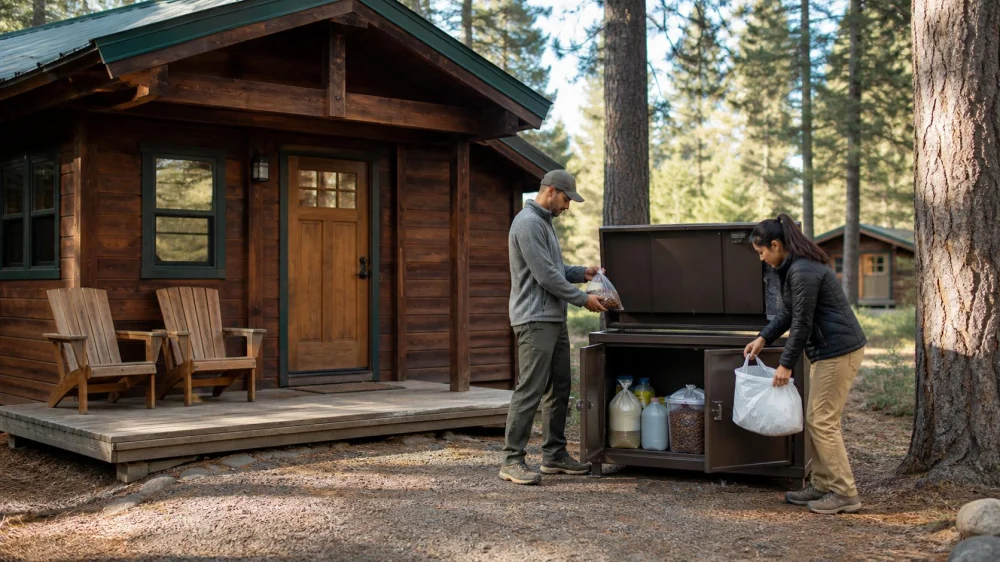
Camping Cabin Food Storage: Keep Wildlife Outside
On this page
Quick answer
At a camping cabin, store food, rubbish, pet food, toiletries, coolers, and scented gear exactly as the land manager requires. A hard-sided cabin is not automatically wildlife-resistant if windows, screens, doors, gaps, or unattended porches provide access. Use designated lockers or approved vehicle storage where directed, clean cooking areas promptly, and never feed or approach wildlife.

Why it matters
Camping-cabin food storage is the routine that keeps edible and scented items unavailable to wildlife from arrival through checkout. It protects people, animals, property, and future visitors.
This U.S. guide applies to developed cabins and campgrounds. Bear, rodent, raccoon, insect, and food-storage rules differ by park, season, and species. Posted rules and ranger instructions control.

Hillside Valley Mobile Home Community
LudlowHampden CountyMassachusetts
229 Miller St, Ludlow, MA 01056, USA
Practical checklist
- Read current food-storage and rubbish rules before packing and again at check-in.
- Confirm whether the cabin, locker, vehicle, or another approved container is required.
- Treat food, drinks, coolers, dishes, rubbish, pet supplies, toiletries, medicines, and scented products as attractants.
- Inspect doors, latches, windows, screens, vents, and gaps without attempting structural repair.
- Keep cooking and eating to permitted areas and never store food in sleeping areas when rules prohibit it.
- Clean crumbs, grease, grills, tables, and spills promptly using site procedures.
- Carry rubbish to the designated wildlife-resistant receptacle; never leave bags on a porch.
Step-by-step plan
- Ask the land manager what counts as secure. Rules may change with animal activity, and a cooler alone may not qualify.
- Assign one storage zone immediately at arrival. Move every attractant there before unpacking sleeping gear.
- Keep access closed. Latch lockers and cabin doors after every use and supervise children and guests who may leave food out.
- Separate cooking from sleeping. Use designated outdoor or kitchen areas and avoid carrying odorous cookware or snacks to beds.
- Manage pet items under the same rules. Store bowls after use and pick up waste according to campground instructions.
- Respond to wildlife without confrontation. Go indoors or create distance, alert staff, and follow local guidance rather than retrieving food.
- Complete a scent check at checkout. Inspect drawers, appliances, porch, vehicle area, and fire ring for food, grease, rubbish, or spilled toiletries.
Save the campground's current storage instructions and emergency contact. Report broken lockers, latches, screens, or wildlife activity promptly with location and time.
Limits and warning signs
A cabin wall does not make open food safe, and odour-proof bags may not meet wildlife-resistant standards. Hanging food is not allowed or effective everywhere. Wildlife can learn to open common containers and vehicles may be restricted in some locations.
Do not approach, feed, photograph closely, or attempt to scare a dangerous animal without official guidance. Enter a safe place, keep exits clear, contact rangers or campground staff, and call emergency services for an immediate threat or injury.
Frequently asked questions
Can I leave a cooler inside the cabin?
Only if current rules treat the cabin as approved storage. Some sites require lockers or other methods even for hard-sided cabins.
Do toiletries count as attractants?
Often yes. Store scented toiletries, cosmetics, medicines, and cleaning products under local rules.
Can pet food stay in a sealed bag?
Do not assume a retail bag is wildlife-resistant. Treat pet food and bowls like human food.
What if the storage locker is broken?
Keep attractants secured through another approved method and report the defect to staff immediately.
Sources and evidence
The article reflects common U.S. wildlife-safe camping practice: store all attractants in approved locations, keep access closed, clean promptly, never feed wildlife, and follow land-manager rules that respond to local species and activity.
Conclusion and next steps
Before arrival, identify the exact approved storage method and pack so all attractants move there first. Keep latches closed, clean after every meal, and report defects or wildlife activity. The goal is to prevent animals from receiving any reward.



 Bethesda park cabin #34.0 (5 reviews)
 Lil Wolf3.0 (202 reviews)
 Lakeview CT4.0 (33 reviews)
 Riverwoods Mobile Home Community3.0 (88 reviews)
 Duck Neck Campground4.0 (197 reviews)
 Chisel Branch Hiker Biker Campsite4.0 (28 reviews)
 Why Winter is the Best Time for a Camping Cabin Getaway
 Best Remote Camping Cabins for Stargazing and Night Adventures in the U.S.
 The 10 Must-Have Amenities for a Comfortable Stay in Your Camping Cabin
 Winter Camping Cabins: How to Stay Cozy and Warm in the Cold
 Best Camping Cabins with Stunning Views of National Parks and Forests
 How to Create the Ultimate Outdoor Experience with a Camping Cabin