
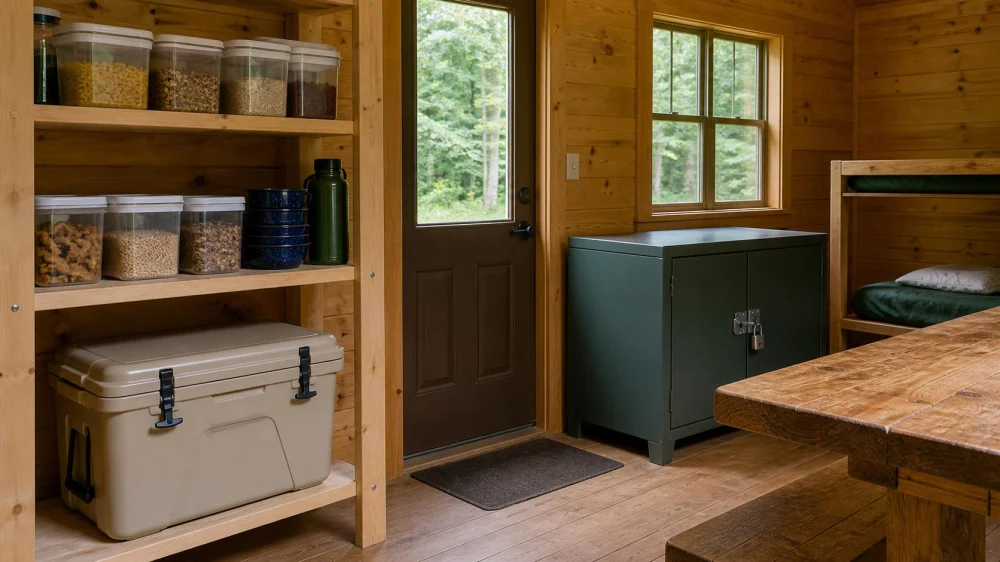
Camping Cabin Food Storage: Protect Food and Wildlife
On this page
Quick answer
At a camping cabin, treat food, trash, scented toiletries, pet food, coolers, and cooking equipment as wildlife attractants. Follow the campground's current storage rules even when the cabin has solid walls. Use any provided bear-resistant locker correctly, keep doors and windows closed, clean spills promptly, and never leave attractants on the porch or in an unattended outdoor cooking area.
The right storage location depends on the site, species, cabin design, and local rules. A locked vehicle may be acceptable in some places and prohibited or ineffective in others, especially where bears have learned to enter vehicles.
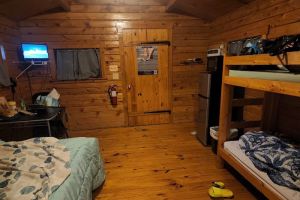
Ponderosa Campground
Middle TownshipCape May CountyNew Jersey
18 W Beaver Dam Rd, Cape May Court House, NJ 08210, USA
Check rules before arrival
- Read the campground's food-storage and wildlife notices.
- Ask whether the cabin has a refrigerator, locker, secure pantry, or no approved storage at all.
- Confirm whether coolers may remain inside the cabin or vehicle.
- Learn how trash and recycling must be secured and when disposal areas are open.
- Plan for pet food, medicines, scented toiletries, and infant supplies—not just meals.
Rules can change with wildlife activity. Recheck posted notices and instructions at check-in rather than relying on an old review or photo.

Hillcrest
MontvilleSoutheastern Connecticut Planning RegionConnecticut
3 Hillcrest Dr, Uncasville, CT 06382, USA
Store attractants at the cabin
- Unload food directly into the approved storage area.
- Latch bear-resistant lockers exactly as instructed.
- Keep a tidy inventory so nothing is forgotten in bags, bunks, or pockets.
- Place toiletries and scented wipes with other attractants when local guidance requires it.
- Supervise children and pets around storage latches and doors.
Ordinary plastic totes help organize supplies but are not automatically wildlife-resistant. A cooler on a porch is still accessible, even if its lid feels tight.
Cook and clean carefully
Use only the cooking locations and equipment the property permits. Keep the preparation area attended, collect scraps immediately, and clean grease from tables and approved appliances after they cool. Do not pour dishwater, cooking oil, or drink residue beside the cabin. Use the site's designated disposal method.
After every meal, perform a short reset: package leftovers, secure trash, wipe surfaces, inspect the floor, and return all attractants to approved storage. Do the same before sleeping or leaving for a hike.
If wildlife appears
Do not feed, approach, corner, or photograph an animal at close range. Bring people and pets to a safe location, follow species-specific instructions from the land manager, and report animals that enter structures, obtain food, or behave aggressively. Never risk close contact to retrieve a cooler or trash bag.
If an animal accessed food, tell campground staff. The incident may affect site rules and wildlife management, and damaged storage equipment may need to be taken out of service.
Checkout checklist
- Inspect the refrigerator, shelves, drawers, porch, fire ring, and vehicle area.
- Remove all food, trash, toiletries, and pet supplies.
- Dispose of waste only in designated secured containers.
- Clean permitted cooking equipment according to host instructions.
- Report damaged latches, screens, doors, or wildlife lockers.
Important limitations
This is general trip-planning information. Wildlife precautions vary across U.S. parks, forests, private campgrounds, and seasons. Always follow the property, land manager, ranger, and emergency instructions for the specific location. Do not assume a cabin makes food storage optional.
Evidence notes
The recommendations apply a common wildlife-conflict prevention approach: remove access to human food and scented attractants, reduce residue, use approved storage, and report incidents. Site-specific notices remain the controlling source because local species and recent activity determine the safest method.
FAQ
Can I keep food in the cabin refrigerator?
Only if the campground permits it and the refrigerator is in an approved, secure structure. Confirm at check-in.
Is a locked cooler wildlife-proof?
Not necessarily. Use storage equipment approved for that site.
Does unopened food count as an attractant?
Yes. Packaging does not reliably prevent animals from detecting odors.
What about toothpaste and sunscreen?
Many locations treat scented toiletries as attractants. Follow local storage guidance.
Should I burn food scraps?
No unless the land manager explicitly directs it. Use designated waste systems.
Next steps
Before booking, ask exactly what secure storage the cabin provides. Pack fewer scented items, bring containers for organization, review current wildlife notices at arrival, and make the after-meal storage reset part of the group's routine.

 Deer Brook Village4.0 (209 reviews)
 Safety Park1.0 (2 reviews)
 Whitetail Woods Camper Cabins4.0 (64 reviews)
 Bluebird Cottage5.0 (3 reviews)
 Bayside Drive-in Campground4.0 (252 reviews)
 Waterford Estates3.0 (115 reviews)
 Why Winter is the Best Time for a Camping Cabin Getaway
 Best Remote Camping Cabins for Stargazing and Night Adventures in the U.S.
 The 10 Must-Have Amenities for a Comfortable Stay in Your Camping Cabin
 Winter Camping Cabins: How to Stay Cozy and Warm in the Cold
 Best Camping Cabins with Stunning Views of National Parks and Forests
 How to Create the Ultimate Outdoor Experience with a Camping Cabin