
Camping Cabin Generator Safety: Keep Exhaust Far Outside
On this page
Quick answer
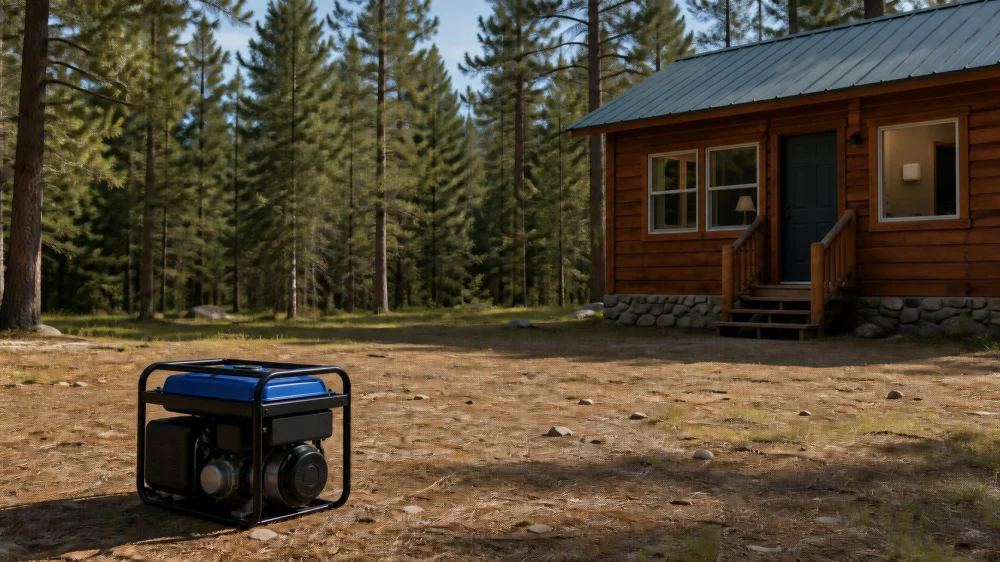
Never run a portable generator inside a camping cabin, porch, garage, carport, shed, tent, or other enclosed or partly enclosed space. CDC and CPSC say to operate it outdoors at least 20 feet from doors, windows, and vents, with exhaust pointing away from the cabin and nearby occupied buildings. Open doors and fans do not make indoor operation safe.
Use working battery-powered or battery-backup carbon monoxide alarms near sleeping areas and on each level. If an alarm sounds or anyone develops headache, dizziness, weakness, nausea, vomiting, sleepiness, or confusion, move everyone to fresh air immediately and call 911.
Hilltop Mobile Village
Pemberton TownshipBurlington CountyNew Jersey
304 Trenton Rd, Browns Mills, NJ 08015, USA
Place it at least 20 feet away
Measure from every opening, not only the nearest wall. Include windows, doors, crawl-space vents, appliance intakes, and neighbouring cabins. Point exhaust away from all structures. Wind can change, so reassess direction and never place the unit where fumes collect downhill, beneath a deck, or in a courtyard.
Set the generator on a dry, stable outdoor surface following its manual. Protect it from rain with a manufacturer-approved open-sided canopy that preserves airflow; never improvise a tight enclosure.

Use working carbon monoxide alarms
Confirm the cabin has CO alarms where required and test them using the manufacturer’s button. Bring a travel alarm as an additional safeguard, not a replacement for property equipment. Check its certification, battery, end-of-life date, and placement instructions.
Never silence or remove an alarm because cooking or equipment seems to cause it. Leave the building, call emergency services, and let professionals identify the source.
Recognize carbon monoxide symptoms
CO has no colour or smell. Early symptoms can resemble flu without fever: headache, fatigue, dizziness, nausea, and shortness of breath. Higher exposure can cause confusion, vomiting, loss of coordination, unconsciousness, and death.
Multiple people or pets feeling ill together is an important clue. Do not re-enter to retrieve belongings. Tell clinicians about generator use and possible CO exposure.
Fuel and fire safety
Turn the generator off and let it cool before refuelling. Petrol on hot engine parts can ignite. Store fuel outdoors in approved labelled containers away from the cabin, ignition sources, children, and wildlife, following site rules.
No smoking, flames, candles, or cooking equipment should be near fuel. Clean spills only as the product and site instructions direct.
Connect power safely
Never plug a generator into a wall outlet; backfeeding can electrocute utility workers and occupants. A permanent building connection requires a qualified electrician and approved transfer equipment.
For permitted portable loads, use outdoor-rated cords sized for the load, fully uncoiled, dry, undamaged, and protected from traffic. Do not exceed generator or cord ratings. Grounding requirements depend on the equipment and use; follow the manual and electrical code.
Plan for weather and neighbours
Check the cabin operator’s generator policy, quiet hours, wildfire restrictions, and fuel rules before arrival. Positioning must protect every nearby cabin, not only yours. Do not operate in flooding, lightning, or wildfire conditions unless authorities and the manual permit it.
Keep a torch, batteries, power banks, and non-electric backup plan so pressure to run the generator never overrides safety.
Generator checklist
- Confirm the site allows generators.
- Place outdoors at least 20 feet from every opening.
- Point exhaust away from all occupied structures.
- Test CO alarms near sleeping areas.
- Use rated cords and never backfeed an outlet.
- Cool before refuelling and store fuel safely.
- Leave immediately for an alarm or symptoms.
Frequently asked questions
Can I run it on a screened porch?
No. Porches are too close and may trap exhaust.
Is 20 feet enough in every wind?
It is a minimum; also point exhaust away and reassess wind and nearby openings.
Can I run it overnight?
Follow site and manufacturer rules, but never compromise placement, monitoring, fuel, or alarm safety.
Can a fan remove the fumes?
No. Fans and open windows do not make indoor generator use safe.
What if the CO alarm chirps?
Follow the alarm instructions. A full alarm requires immediate evacuation and emergency help.
Can I use a carport?
No. CPSC says generators belong outside, away from the home with exhaust facing away.
Sources and evidence notes
CDC says generators should run outdoors more than 20 feet from windows, doors, and vents, with battery-powered or backup CO detection. See CDC carbon monoxide guidance.
CPSC advises at least 20 feet from homes, exhaust facing away, and CO alarms on each level and outside sleeping areas. See CPSC CO Safety Center.
Conclusion and next steps
Keep every generator outdoors, at least 20 feet from openings, with exhaust aimed away. Test CO alarms, use rated electrical connections, cool before fuelling, and obey site rules. At any alarm or symptom, get everyone into fresh air and call 911.



 McKinney Falls State Park Campground4.0 (12 reviews)
 Mountain View Mobile Home4.0 (38 reviews)
 Cape Henlopen State Park Campground4.0 (13 reviews)
 Deep Branch Family Campground4.0 (170 reviews)
 Hidden Valley Estates3.0 (47 reviews)
 Coastal Woodland escape0.0 (0 reviews)
 Why Winter is the Best Time for a Camping Cabin Getaway
 Best Remote Camping Cabins for Stargazing and Night Adventures in the U.S.
 The 10 Must-Have Amenities for a Comfortable Stay in Your Camping Cabin
 Winter Camping Cabins: How to Stay Cozy and Warm in the Cold
 Best Camping Cabins with Stunning Views of National Parks and Forests
 How to Create the Ultimate Outdoor Experience with a Camping Cabin