
Camping Cabin Hot-Weather Plan: Ventilation, Water, and Sleep
A cabin can become much warmer than the outdoor forecast suggests, especially in direct sun or when windows provide little cross-ventilation. Planning for heat means confirming what the cabin actually provides, bringing enough drinking water, managing activity, and recognizing when discomfort is becoming illness. Electricity or a fan alone is not a complete heat plan.
Read the Forecast
Check daytime highs, overnight lows, humidity, air-quality alerts, and severe-weather chances for the exact campground area. A cool mountain morning can still lead to a hot afternoon, while humidity can make cooling by evaporation less effective. Save alerts before cell coverage disappears and identify the hottest hours when strenuous hiking or cooking should be reduced.

Wappinger Falls Manufactured Housing
Wappingers FallsDutchess CountyNew York
1 Laurenda Ln, Wappingers Falls, NY 12590, USA
Confirm Cabin Amenities
Ask whether the cabin has air conditioning, screened windows, ceiling or portable fans, potable water, refrigeration, and reliable electricity. Clarify whether outages are common and whether personal fans are allowed. “Climate controlled” can mean different things, so request specifics. Ask staff where the nearest cooled public building or emergency assistance point is located.
Assess the Cabin
On arrival, compare indoor conditions with outdoors and check that windows, screens, shades, and supplied cooling equipment work. Report a failed unit promptly rather than dismantling it. Locate exits, smoke and carbon-monoxide alarms, and electrical panels without blocking them with luggage. Never use a fuel-powered generator, grill, or vehicle to provide indoor power or cooling.
Create Safe Airflow
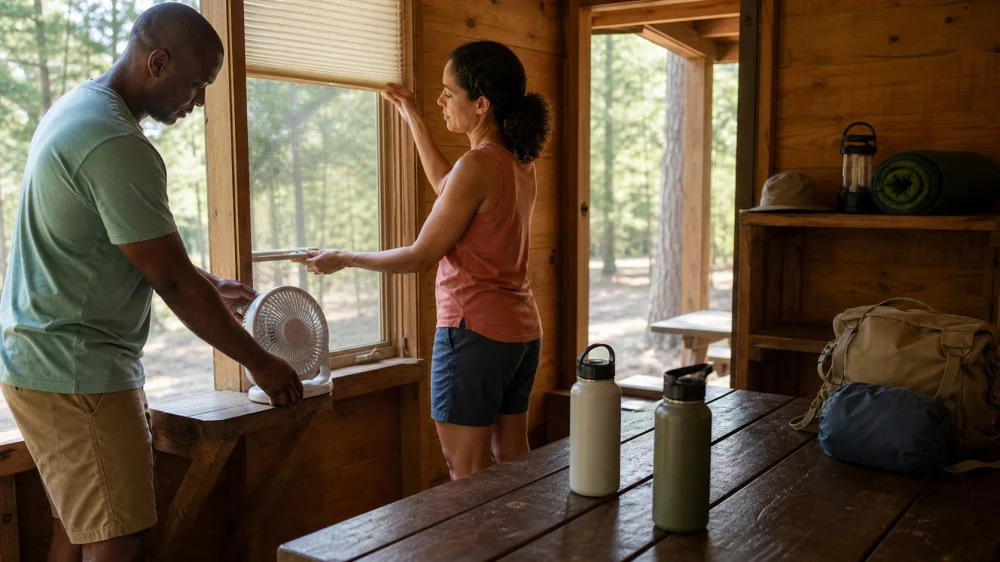
Open screened windows when outdoor air is cooler and security, smoke, pollen, and weather conditions permit. Position a fan on a stable surface with an undamaged cord, away from water and walking paths. Close shades on sun-facing windows during peak heat. Fans move air but may not prevent heat illness when temperatures are very high, so monitor conditions and people.
Plan Drinking Water
Bring a reliable supply if potable water is uncertain, plus clean refillable bottles. Drink regularly and pair longer activity with food and electrolytes when appropriate for your health needs. Alcohol can impair judgment and hydration planning. Keep water accessible at night and during travel, but do not leave containers where leaks could reach outlets, fans, or cabin floors.
Adjust Activity
Schedule hiking, setup, and outdoor chores for cooler periods. Use shade, lighter clothing, a hat, sunscreen, and frequent rest. Reduce pace when the heat index or elevation makes effort harder. A group should use the capacity of its most vulnerable member, not its fastest member. Turn back early if the route lacks water, shade, or a reliable exit.
Prepare for Sleep
Use breathable sleepwear and bedding suited to the actual overnight low. Avoid placing a mattress directly against a heater, fan, window exit, or damp wall. Check that children cannot reach cords or tip equipment. If the cabin remains dangerously hot after sunset, do not assume everyone will adapt; move to the established cooler backup location.
Protect Higher-Risk Guests
Older adults, infants, pregnant people, those with certain medical conditions, and people taking some medicines may be more vulnerable to heat. Ask a clinician about individual risks before travel when needed. Check on companions regularly, because confusion can prevent self-reporting. Pets also need water, shade, ventilation, and veterinary-appropriate planning; never leave them in a parked vehicle.
Recognize Heat Illness
Headache, dizziness, weakness, nausea, heavy sweating, cramps, or unusual fatigue can indicate heat exhaustion. Stop activity, move to a cooler place, loosen excess clothing, cool the person, and seek medical guidance. Confusion, collapse, seizure, or very high body temperature can signal heat stroke. Call emergency services immediately and begin rapid cooling while help is coming.
Use a Backup Plan
Set a clear threshold for leaving: failed cooling equipment, an unsafe indoor temperature, worsening symptoms, wildfire smoke, power loss, or no safe water. Know the route to a cooled building, vehicle, hotel, or home and keep enough fuel or charge available. Tell campground staff when leaving unexpectedly so they do not start an unnecessary search.
Make the plan visible to the entire group. Put drinking water, keys, charged phones, medications, and the campground contact in consistent places. Agree on regular check-in times and on who will evaluate children, older adults, and pets. A small thermometer can help track the cabin trend, but personal symptoms matter more than a single reading. Reassess after a power interruption, a change in wind, or an afternoon activity. Do not wait for every traveler to feel ill before using the backup. Moving early is usually easier than packing in darkness, severe weather, or a medical emergency.
A hot-weather cabin stay is safer when the plan does not depend on one fan or optimistic forecast. Verify the amenities, manage sun and airflow, drink consistently, slow down, watch vulnerable guests, and leave early when conditions exceed what the cabin can safely support.
 Bayshore Campgrounds4.0 (289 reviews)
 Tall Pines Campground Resort4.0 (484 reviews)
 Safety Park1.0 (2 reviews)
 Coastal Woodland escape0.0 (0 reviews)
 Apple Valley Village4.0 (15 reviews)
 Pleasant Valley Family Campground4.0 (134 reviews)
 Why Winter is the Best Time for a Camping Cabin Getaway
 Best Remote Camping Cabins for Stargazing and Night Adventures in the U.S.
 The 10 Must-Have Amenities for a Comfortable Stay in Your Camping Cabin
 Winter Camping Cabins: How to Stay Cozy and Warm in the Cold
 How to Create the Ultimate Outdoor Experience with a Camping Cabin
 Best Camping Cabins with Stunning Views of National Parks and Forests