
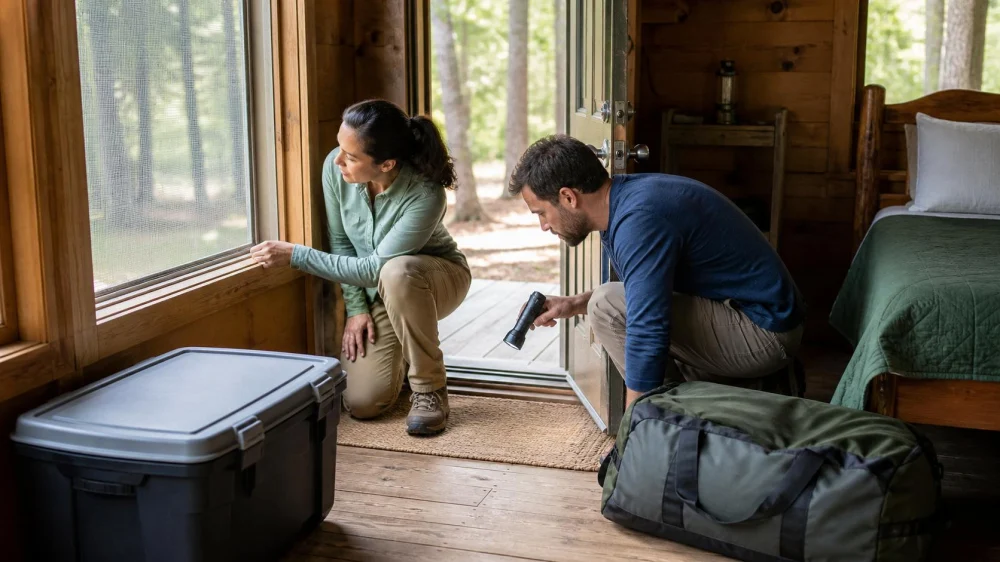
Camping Cabin Insect Prevention: Check Screens and Store Gear
A camping cabin offers more protection than a tent, but open doors, torn screens, damp gear, and food crumbs can still invite insects indoors. A practical prevention plan starts with inspection and housekeeping, not indiscriminate pesticide use. The goal is to reduce entry points, remove attractants, and know when a problem belongs to the campground staff.
Check Before the Trip
Ask whether the cabin has intact window screens, a closing screen door, air conditioning, and rules about insect sprays or plug-in devices. Pack a flashlight, sealable bags, a small lint roller, approved personal repellent, and any allergy medicines recommended for you. Do not assume that every product is safe around children, pets, asthma, or food-preparation areas.
Watch Hill Fire Island Campground & Safari Tent Glamping
PatchogueSuffolk CountyNew York
Fire Island National Seashore, Burma Rd, Patchogue, NY 11772, USA
Inspect on Arrival
Before unpacking, use a flashlight around windows, door frames, mattress seams, curtains, and under furniture. Look for live insects, clusters, shed skins, staining, nests, or many dead insects in one place. A stray moth is different from a persistent infestation. Photograph a concerning condition and contact staff before moving belongings throughout the cabin.

Check Screens and Gaps
Close each window and door to see whether screens sit securely and latches work. Do not permanently alter the cabin or stuff flammable material near heaters. For a small gap, ask staff for an approved temporary fix. Keep doors closed, especially around dusk, and teach everyone to enter and exit promptly instead of holding a lit doorway open.
Control Food and Trash
Store food, sweet drinks, pet food, and scented toiletries in closed containers. Wipe counters after cooking, sweep crumbs without scattering them into wall gaps, and take trash to the designated animal-resistant receptacle. Follow campground food-storage rules because the same habits that discourage ants and flies also reduce wildlife conflicts. Never leave sticky cans beside the bed overnight.
Manage Clothing and Gear
Keep damp boots, towels, and outdoor gear together on an easy-to-clean surface rather than across beds. Shake outerwear outdoors when appropriate, but do not disturb a visible nest. Use a closed laundry bag for worn clothing. If pets are permitted, inspect them for ticks according to veterinary guidance and keep their bedding and bowls clean.
Use Light Thoughtfully
Bright light near an open window or door can attract flying insects. Close screens before switching on interior lights, use curtains after dark, and choose a designated exterior light only when needed for safe walking. Do not disable required safety lighting. If insects gather around an entrance, use another approved entrance or ask staff about safe management.
Choose Repellents Carefully
Use personal insect repellent exactly as its label directs, including age, application, ventilation, and washing instructions. Apply it away from food and avoid eyes, hands of young children, cuts, and irritated skin. Do not spray a cabin, mattress, or wildlife with a product not labeled for that use. Mixing products or applying extra does not make protection safer.
Respond to Bites
Move away from the insect, wash the area, and use basic first aid appropriate to the bite or sting. Seek emergency help for trouble breathing, swelling of the face or throat, faintness, or other signs of a severe allergic reaction. For an attached tick, follow current public-health removal guidance and note where and when exposure occurred.
Report a Larger Problem
Contact campground staff if you find a nest, repeated bites indoors, bedbug-like evidence, unsafe pesticide residue, or a screen that cannot close. Keep children and pets away, document the location, and ask about relocation or professional treatment. Do not crush unknown insects on bedding or attempt to remove a hive, wasp nest, or large colony yourself.
Leave Without Hitchhikers
At checkout, inspect luggage seams and shake gear outdoors where permitted. Seal suspicious items in a bag and ask staff what they recommend. At home, unpack in a controlled area, wash and dry clothing as care labels allow, and clean storage bins. A calm final check helps prevent an isolated cabin encounter from becoming a household problem.
Assign simple roles when traveling with a group. One adult can inspect screens and sleeping areas while another places food and trash supplies in their designated locations. Keep the flashlight and sealed bags where everyone can find them, and tell children not to touch nests or unfamiliar insects. Record the campground office number and after-hours contact before losing reception. If anyone has a history of severe allergy, confirm that their prescribed emergency medicine is current, accessible, and understood by a companion. Prevention works best when the whole group follows the same routine rather than leaving doors, snacks, and damp gear to individual habits.
Good cabin insect prevention is mostly simple: confirm the setup, inspect before unpacking, keep screens closed, control food and damp gear, and escalate genuine infestations. Those habits protect comfort without creating new risks from unapproved chemicals or unsafe do-it-yourself treatment.




 Bayshore Campgrounds4.0 (289 reviews)
 Tall Pines Campground Resort4.0 (484 reviews)
 Safety Park1.0 (2 reviews)
 Coastal Woodland escape0.0 (0 reviews)
 Apple Valley Village4.0 (15 reviews)
 Pleasant Valley Family Campground4.0 (134 reviews)
 Why Winter is the Best Time for a Camping Cabin Getaway
 Best Remote Camping Cabins for Stargazing and Night Adventures in the U.S.
 The 10 Must-Have Amenities for a Comfortable Stay in Your Camping Cabin
 Winter Camping Cabins: How to Stay Cozy and Warm in the Cold
 How to Create the Ultimate Outdoor Experience with a Camping Cabin
 Best Camping Cabins with Stunning Views of National Parks and Forests