
Camping Cabin Pest Check: Food, Bedding, and Reporting
On this page
- Quick answer
- Inspect before spreading out
- Check bedding and the sleeping area
- Inspect food storage and water areas
- Notice entry points without making repairs
- Protect luggage, food, and pets
- Avoid improvised pest treatment
- Document and report concerns promptly
- Know when to request relocation
- Limits and important notes
- Frequently asked questions
- Sources and evidence notes
- Conclusion and next steps
Quick answer
On arrival, inspect a camping cabin without unpacking everything: look around mattresses, bedding, corners, cupboards, food areas, and entry gaps for live insects, droppings, gnawing, nesting, stains, or unusual odour. Keep food sealed, luggage off beds and floors, and pets away from evidence. Do not spray unknown pesticides. Photograph findings, contact the host promptly, and relocate if infestation, bites, contamination, or unsafe treatment cannot be resolved.
Inspect before spreading out
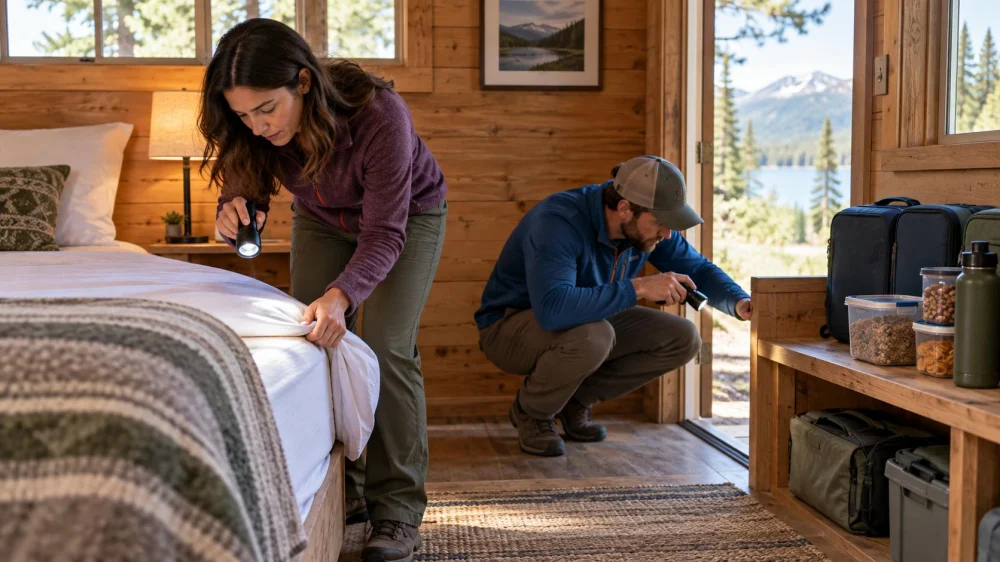
Leave bags closed and place them on a hard luggage rack, bench, or other raised surface away from beds and walls. Use a flashlight and spend a few calm minutes checking sleeping and food areas before making beds or opening groceries.
Cabins naturally connect with the outdoors, so one harmless insect does not always mean an infestation. Look for patterns, multiple signs, contamination, structural entry points, or activity that affects safe use.
Check bedding and the sleeping area
- Look at mattress seams, labels, piping, bed-frame joints, headboard edges, and nearby cracks.
- Check sheets and protectors for unexplained dark spots, shed material, or live insects without dismantling furniture.
- Inspect loft ladders, bunks, cushions, and upholstered chairs with the same care.
- Do not place luggage, clothing, or blankets on a bed until the check is complete.
- If you find a concerning sign, stop and photograph it in place rather than carrying it through the cabin.
Inspect food storage and water areas
Check cupboards, drawers, counters, the refrigerator surround, rubbish area, plumbing gaps, and floor edges for droppings, gnaw marks, nesting material, damaged packages, or unusual odour. Do not sweep or vacuum suspect rodent waste, because that can disturb contaminated dust.
Keep all food, pet food, rubbish, and scented items in sturdy closed containers according to campground wildlife rules. Clean crumbs promptly and never feed animals near the cabin.
Notice entry points without making repairs
Look for gaps below doors, torn screens, open vents, damaged weather stripping, holes around pipes, and branches touching the structure. Close ordinary doors and windows, but do not seal, trap, block, or dismantle anything without the host's permission.
Tell the host where the opening is and whether you saw active animals. Some species are protected, and nests, bats, bees, or wildlife may require trained removal rather than guest action.
Protect luggage, food, and pets
- Keep suitcases zipped and elevated.
- Store clean and worn clothing in separate sealed bags.
- Use approved food lockers or hard containers where wildlife rules require them.
- Keep pet bowls clean, food sealed, and animals away from droppings, traps, nests, and dead wildlife.
- Inspect outdoor gear before bringing it inside.
- At departure, check bags and clothing again before loading the vehicle.
Avoid improvised pest treatment
Do not use foggers, powders, essential oils, household sprays, poison, or traps unless the property operator specifically authorizes and manages them. A product can create inhalation, fire, skin, pet, wildlife, food, and surface-contamination risks while scattering pests rather than solving the problem.
Do not handle live or dead wildlife with bare hands. For a bite, sting, exposure, or suspected disease risk, wash as appropriate and contact a medical professional, poison service, or emergency service based on symptoms.
Document and report concerns promptly
Take clear photos or short video of the sign, its location, and the wider room. Note the time, where luggage and food were placed, any bites or damaged packages, and who was contacted. Avoid posting identifying accusations before the operator has a chance to inspect.
Ask the host for a qualified assessment, safe cleanup, another unit, or cancellation options. Keep communications and receipts. If the host proposes treatment while you remain inside, ask what product or method will be used and what re-entry instructions apply.
Know when to request relocation
Request another cabin or leave when there is an active or widespread infestation, contaminated sleeping or food surfaces, aggressive wildlife, repeated bites, unsafe pesticide use, strong unexplained odour, or a risk that cannot be isolated. People with severe allergies, asthma, immune concerns, small children, or pets may need a lower threshold.
Do not move directly into another unit with open bags if bed bugs or similar hitchhiking pests are suspected. Ask the operator for a containment plan first.
Limits and important notes
A visual guest check cannot identify every species or rule out hidden pests. Bites and skin marks have many possible causes, and online photographs are not a reliable diagnosis. Qualified pest, wildlife, and medical professionals should assess uncertain or serious situations.
Cleaning rules differ by pest and material. Follow public-health guidance and the operator's professional response rather than improvising with chemicals or dry cleanup.
Frequently asked questions
Does one insect mean we must leave?
Not necessarily. Consider the species, number, location, property condition, and whether the host can identify and resolve the issue safely. Avoid handling an unknown insect.
Should we move our bags outside?
Keep them closed and isolated on a hard, raised surface while you contact the host. Moving bags through rooms or into a vehicle can spread a hitchhiking pest.
What should we do after returning home?
If a hitchhiking pest was suspected, keep luggage isolated and follow qualified guidance for inspection, laundering, drying, or treatment before storing it. Do not bring untreated items onto beds or upholstered furniture.
Sources and evidence notes
This article uses general US lodging, food storage, bed bug, rodent-waste, wildlife, and pesticide-safety principles. The property rules, local public-health agency, park or campground staff, licensed pest professional, wildlife authority, poison service, and clinician govern a specific event.
Conclusion and next steps
Pack sealable bags, a flashlight, sturdy food containers, and the host's contact details. Inspect before unpacking, keep sleeping and food areas orderly, and report evidence without disturbing it. A quick documented response protects guests, the property, and the next visitors better than an improvised spray.


 Round Top Campground4.0 (484 reviews)
 Sunrise Trailer Court Inc4.0 (45 reviews)
 Country Acres Manufactured Home Village4.0 (41 reviews)
 Penn View Mobile Home Park3.0 (53 reviews)
 Urban Acres4.0 (18 reviews)
 Valley View Tuckerton Mobile Home Park3.0 (40 reviews)
 Why Winter is the Best Time for a Camping Cabin Getaway
 Best Remote Camping Cabins for Stargazing and Night Adventures in the U.S.
 The 10 Must-Have Amenities for a Comfortable Stay in Your Camping Cabin
 Winter Camping Cabins: How to Stay Cozy and Warm in the Cold
 Best Camping Cabins with Stunning Views of National Parks and Forests
 How to Create the Ultimate Outdoor Experience with a Camping Cabin