
Camping Cabin Pet Policy: Verify Fees, Limits, and Cleanup
On this page
A “pet-friendly” camping cabin does not automatically welcome every animal under every condition. The property may limit species, number, size, or breed; require pets to remain leashed; prohibit them from beds; or charge fees that are separate from the nightly rate. Rules for the cabin can also differ from rules on nearby trails, beaches, or public lands.
Confirming the complete policy before booking protects the reservation and helps you decide whether the setting truly fits your pet. This guide covers the practical details—from fees and unattended-pet rules to wildlife safety and checkout—so the trip begins with clear expectations.
Confirm the exact cabin policy
Read the current listing and the property's full terms, then contact the host or campground with the exact cabin, dates, and pet details. A business may have both pet-friendly and pet-free units, or only certain buildings may accept animals. Do not assume a search filter overrides the individual unit description.
Request written confirmation through the booking channel. Ask whether approval must be added to the reservation and what happens if the assigned unit changes. Save the reply, fee schedule, cancellation terms, and any rules provided after booking.

Hospitality Creek Campground
MonroeGloucester CountyNew Jersey
3606 Old Black Horse Pike, Williamstown, NJ 08094, USA
Ask what pet-friendly means
State the species, number, approximate size, age, and any accommodation need relevant to the stay. Ask about limits and prohibited areas without trying to hide a pet that might not qualify. A host needs accurate information to assign an appropriate space and explain restrictions.
Confirm rules for furniture, beds, crates, bathing, shared indoor areas, decks, yards, and waste. Ask whether pets can ever be left alone and whether a crate changes that rule. If the property refers to service animals, seek its current procedure and applicable official guidance rather than treating an assistance animal as an ordinary pet.
Calculate fees and deposits
A pet charge may be per animal, per night, per stay, or per cabin. It may be taxable and may not appear in the initial search price. Ask whether there is also a refundable deposit, cleaning fee, damage authorization, or penalty for an undeclared pet.
Understand what the standard charge covers and what could lead to an additional assessment, such as damaged screens, excessive hair, stains, odors, or uncollected waste. Photograph the cabin at arrival and report existing damage promptly. A fee is not permission to ignore cleanup or supervision rules.
Check property and trail rules
Ask where pets may walk, toilet, swim, or wait during check-in. Confirm lead length, enclosed-dog-area rules, quiet hours, and restrictions around playgrounds, food-service areas, wildlife habitats, or other cabins. A fenced-looking space is not necessarily designated or escape-proof.
Research every planned destination separately. National, state, county, municipal, and private lands can have different pet rules, seasonal closures, leash requirements, and trail restrictions. Verify current information with the managing authority, including whether shuttle vehicles or boat services accept animals.
Prepare health and identification
Make sure identification and microchip contact details are current. Carry a recent photo and a secure tag with a reachable phone number. Bring any records the property specifically requires, and ask your veterinarian well before travel about preventive care appropriate to the destination and your individual pet.
Locate routine and emergency veterinary services near the cabin, noting that rural coverage and operating hours can vary. Keep prescribed medicines in original labeled packaging and bring enough for the stay plus a reasonable delay. Never start a new sedative, parasite product, or human medicine without veterinary guidance.
Pack for the cabin
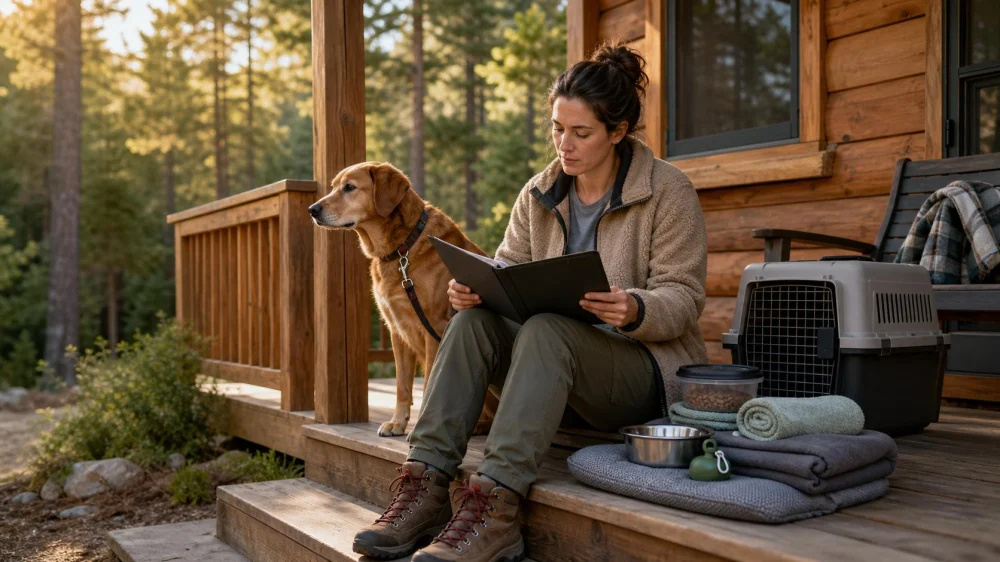
Bring the pet's regular food, water bowls, bedding, secure lead or harness, carrier or crate, waste bags, towels, cleaning supplies approved by the property, and familiar enrichment. A washable cover can help protect an allowed furniture area, but it does not override a no-furniture rule.
Pack for weather and terrain without overloading the animal. Include a light for evening walks and a physical map or downloaded directions where coverage is weak. Store food, treats, medicines, and scented supplies in wildlife-resistant facilities as directed; a cabin is not automatically secure from rodents or larger animals.
Arrive and inspect safely
Keep the pet secured while unloading. Before allowing free movement inside, check doors, screens, windows, deck rails, gaps, dropped food, cleaning chemicals, pest-control products, sharp objects, and accessible trash. Photograph existing stains or damage and report urgent hazards.
Identify the safest toilet route and check the ground for broken glass, hooks, toxic plants, wildlife, or hot surfaces. Show the pet one room at a time and maintain its normal routine where possible. Never tie an animal unattended to a porch, tree, vehicle, or unfamiliar fixture.
Manage noise and alone time
A dog that is calm at home may bark in a cabin with unfamiliar sounds and smells. Plan activities that allow the pet to accompany you where permitted. If the host prohibits unattended animals, follow the rule even for a short meal or shower-house visit.
If alone time is allowed, consider temperature, ventilation, escape risk, noise, and the animal's established behavior. A crate is useful only for a pet already comfortable in it and when property rules allow it. Do not rely on a camera as a substitute for supervision or leave an animal in a parked vehicle.
Protect wildlife and neighbors
Keep the pet under reliable physical control where required and never allow chasing, approaching, or feeding wildlife. Carry waste bags on every outing and dispose of them in the designated bin; leaving a filled bag beside a trail is still littering.
Respect other guests who may be afraid, allergic, resting, or traveling with reactive animals. Do not allow greetings without consent. During quiet hours, reduce door activity, play, and barking triggers, and contact the property if the environment is making safe management impossible.
Clean up before checkout
Follow the written checkout list. Collect waste around the cabin, remove pet hair with the approved tools, clean bowls and mats, check under furniture for toys or food, and bag soiled items separately. Do not use an unfamiliar chemical that could damage finishes or expose the next guest.
Inspect screens, doors, floors, bedding, yard areas, and furniture, then report accidental damage honestly. Take time-stamped departure photos if appropriate and keep the final receipt. Leave enough time to clean without missing checkout or rushing the pet into a hot vehicle.
Pet-friendly cabin checklist
- Confirm the exact unit accepts the specific pet and dates.
- Save written limits, fees, deposits, and cancellation terms.
- Check furniture, crate, unattended-pet, and quiet-hour rules.
- Verify pet access for every trail and planned activity.
- Update identification and prepare veterinary contacts.
- Pack regular supplies, secure gear, towels, and waste bags.
- Inspect and photograph the cabin before settling in.
- Store food and scented items according to wildlife guidance.
- Supervise around neighbors, vehicles, water, and wildlife.
- Clean thoroughly and report any damage before checkout.
A pet-friendly camping cabin is a good match only when the written rules, location, and animal's needs align. Verify the booking, budget for every fee, bring familiar equipment, and manage the pet respectfully throughout the stay. Clear planning protects the property, wildlife, neighboring guests, and the pet you brought along.

 Ocean Isle Campground4.0 (102 reviews)
 Hillside Valley Mobile Home Community3.0 (28 reviews)
 Skipper's Point Campground3.0 (19 reviews)
 Heckscher State Park Campground4.0 (56 reviews)
 The Hornets Nest5.0 (2 reviews)
 Friendly Mobile Park3.0 (8 reviews)
 Why Winter is the Best Time for a Camping Cabin Getaway
 Best Remote Camping Cabins for Stargazing and Night Adventures in the U.S.
 The 10 Must-Have Amenities for a Comfortable Stay in Your Camping Cabin
 Winter Camping Cabins: How to Stay Cozy and Warm in the Cold
 Best Camping Cabins with Stunning Views of National Parks and Forests
 How to Create the Ultimate Outdoor Experience with a Camping Cabin