
Camping Cabin Severe Weather: Alerts, Shelter, and Evacuation
On this page
Quick answer
A camping cabin is not automatically safe in severe weather. Before arrival, check local hazards, forecasts, alerts, road closures, and the property’s shelter and evacuation plan. On site, identify a sturdy nearby shelter, lowest interior windowless area, communication backup, and two exit routes. Follow official warnings and hosts, move early when told, and never enter floodwater or shelter beneath tall isolated trees.

Before the trip
Check the National Weather Service, local emergency management, park or campground notices, and road conditions. Ask the host whether the cabin is designed for storms, where the nearest designated shelter is, how guests are warned, and what happens if access roads close.
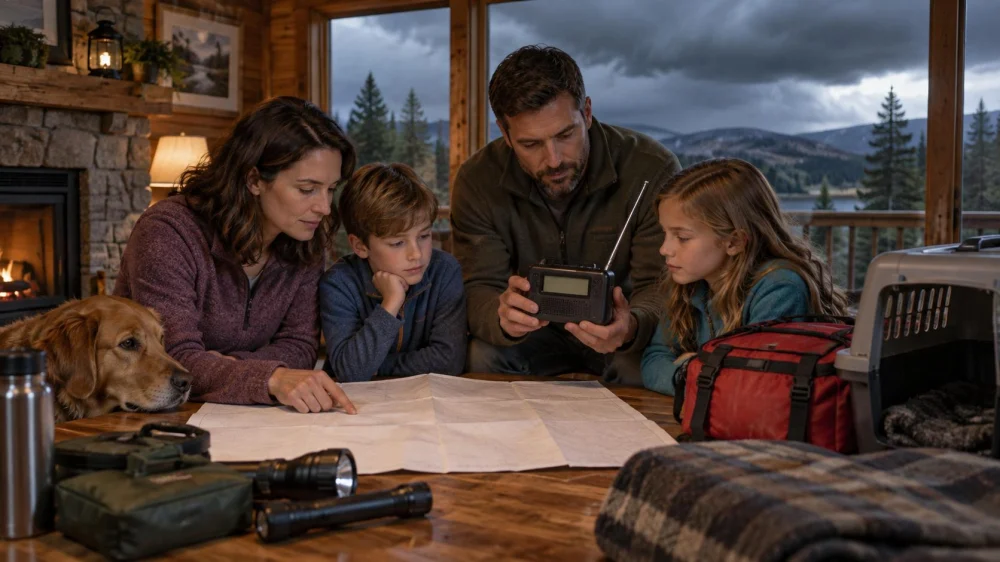
Pack charged phones, backup power, weather radio, flashlights, water, medicines, sturdy shoes, warm layers, and a paper map. Share the address, cabin number, route, vehicle, and return time with an off-site contact.

At arrival
- Save the exact street or site address and coordinates.
- Walk the route to the stated shelter in daylight.
- Identify two vehicle and foot exit routes, noting bridges and low crossings.
- Check mobile signal and the host's after-hours contact.
- Bring pets indoors and keep carriers or leashes ready.
- Move loose outdoor items before a warning, if safe.
Do not assume a sleeping loft, porch, vehicle, tent, or small detached shed is the safest option.
Understand alerts
A watch generally means conditions are possible; a warning means danger is occurring or imminent and action is needed. Enable local wireless alerts and use more than one source because remote locations can lose mobile service. Follow the most current official instruction rather than a social-media repost.
If thunder is heard, move indoors to a sturdy building or a hard-topped vehicle as directed. Suspend water, ridge, tree, and open-field activities before the storm reaches the site.
Choose safer shelter
For a tornado warning, use a designated shelter or sturdy building, going to a small interior windowless room on the lowest level and protecting head and neck. Stay away from windows, exterior walls, doors, and wide-span rooms. A cabin with large windows or weak construction may require moving earlier to another building.
For flooding, move to higher ground and never walk or drive through moving water. For wildfire, hurricane, or winter storms, follow hazard-specific orders and local routes; the best action can be evacuation rather than sheltering.
Evacuate when directed
Leave promptly when officials or the property direct it. Take people, pets, medicines, identification, essential supplies, and only gear that is ready. Do not delay to pack, photograph weather, or protect property. Tell the host and off-site contact where you are going when communications allow.
Never drive around barricades, across flooded roads, or into smoke. If the planned route is blocked, use official updates and emergency services rather than improvising a back road.
After the storm
Wait for official clearance. Watch for fallen trees and power lines, unstable structures, broken glass, gas odour, contaminated water, and washed-out roads. Photograph damage from a safe place, report it to the host, and do not reconnect utilities or enter a damaged cabin until authorised.
Frequently asked questions
Is a car safe in a thunderstorm?
A hard-topped vehicle may provide safer shelter when no sturdy building is available; avoid touching metal and follow official guidance.
Should I open windows for a tornado?
No. Go to shelter immediately rather than spending time on windows.
Can I wait for visual confirmation?
No. Act on official warnings; storms may be hidden by darkness, trees, or rain.
What if the cabin has no cellar?
Ask about a designated nearby shelter before the trip and move early enough to reach it safely.
Sources and notes
Ready.gov's FEMA app guide describes real-time National Weather Service alerts and shelter information. Its alerts and warnings guide advises immediate shelter for tornado warnings in a sturdy building or small interior windowless room on the lowest level.
Next steps
Check hazards and forecasts, confirm the property's shelter and evacuation plan, pack redundant alerts and power, and walk routes on arrival. Act immediately on warnings or evacuation orders and wait for clearance before returning to a damaged area.



 Round Top Campground4.0 (484 reviews)
 Sunrise Trailer Court Inc4.0 (45 reviews)
 Country Acres Manufactured Home Village4.0 (41 reviews)
 Penn View Mobile Home Park3.0 (53 reviews)
 Urban Acres4.0 (18 reviews)
 Valley View Tuckerton Mobile Home Park3.0 (40 reviews)
 Why Winter is the Best Time for a Camping Cabin Getaway
 Best Remote Camping Cabins for Stargazing and Night Adventures in the U.S.
 The 10 Must-Have Amenities for a Comfortable Stay in Your Camping Cabin
 Winter Camping Cabins: How to Stay Cozy and Warm in the Cold
 Best Camping Cabins with Stunning Views of National Parks and Forests
 How to Create the Ultimate Outdoor Experience with a Camping Cabin