
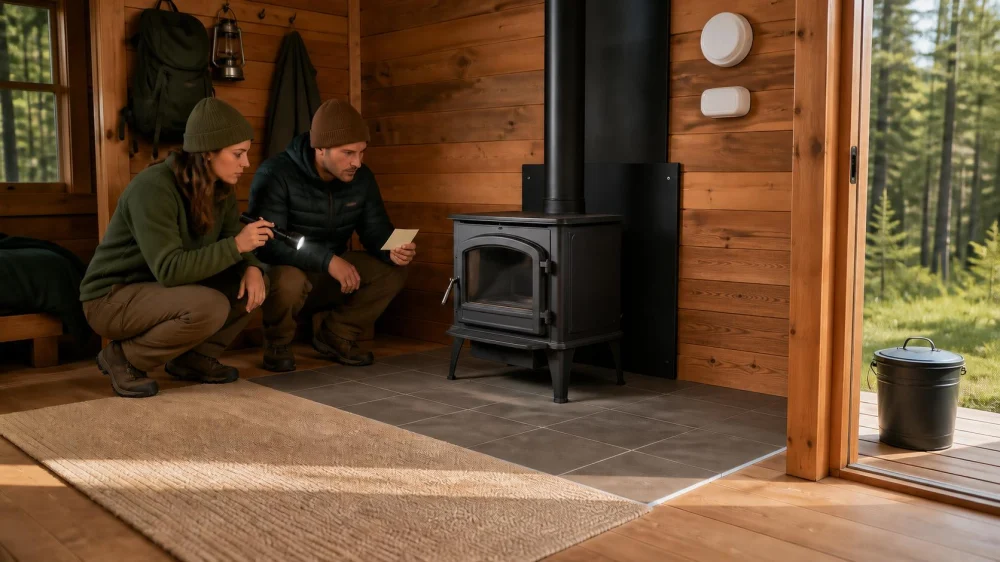
Camping Cabin Wood Stove: Check It Before Lighting
On this page
- Quick answer
- Confirm that use is allowed
- Inspect from a safe distance
- Clear the three-foot zone
- Light only approved fuel
- Stay awake and monitor
- Cool and store ashes safely
- Respond to smoke, fire, or carbon monoxide
- Limitations and important notes
- Sources and evidence notes
- Frequently asked questions
- Next steps
Quick answer
Use a cabin wood stove only when the host allows it, fire restrictions permit it, and instructions are available. Confirm chimney maintenance, working smoke and carbon-monoxide alarms, an undamaged stove and flue, a clear three-foot zone, approved dry fuel, and a metal ash container. Never burn rubbish or use liquid accelerant, leave the fire unattended, or sleep before it is fully out. Exit immediately for an alarm, smoke leak, chimney fire, or carbon-monoxide symptoms.

Spacious Skies Campgrounds - Country Oaks
WeymouthAtlantic CountyNew Jersey
13 S Jersey Ave, Dorothy, NJ 08317, USA
Confirm that use is allowed
A stove installed in the cabin is not automatically available for guest use. Ask the host or ranger whether it is operational, when it was inspected, which fuel is supplied, and who to call with a problem.
Check current fire restrictions at arrival. A restriction may prohibit wood or charcoal even when a fire ring or stove exists. Historic or backcountry cabins may have site-specific limits on collecting wood, transporting firewood, and disposing of ashes.
If instructions are absent, the chimney has not been maintained, alarms are missing, or the stove is tagged out, do not light it. Use another approved heat source or accommodation.

Tucquan Park Family Campground
HoltwoodLancaster CountyPennsylvania
917 River Rd, Holtwood, PA 17532, USA
Inspect from a safe distance
Before loading fuel, look for a cracked door or glass, loose hinges, damaged latch, missing firebrick, corrosion holes, separated stovepipe joints, dark staining around seams, debris in the flue, or signs of a prior smoke leak.
Check that stovepipe sections are secure and that the chimney cap and exterior area appear intact from the ground. Do not climb on the roof or dismantle a pipe.
Press the test buttons on smoke and carbon-monoxide alarms according to their instructions. A successful button test does not replace current batteries, correct placement, or proper stove maintenance.
Clear the three-foot zone
U.S. Fire Administration guidance says to keep anything that can burn at least three feet from fireplaces, wood stoves, and other heat sources.
Move bedding, coats, boots, towels, firewood, chairs, rubbish, pet beds, chargers, and children’s items outside that zone. Keep the route to the exit clear.
Use the installed hearth and heat shields as designed. Do not hang wet clothing above the stove or lean wood against it. Keep children and pets behind a stable boundary and supervise continuously.
Light only approved fuel
Use only the fuel and fire-starting method in the cabin instructions. U.S. Fire Administration guidance says not to burn paper, rubbish, or liquid fuel and to use only the intended wood or pellets.
Do not use gasoline, camp fuel, alcohol, aerosol spray, or an accelerant. Do not burn treated, painted, glued, or wet wood, packaging, plastics, or food waste.
Open and adjust dampers only as instructed. Keep the stove door closed and latched during operation unless the instructions require brief tending. Do not overfill the firebox.
Stay awake and monitor
A capable adult should remain awake and present. Watch for smoke entering the room, an unusually roaring chimney, glowing stovepipe, sparks from the chimney, cracking sounds, or an alarm.
Ventilation openings required by the stove or cabin must remain unobstructed. Do not use a kitchen exhaust fan or another appliance if instructions warn it could reverse chimney draft.
Never use an oven, charcoal grill, or outdoor heater to warm the cabin. Combustion devices can create fire and carbon-monoxide hazards.
Cool and store ashes safely
Put the fire fully out before sleeping or leaving. Follow the cabin procedure; do not pour water into a hot stove unless directed, because steam and thermal shock can cause injury or damage.
Handle ashes only with the provided metal tools. Place them in a metal container with a tight-fitting lid, then store that container outside on a non-combustible surface away from the cabin and anything that can burn. U.S. Fire Administration materials specify at least 10 feet from the home.
Coals can remain hot beneath grey ash. Never put ashes in a plastic bin, paper bag, cardboard box, porch container, or woodland. Follow the site’s disposal rules.
Respond to smoke, fire, or carbon monoxide
For a smoke or carbon-monoxide alarm, visible fire outside the stove, a chimney fire, or smoke filling the cabin, get everyone outside, move to the meeting point, and call 911. Do not re-enter or climb onto the roof.
Possible carbon-monoxide symptoms include headache, dizziness, weakness, nausea, vomiting, chest pain, or confusion. Move to fresh air and seek emergency help; do not assume sleep will fix it.
Use a fire extinguisher only if trained, the fire is small and contained, everyone else is out, emergency services have been called, and a safe exit remains behind you.
Limitations and important notes
Stove designs, fuel, draft controls, chimney systems, altitude, and cabin rules vary. This guide cannot approve a specific installation or replace the manufacturer’s and land manager’s instructions.
People with heart or lung disease, pregnancy, children, and older adults may be more vulnerable to smoke and carbon monoxide. Choose another heating option if safe use is uncertain.
Sources and evidence notes
U.S. Fire Administration guidance recommends annual professional inspection and chimney cleaning, a three-foot clearance, approved fuel only, extinguishing before sleep or departure, and cooling ashes in a lidded metal container outside.
- U.S. Fire Administration: Heating Fire Safety
- U.S. Fire Administration: Fireplace and Wood Stove Safety
Frequently asked questions
Can I use the stove if no instructions are posted?
No. Contact the host or land manager and use another approved heat source until safe operation is confirmed.
Can I burn cardboard to start it?
Use only the approved fuel and starter specified by the instructions. Do not burn rubbish or packaging.
How far should gear be from the stove?
U.S. Fire Administration guidance uses a minimum three-foot zone for anything that can burn.
Can ashes go in the cabin bin?
No. Use the designated lidded metal container outside on a non-combustible surface away from the structure.
What if the carbon-monoxide alarm sounds?
Get everyone outside to fresh air and call emergency services. Do not re-enter until authorities say it is safe.
Next steps
Before arrival, ask about stove availability, inspection, fuel, alarms, restrictions, ash disposal, and backup heat. At the cabin, verify condition and clearance before lighting, supervise continuously, and keep the emergency exit and meeting plan clear.
 Range 14 RV Park4.0 (39 reviews)
 Swanson Lodge4.0 (49 reviews)
 Outdoor Calisthenics Gym at Auditorium Shores5.0 (6 reviews)
 Hereford Estates3.0 (59 reviews)
 BigMount Glamping5.0 (4 reviews)
 Hillside Estates At Franklin3.0 (27 reviews)
 Why Winter is the Best Time for a Camping Cabin Getaway
 Best Remote Camping Cabins for Stargazing and Night Adventures in the U.S.
 The 10 Must-Have Amenities for a Comfortable Stay in Your Camping Cabin
 Winter Camping Cabins: How to Stay Cozy and Warm in the Cold
 Best Camping Cabins with Stunning Views of National Parks and Forests
 How to Create the Ultimate Outdoor Experience with a Camping Cabin