
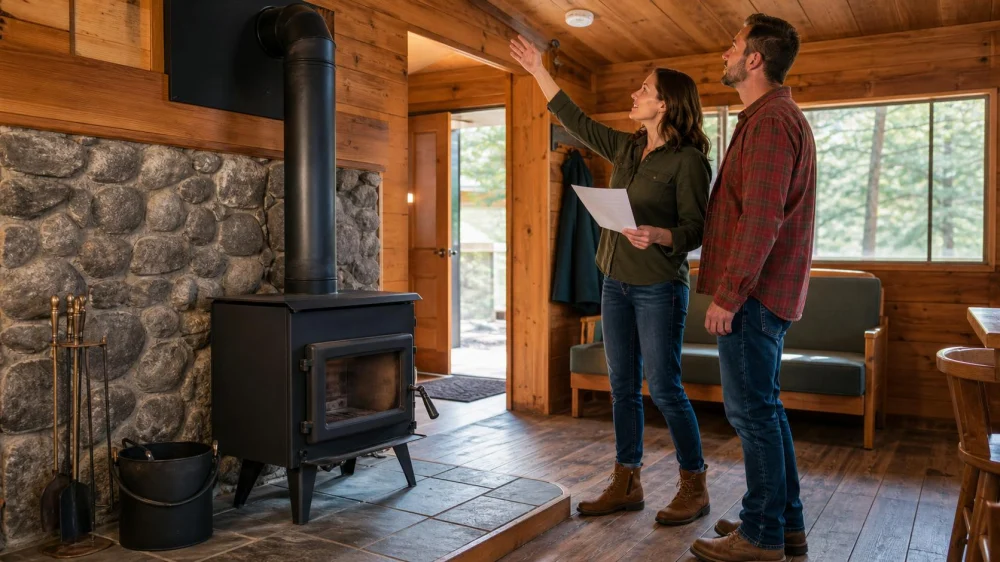
Camping Cabin Wood Stove: Confirm Rules Before Use
On this page
Quick answer
Use a cabin wood stove or fireplace only when the host permits it, the appliance and chimney have been inspected, alarms are working, and written instructions are available. Burn only approved fuel, keep the screen or door and clearances as directed, supervise continuously, and place cooled ash only where staff instruct. Leave immediately for smoke, carbon-monoxide alarm, chimney fire, or uncontrolled flame.
Why it matters
A cabin wood-burning appliance provides heat through controlled combustion and a dedicated vent. Safe use depends on appliance condition, dry approved fuel, airflow, chimney function, clearances, alarms, supervision, and ash handling.
This U.S. guide supports guest decisions, not installation, repair, chimney inspection, or fire-fighting. Some cabins prohibit guest use or restrict fires during weather and air-quality events. Host and fire-authority rules control.

Pine Tree Campground
Ocean ViewSussex CountyDelaware
38452 Resort RV Cir #1, Ocean View, DE 19970, USA
Practical checklist
- Confirm the stove or fireplace is available to guests and obtain current operating instructions.
- Check smoke and carbon-monoxide alarms using the host-approved test and report any fault.
- Inspect from outside the appliance for broken glass, loose doors, heavy damage, blockage, or nearby combustibles.
- Use only fuel and fire starters supplied or explicitly approved; never burn rubbish or treated wood.
- Maintain required clearance from bedding, clothing, luggage, furniture, children, and pets.
- Know extinguisher, exit, emergency number, and cabin location before lighting.
- Plan complete shutdown and cooled-ash handling before sleep or departure.
Step-by-step plan
- Ask the host for a walkthrough. Do not guess damper, air control, door, spark screen, fuel size, or overnight-use procedure.
- Prepare the room. Clear combustibles to the required distance, secure children and pets, and keep exits unobstructed.
- Start only as instructed. Never use petrol, alcohol, or another unapproved accelerant, and do not overload the firebox.
- Keep the appliance closed or screened as designed. Open doors slowly and only when the instructions require it to limit sparks and smoke.
- Monitor flame, smoke, alarms, chimney sound, and room conditions continuously. Do not leave the cabin with a live fire.
- Let the fire finish under the approved procedure. Never apply water to a hot stove unless emergency professionals direct it.
- Handle ash only when fully cooled and only in the metal container or disposal site designated by the host.
Photograph existing damage before use and save the host's instructions and contact. Report smoke spillage, alarm activation, unusual chimney noise, cracked glass, damaged gasket, or excessive heat immediately.
Limits and warning signs
A visible flame can produce invisible carbon monoxide, and opening a window is not a substitute for correct venting. Ash can retain heat after it looks cold. A guest cannot verify chimney cleanliness or hidden appliance integrity by sight.
For a carbon-monoxide or smoke alarm, visible chimney fire, uncontrolled flame, heavy smoke, breathing symptoms, confusion, headache, or dizziness, get everyone outside, call emergency services, and do not re-enter. Do not climb onto the roof or attempt chimney repair.
Frequently asked questions
Can I use firewood I brought?
Only if the host and local rules approve its type and movement. Transporting firewood may spread pests and violate restrictions.
Can I leave embers overnight?
Follow the cabin's exact policy. Never assume an unattended or sleeping fire is permitted.
Is opening a window enough if the room smells smoky?
No. Smoke can indicate a vent or operating problem. Stop according to instructions, leave if needed, and contact the host.
Where should ash go?
Only in the designated metal container or disposal location after it is fully cooled under the host's procedure.
Sources and evidence
The guide reflects common wood-burning and cabin fire-safety principles: use inspected equipment and approved fuel, maintain clearances, supervise, rely on working smoke and carbon-monoxide alarms, and treat ash as hot.
Conclusion and next steps
Before lighting, obtain the host's procedure, test alarms as authorised, clear the area, and identify exits. If instructions or appliance condition are uncertain, do not use it. A cold cabin can be solved by the host; a chimney or carbon-monoxide emergency cannot be improvised.
 Bethesda park cabin #34.0 (5 reviews)
 Lil Wolf3.0 (202 reviews)
 Lakeview CT4.0 (33 reviews)
 Riverwoods Mobile Home Community3.0 (88 reviews)
 Duck Neck Campground4.0 (197 reviews)
 Chisel Branch Hiker Biker Campsite4.0 (28 reviews)
 Why Winter is the Best Time for a Camping Cabin Getaway
 Best Remote Camping Cabins for Stargazing and Night Adventures in the U.S.
 The 10 Must-Have Amenities for a Comfortable Stay in Your Camping Cabin
 Winter Camping Cabins: How to Stay Cozy and Warm in the Cold
 Best Camping Cabins with Stunning Views of National Parks and Forests
 How to Create the Ultimate Outdoor Experience with a Camping Cabin