
How to Keep a Camping Cabin Clean in Muddy Weather
On this page
Quick answer
Keep mud near the door instead of cleaning it throughout the cabin. Pack a washable boot tray or ground cloth, absorbent towels, indoor footwear, bags for wet items, and a small brush. Follow the host's rules, hang gear only on approved hooks, ventilate safely, and sweep after mud dries. Never rinse soil, soap, or dirty water into streams, lakes, or storm drains.
Plan before arriving
Wet-weather cabin care starts with accurate expectations. A camping cabin may range from a simple shelter with bare floors to a furnished rental with rugs, upholstery, plumbing, and strict cleaning rules. Read the listing and current guest instructions for footwear, pets, towels, laundry, fireplaces, porches, gear storage, trash, and checkout.
Check the forecast and route conditions for the specific destination. Rain can make unpaved access roads, trails, steps, and parking areas slippery. Ask the property which entrance is safest and whether a covered porch, mudroom, boot rack, mop, broom, or drying area is available.
Pack a compact mud kit:
- Washable boot tray, shallow bin, or durable ground cloth
- Two or more absorbent towels reserved for gear and floors
- Soft boot brush or scraper used only where the property permits
- Clean indoor shoes or slippers with non-slip soles
- Reusable waterproof bags or bins for wet clothing
- Spare socks and a dry layer kept in a sealed bag
- Small broom and dustpan if the cabin does not provide them
Do not bring strong cleaners or assume you may use bleach, solvents, or fragranced products. Hosts may restrict products to protect septic systems, finishes, wildlife, and guests with sensitivities.

Create a simple entry zone
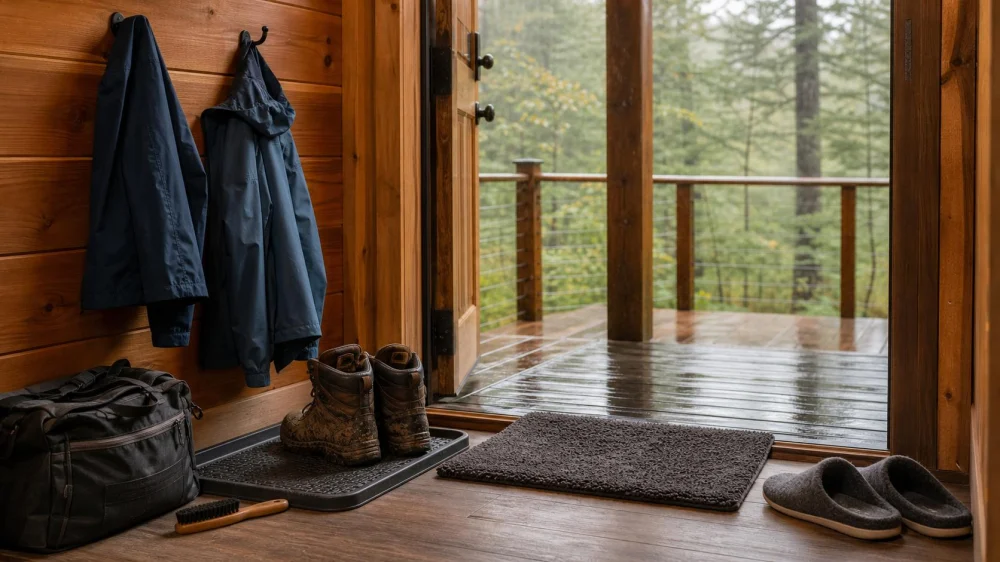
- Choose the approved entrance. Use a covered, well-lit door with a stable walkway when available.
- Place the tray inside the threshold. Keep it flat and out of the swing path, heater clearance, and emergency exit route.
- Set one towel at the transition. Blot water from footwear before stepping fully inside. Replace a saturated towel so it does not become a slipping hazard.
- Remove outer footwear. Put muddy boots upright in the tray and change into clean indoor shoes.
- Assign a wet-gear container. Place damp outer layers in a ventilated bin or waterproof bag temporarily, away from bedding and furniture.
- Keep essentials reachable. Store a flashlight, dry socks, and rain layer near the door without blocking it.
A good entry zone is small, obvious, and easy for every guest to use. Explain it once to the group. Children and visitors are more likely to follow a visible routine than a complex list of rules.
Dry wet gear without damaging the cabin
Shake loose water and brush heavy mud outdoors only where doing so will not damage vegetation or send sediment into water. Inside, use approved hooks, racks, or freestanding hangers. Do not hang weight from curtain rods, sprinkler pipes, smoke alarms, furniture edges, light fixtures, or unapproved nails.
Keep wet clothing away from heaters, wood stoves, open flames, and cooking equipment. Follow all clearance instructions. Direct heat can damage waterproof fabrics, melt footwear, or create a fire risk. Use gentle airflow and normal room ventilation instead.
Open windows only when the host permits it and weather conditions are safe. Close them before leaving or sleeping if rain could enter. Never disable a smoke or carbon monoxide alarm to create drying space or because cooking and damp gear trigger concern.
If the cabin lacks safe drying capacity, keep soaked items in a leak-resistant container and move them to an approved laundry or sheltered facility. Do not leave sealed wet gear packed for long periods; moisture can create odor and damage materials.
Use a short daily cleanup routine
Clean small amounts before they spread:
- Wipe fresh drips promptly with a designated towel.
- Let thick mud dry on durable flooring when immediate wiping would smear it, then lift it with a soft brush or broom.
- Use only the cleaner and method approved for the floor finish.
- Check under the boot tray for trapped water.
- Move damp towels to an approved drying location.
- Inspect the route from the door to the bathroom and sleeping area.
- Empty dirty water only into an approved drain or disposal point.
Photograph unexpected stains, leaks, or damage and notify the host promptly. Trying an aggressive cleaning method without permission can make a mark worse and complicate responsibility.
Keep mud control low-impact outdoors
Stay on established paths and durable surfaces rather than widening a muddy trail. Walking around puddles can trample vegetation and create a broader damaged area. Follow posted closures and do not drive around gates or barriers.
Do not dig drainage channels, move rocks, cut branches, spread gravel, or build makeshift boardwalks unless property staff direct you. These changes can redirect water, increase erosion, and disturb habitat.
Brush soil from gear at a designated location when possible. Moving mud, seeds, and plant material between recreation areas can spread invasive organisms. Before traveling to another site, clean and dry footwear and equipment using the destination's recommended practice.
Use biodegradable soap only where explicitly allowed; “biodegradable” does not mean it belongs in natural water. Dispose of wash water according to campground or property instructions and applicable rules.
Prepare for a clean departure
- Check the host's checkout instructions before the final morning.
- Pack clean, dry items first and keep muddy gear isolated until last.
- Shake or brush loose outdoor dirt at the approved location.
- Sweep durable floors and clean only with provided or approved products.
- Dry the area beneath boot trays and wet bags.
- Remove personal towels, gear, and waste as required.
- Report leaks, stains, broken hooks, or drainage problems honestly.
- Photograph the final condition if the rental process recommends it.
Do not hide wet towels in a closed cabinet or leave muddy water in a bucket. Clear information helps staff protect the cabin for the next guest.
Safety, limitations, and evidence notes
This guidance reflects common low-impact outdoor practice and ordinary property care. It does not override a campground's rules, rental agreement, equipment instructions, fire restrictions, wastewater requirements, trail closures, or emergency directions. Cabins and environments across the United States differ substantially.
Wet conditions can create hazards beyond housekeeping, including flash flooding, falling limbs, unstable slopes, lightning, cold stress, damaged roads, and reduced visibility. Monitor official conditions and follow staff or emergency instructions. Leave early or shelter as directed when weather becomes unsafe.
Cleaning cannot correct a roof leak, sewage backup, electrical hazard, structural damage, or persistent indoor moisture. Keep people away from the affected area, document it, and contact the host or emergency services as appropriate.
Frequently asked questions
Should I take muddy boots off outside?
Use the property's preferred method. Removing boots under a covered entrance can work when the surface is stable and secure, but leaving footwear outside may expose it to rain, wildlife, insects, or theft. A tray just inside the door is often more controlled.
Can I dry boots beside a wood stove?
Only at the clearance and location allowed by the stove, boot, and cabin instructions. Direct heat can damage materials and increase fire risk. Gentle airflow at a safe distance is usually a better choice.
What if the cabin has carpet?
Make the footwear change at the hard-surface entry area and keep muddy gear in a waterproof tray or bin. Ask the host how to treat a spot. Do not saturate carpet or use an unapproved machine or chemical.
Where should I empty muddy wash water?
Use only the approved sink, utility drain, dump point, or other location identified by the property. Never pour it into a stream, lake, campsite vegetation, roadside gutter, or storm drain.
How can I manage mud with children?
Make the routine visual and simple: stop on the towel, boots in the tray, indoor shoes on, wet coat on the assigned hook. Keep the path uncluttered and supervise around slippery steps, heaters, and cleaning supplies.
Conclusion and next steps
For a wet-weather cabin stay, pack a small mud kit, establish one entry transition, dry gear only in approved places, and clean little messes before they spread. Protect trails and waterways while managing soil, follow the property's materials and wastewater rules, and report problems that ordinary housekeeping cannot safely solve.



 Catskill Pond0.0 (0 reviews)
 Tuckahoe Acres4.0 (193 reviews)
 Cranberry Run4.0 (55 reviews)
 Campsites4.0 (68 reviews)
 Sherwood Forest5.0 (2 reviews)
 Walter's Mobile Home Village3.0 (25 reviews)
 Why Winter is the Best Time for a Camping Cabin Getaway
 Best Remote Camping Cabins for Stargazing and Night Adventures in the U.S.
 The 10 Must-Have Amenities for a Comfortable Stay in Your Camping Cabin
 Winter Camping Cabins: How to Stay Cozy and Warm in the Cold
 Best Camping Cabins with Stunning Views of National Parks and Forests
 How to Create the Ultimate Outdoor Experience with a Camping Cabin