
Rodent Droppings in a Camping Cabin: Do Not Sweep Them
On this page
Quick answer
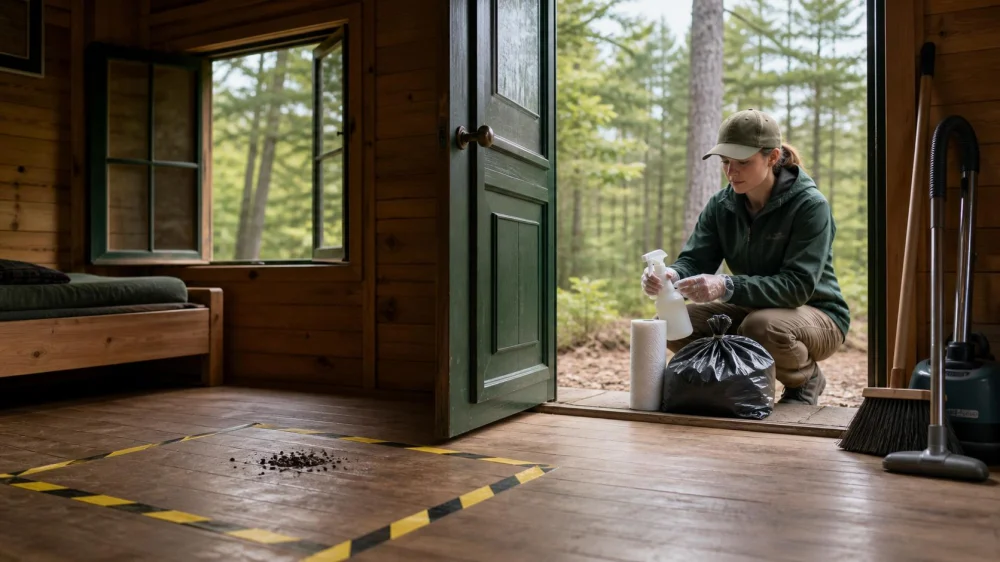
Do not sweep or vacuum rodent urine, droppings, or nesting material in a camping cabin. Leave the area, open doors and windows from a position that avoids stirring dust, and ventilate for 30 minutes before re-entry. For a small amount, wear plastic gloves, wet the waste thoroughly with an EPA-registered disinfectant or correctly prepared bleach solution, wait as directed, wipe with paper towels, and bag the waste. Heavy infestation, contaminated ventilation, or extensive nests needs professional or property-manager response.

Horsepen Branch Hiker Biker Campsite
PoolesvilleMontgomery CountyMaryland
Chesapeake and Ohio Canal Towpath, Poolesville, MD 20837, USA
Pause before unpacking
Inspect the cabin before placing food, sleeping bags, or luggage on floors and bunks. Use a flashlight and look from the doorway for droppings, gnaw marks, shredded nesting material, urine staining, dead rodents, chewed wiring, or food packages with holes.
Do not kick debris, shake bedding, start a fan, or turn on a forced-air system in a visibly contaminated space. These actions can move dust and particles into the air.
Keep children and pets outside. Photograph the condition from a safe distance and contact the host, campground, park, or property manager. Request another clean accommodation when the problem is widespread or cannot be handled safely.

Ventilate without stirring dust
CDC advises opening doors and windows for 30 minutes before cleaning a closed space and leaving during that period. Open from outside when possible and avoid cross-breezes that blow contamination toward people.
Do not use an air compressor, leaf blower, high-pressure sprayer, broom, or ordinary vacuum. If rodents may have entered ducts or a heating and cooling system, do not start it; contact a professional rodent-control or duct-cleaning service.
Decide whether to clean or leave
A few droppings on a hard washable surface may be manageable with the CDC wet-cleaning method and the property owner’s approval. Do not personally clean:
- piles of droppings or numerous nests or dead rodents;
- contaminated insulation, ducts, mattresses, or large porous areas;
- areas requiring crawling, demolition, or electrical work;
- droppings mixed with sewage, mould, or unknown chemicals; or
- a space where safe ventilation and protective equipment are unavailable.
Heavy infestations require additional precautions and trained control. Choose another cabin rather than improvising.
Use the wet disinfection method
For a small approved cleanup on a hard surface:
- Ventilate for 30 minutes and leave the area.
- Put on intact rubber or plastic gloves.
- Use an EPA-registered disinfectant suitable for the surface, or a bleach solution prepared exactly as CDC and the product label direct.
- Spray urine, droppings, and nesting material until very wet.
- Wait five minutes or the disinfectant label’s contact time.
- Wipe up with paper towels and place waste in a covered bin or bag as locally directed.
- Disinfect the hard surface again.
- Wash gloved hands before removing gloves, then wash bare hands with soap and warm water.
Never mix bleach with ammonia, acids, or another cleaner. Ensure ventilation and follow label precautions for eye protection and surface compatibility.
Protect food, bedding, and gear
Discard food in paper or plastic packaging that rodents may have contacted or chewed. Do not taste or smell it. Clean intact cans and sealed hard containers according to public-health guidance.
Keep food, rubbish, and scented items in rodent-resistant containers. Do not leave pet food overnight. Inspect sleeping gear before packing and separate potentially contaminated items.
Do not shake dusty fabric indoors. Follow CDC material-specific instructions for laundering or disposal. Contaminated cardboard is difficult to disinfect and may need disposal.
Report and prevent re-entry
Report holes, damaged screens, door gaps, food storage issues, and chewed wiring to management. Guests should not seal active entry points or place poison without permission; trapped animals and misplaced bait can create new hazards.
Store rubbish as the site requires and keep the cabin tidy. Prevention is a property-management task that combines exclusion, sanitation, and population control.
Limitations and important notes
Rodents can spread several diseases, and risk varies by region and species. This article is not a medical or occupational cleanup assessment.
After possible exposure, contact a clinician for fever or illness and state the rodent and cabin exposure. Call 911 for severe breathing difficulty, collapse, or another emergency.
Sources and evidence notes
CDC’s current rodent-cleanup guidance directs people not to sweep or vacuum, to ventilate closed spaces for 30 minutes, wet waste with disinfectant, observe contact time, wipe it up, and use additional precautions for heavy infestation.
Frequently asked questions
Can I vacuum a few dry droppings?
No. CDC advises wet disinfection before removal because vacuuming can put contaminated particles into the air.
How long should I ventilate?
CDC recommends opening doors and windows for 30 minutes before cleaning and leaving during ventilation.
Can I use any cleaner?
Use an EPA-registered disinfectant suitable for the surface or the CDC-directed bleach solution, following the label exactly.
Should I sleep in the cabin after cleanup?
Only if the contamination was minor, cleaned correctly, and the host confirms the space is safe. Choose another cabin when uncertain.
What if droppings are in a vent?
Do not start the system. Contact management and a qualified professional.
Next steps
Inspect before unpacking. If droppings are present, keep people out, ventilate for 30 minutes without stirring dust, document and report the condition, and use wet disinfection only for a small approved cleanup. Leave heavy contamination to professionals.

 Range 14 RV Park4.0 (39 reviews)
 Swanson Lodge4.0 (49 reviews)
 Outdoor Calisthenics Gym at Auditorium Shores5.0 (6 reviews)
 Hereford Estates3.0 (59 reviews)
 BigMount Glamping5.0 (4 reviews)
 Hillside Estates At Franklin3.0 (27 reviews)
 Why Winter is the Best Time for a Camping Cabin Getaway
 Best Remote Camping Cabins for Stargazing and Night Adventures in the U.S.
 The 10 Must-Have Amenities for a Comfortable Stay in Your Camping Cabin
 Winter Camping Cabins: How to Stay Cozy and Warm in the Cold
 Best Camping Cabins with Stunning Views of National Parks and Forests
 How to Create the Ultimate Outdoor Experience with a Camping Cabin