
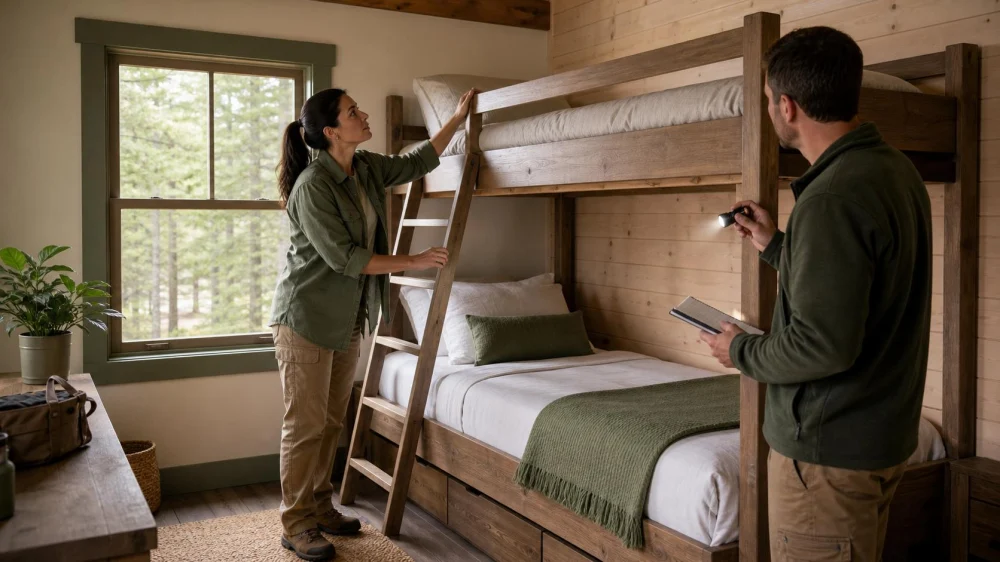
Camping Cabin Bunk Beds: Inspect Before Anyone Climbs
Quick answer: Before using a cabin bunk bed, check that the frame, mattress support, guardrails, ladder, and fasteners appear secure; confirm the posted age, mattress, and weight limits; clear the floor; and assign the lower bunk to anyone who cannot climb confidently. Do not use an upper bunk with a loose rail, damaged ladder, unstable frame, missing parts, excessive mattress height, or an unknown safety issue.
Rustic does not have to mean improvised. A brief arrival check can uncover a loose rung, shifted support, blocked ladder, or thick added mattress before bedtime, when staff may be harder to reach.
1. Ask Questions Before Booking
Confirm how many bunks are true sleeping positions, their mattress dimensions, posted weight limits, upper-bunk minimum age, ladder type, guardrails, ceiling clearance, and whether linens are included. Ask for recent room photos if bunk access affects your group.
Tell the host when a guest has limited mobility, balance concerns, nighttime toileting needs, vertigo, a recent injury, or another reason to avoid climbing. Do not count an upper bunk for a guest who needs a lower bed unless the property confirms an appropriate alternative.

Allaire State Park Group Campsite
Wall TownshipMonmouth CountyNew Jersey
4001 Squankum Allenwood Rd, Allenwood, NJ 08720, USA
2. Check the Frame and Supports
Keep everyone off the bed while you inspect from the floor. Look for cracked wood, bent metal, missing slats, loose bolts, pulled joints, protruding fasteners, sagging supports, or a frame that rocks. Check that the mattress foundation appears seated and secured rather than resting precariously on a narrow edge.
Do not crawl under, shake the frame forcefully, or attempt a load test. If normal light contact makes the structure move, stop and contact the host. A visual check cannot certify structural capacity.

Duck Neck Campground
ChestertownQueen Anne's CountyMaryland
500 Double Creek Point Rd, Chestertown, MD 21620, USA
3. Inspect Upper-Bunk Guardrails
An upper bunk should have a guardrail on both sides. The U.S. Consumer Product Safety Commission’s bunk-bed rules require at least two upper guardrails, with the wall-side rail continuous, and require the rail top to remain at least five inches above the mattress surface. These requirements are useful questions for a cabin host; guests should not dismantle a bed to test regulatory compliance.
Look for a missing, loose, cracked, shortened, or detachable rail; an opening that could trap a body part; and a gap between bed and wall. Do not fill a gap with luggage, pillows, rolled bedding, or a homemade board. Request another bed or a proper property-managed solution.
4. Confirm the Correct Mattress
A mattress that is too thick can reduce the effective height of the guardrail. Check the bed label or host instructions for maximum thickness and exact length and width. The mattress should fit the foundation without large side or end gaps.
Do not add a second mattress, thick topper, inflatable pad, or stacked cushions to an upper bunk unless the manufacturer and host specifically allow it within the stated limit. Keep spare bedding away from openings and the ladder.
5. Test the Ladder From the Floor
Check that the ladder is the intended one, positioned correctly, and firmly attached. Look for missing, wet, cracked, rounded, or loose rungs and sharp edges. The approach should be clear, dry, and illuminated.
Using normal hand pressure from the floor, confirm it does not shift. Do not climb to “see if it holds” when anything is uncertain. Chairs, coolers, trunks, and window ledges are not substitute steps.
6. Choose the Right Sleeper
CPSC warning-label guidance says children under six should not use the upper bunk. Follow the bed’s label and property rules, which may be stricter. Also assign a lower bed to anyone who sleepwalks, is ill, has impaired balance, cannot use the ladder independently, or has consumed alcohol, cannabis, sedating medicine, or another substance that affects coordination.
One person should use one sleeping position unless the manufacturer explicitly states otherwise. Respect the posted load limit, including the sleeper and anything placed on the bunk.
7. Clear the Surrounding Space
Move boots, bags, coolers, cords, and furniture away from the ladder and landing area. Keep the route to the door and bathroom clear. Check ceiling fans, beams, lights, windows, blinds, and heaters near the upper bunk.
Remove ropes, straps, belts, pet leashes, necklaces, and hanging bags from bed posts and rails. Do not drape charging cords or decorative lights across the frame. Keep portable heaters and open flames away from bedding according to property instructions.
8. Plan Safe Nighttime Use
Place a working light within safe reach at the lower level or use a small flashlight. Confirm that the ladder path can be seen without turning on a blinding overhead light. Keep eyeglasses, phone, and water where they do not create a fall or spill hazard.
Climb facing the ladder with both hands available, one person at a time. Do not jump, lean over the rail, play on the bed, or use the upper bunk for storage. If a sleeper needs frequent nighttime trips, move them to a lower bed.
9. Report a Problem Without Repairing It
Photograph the issue from the floor and contact the host or campground staff. State the cabin number, bed position, and exact concern: “the upper right guardrail moves at its mounting point” is more useful than “the bed feels bad.” Keep everyone off the affected bunk.
Do not tighten unknown fasteners, nail a board, tape a rail, substitute a ladder, move the bed, or alter the mattress. Ask for another sleeping space, professional inspection, or a room change. If the only safe sleeping capacity is reduced, discuss a documented booking remedy.
10. Document and Check Out Clearly
Report any new noise, movement, damage, or loose part noticed during the stay, even if no one was hurt. Do not leave a mattress, rail, or ladder repositioned without telling staff. Keep a copy of the message and photos.
At checkout, confirm that the property has received the safety report. For an injury, seek appropriate medical care first and document the scene without delaying treatment. Product recalls can be checked through the CPSC when a brand and model are identifiable, but the host remains the first contact for an unsafe cabin bed.
Arrival checklist: verify age and load limits; inspect frame and supports; check two secure upper rails; confirm mattress fit and thickness; check the ladder; assign an appropriate sleeper; clear the floor and hanging items; add safe lighting; and stop use when any part is uncertain.
Evidence notes: The CPSC bunk-bed guidance explains U.S. guardrail, mattress-height, opening, and support requirements designed to reduce falls and entrapment. Guests should use visible defects and label mismatches as reasons to stop and report, not attempt formal compliance testing themselves.
This article provides general lodging-safety information. Follow the bunk-bed manufacturer’s label, property rules, CPSC guidance, and professional instructions for the specific installation.


 Keystone Courts3.0 (5 reviews)
 G & R Recreation Campground4.0 (329 reviews)
 Hampden Village4.0 (44 reviews)
 YMCA Hallmark Cabin5.0 (2 reviews)
 Taylors Island Family Campgrounds4.0 (107 reviews)
 Ecology Village4.0 (16 reviews)
 Why Winter is the Best Time for a Camping Cabin Getaway
 Best Remote Camping Cabins for Stargazing and Night Adventures in the U.S.
 The 10 Must-Have Amenities for a Comfortable Stay in Your Camping Cabin
 Winter Camping Cabins: How to Stay Cozy and Warm in the Cold
 Best Camping Cabins with Stunning Views of National Parks and Forests
 How to Create the Ultimate Outdoor Experience with a Camping Cabin