
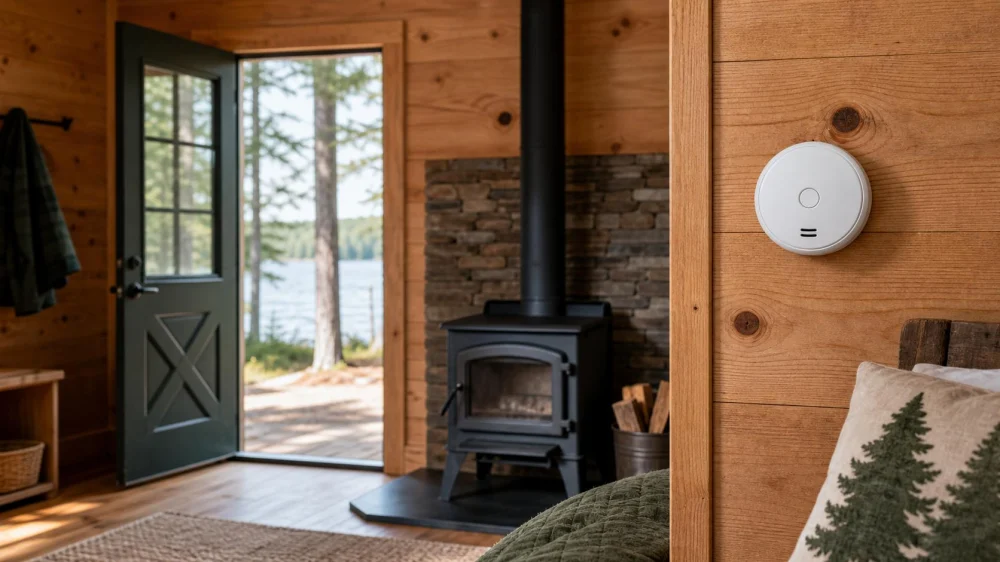
Camping Cabin Carbon Monoxide Safety Checklist
On this page
Quick answer
Use only properly installed, vented and maintained cabin appliances, confirm working carbon monoxide alarms near sleeping areas, and keep grills, camp stoves, generators and fuel-burning heaters outdoors at the distances their instructions require. Never use an oven or vehicle to heat a cabin. If an alarm sounds or anyone feels ill, move everyone into fresh air, call emergency services and do not re-enter until authorities say it is safe.
What carbon monoxide is
Carbon monoxide (CO) is a colourless, odourless gas produced by incomplete combustion. It can build up when fuel-burning equipment, fireplaces, vehicles or generators operate with poor venting or too close to doors, windows and air intakes. Smell cannot confirm whether CO is present.
This guide covers camping cabins and rustic lodging in the United States. It does not replace the property’s emergency plan, alarm instructions, appliance manuals, local fire code or emergency responder direction.

California Village Mobile Home Park
WrightstownBurlington CountyNew Jersey
181 Cookstown New Egypt Rd, Wrightstown, NJ 08562, USA
Questions before booking or arrival
- Which appliances burn propane, natural gas, kerosene, oil or wood?
- Are carbon monoxide alarms installed near sleeping areas and on appropriate levels?
- When were alarms and combustion appliances last checked?
- Is the cabin connected to power, and what happens during an outage?
- Are guests permitted to use a fireplace, wood stove, portable heater or generator?
- Where is the outdoor cooking area, and how far is it from openings?
- What is the exact address, site number and emergency access route?
Best for: cabins with clear equipment instructions, documented alarms and a host who can explain emergency procedures. Not ideal for: lodging that expects guests to improvise heat, use unvented equipment indoors or ignore a missing alarm.
Checks on arrival
- Locate alarms. Identify CO and smoke alarms without removing, covering or relocating them.
- Check status safely. Use the test button only as the manufacturer or host directs. A test confirms circuitry, not that the entire environment is safe.
- Read appliance instructions. Find operating, ventilation, clearance and shutdown directions before lighting anything.
- Inspect visible condition. Do not use an appliance with damaged venting, soot, unusual flame, strong fuel odour or missing parts.
- Map exits. Make sure every guest knows two ways out when available and where to meet outside.
- Save location details. Keep the address, cabin number, host and emergency contacts available offline.
If an alarm is missing, damaged, expired according to its label or not operating, contact the host before sleeping or using combustion equipment. Do not rely on a phone app as a CO detector.
Use heat, cooking and power equipment safely
- Keep charcoal grills, gas grills and camping stoves outdoors; a porch, tent, screened room or open window does not make indoor use safe.
- Place generators outdoors far from doors, windows and vents according to manufacturer and local safety guidance; never in a cabin, garage, crawl space or enclosed porch.
- Do not heat rooms with a cooking oven, stovetop or vehicle engine.
- Use fireplaces and wood stoves only with host permission, open and intact venting, proper fuel and required screens or doors.
- Never alter a flue, defeat a safety switch or repair a fuel appliance during a trip.
- Keep required clearance from bedding, clothing and walls, and supervise allowed equipment.
- Do not idle a vehicle near the cabin, under an attached shelter or where exhaust can drift into openings.
If an alarm sounds or symptoms appear
Headache, dizziness, weakness, nausea, vomiting, chest discomfort and confusion can occur with CO exposure, but these symptoms have other causes and may be mistaken for fatigue or illness. Multiple people or pets feeling unwell at once is especially concerning.
- Move everyone, including pets, into fresh air immediately without delaying to find the source.
- Call 911 or the local emergency number from a safe location and report a possible CO exposure.
- Follow medical and fire-department instructions.
- Do not re-enter to silence the alarm, retrieve belongings or ventilate the cabin unless responders say it is safe.
- Do not reuse the cabin or appliance until qualified authorities identify and correct the problem.
Special situations
Power outage
Use flashlights rather than moving outdoor cooking or power equipment inside. Follow the host’s outage plan and relocate if safe heat cannot be maintained.
Portable travel alarms
A listed travel CO alarm may add a layer of awareness when used exactly as directed, but it does not excuse missing required building alarms or unsafe equipment. Check age, batteries, placement and travel-storage instructions.
Pets and children
They may not describe symptoms clearly. Evacuate them with everyone else and tell responders about every occupant. Keep alarm batteries and fuel equipment inaccessible.
High altitude
Altitude illness and CO exposure can share symptoms. Do not self-diagnose in the cabin; move to fresh air and seek urgent guidance when CO is possible.
Sources and evidence notes
This checklist reflects broad fire-safety, public-health and manufacturer principles: working alarms, outdoor placement of generators and cooking devices, proper venting and immediate evacuation. Exact alarm placement, equipment clearances and legal requirements vary. Official emergency, fire-code and manufacturer instructions take priority.
Frequently asked questions
Can I smell carbon monoxide?
No. CO has no colour or odour. Fuel odour can indicate another hazard, but the absence of smell does not mean the air is safe.
Is cracking a window enough for a camp stove?
No. Camp stoves and grills should be used outdoors as instructed. An open window does not control exhaust or fire risk.
Can I reset an alarm and go back to sleep?
No. Leave for fresh air and contact emergency services. Do not assume the alarm is faulty until qualified personnel determine the cause.
Where should I put my travel CO alarm?
Follow its exact manual. Placement varies by device; do not put it where luggage, curtains or furniture blocks it.
What if the host says the cabin has never had a problem?
Past experience does not replace working alarms, safe equipment and current inspection. Resolve missing safeguards before staying.
Conclusion and next steps
Before the trip, verify alarms, appliances and emergency location details. On arrival, identify exits and inspect equipment before use. Keep all outdoor combustion devices outdoors and away from openings. If an alarm sounds or illness raises concern, fresh air and emergency help come before belongings, troubleshooting or the booking.



 Cottage 550.0 (0 reviews)
 eastwood mobile home park | groton, ct 063404.0 (19 reviews)
 Hillsedge haven - The Hideout5.0 (2 reviews)
 Marina Cove5.0 (5 reviews)
 YMCA Camp Collins4.0 (41 reviews)
 Village Park Inc3.0 (29 reviews)
 Why Winter is the Best Time for a Camping Cabin Getaway
 Best Remote Camping Cabins for Stargazing and Night Adventures in the U.S.
 The 10 Must-Have Amenities for a Comfortable Stay in Your Camping Cabin
 Winter Camping Cabins: How to Stay Cozy and Warm in the Cold
 Best Camping Cabins with Stunning Views of National Parks and Forests
 How to Create the Ultimate Outdoor Experience with a Camping Cabin