
Camping Cabin Sleeping Lofts: Ladder, Rail, and Use Checks
On this page
Quick answer
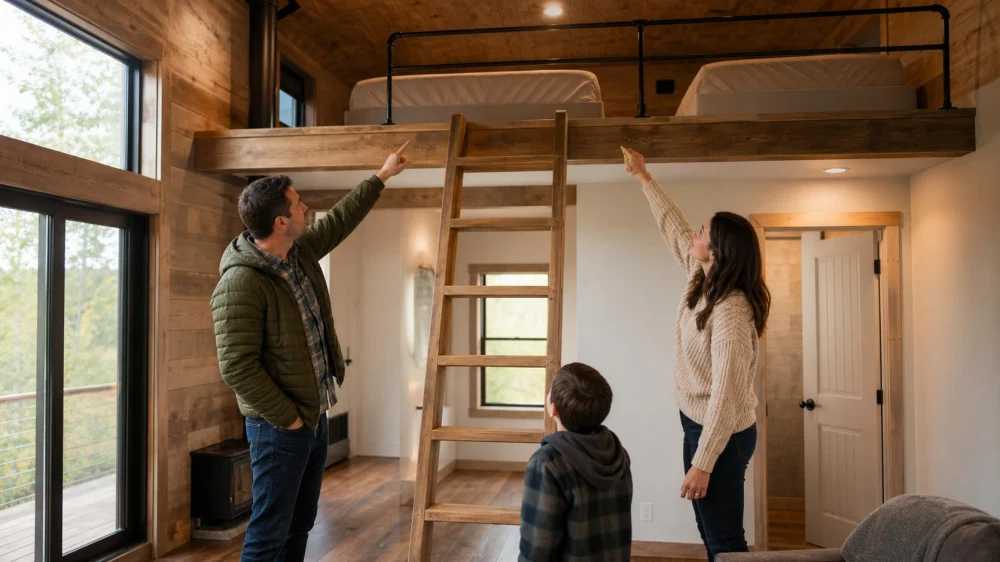
Treat a camping cabin loft as elevated sleeping space, not extra floor area. Before use, confirm the ladder is fixed and intact, the opening and exposed edges have suitable guards, the mattress fits without reducing protection, and occupancy and age rules are clear. Keep the ladder base unobstructed, use a light, face the ladder with three points of contact, and assign ground-level beds to anyone who cannot climb safely at night.

Questions before booking
Listing photos can hide ladder angle, guard gaps, low ceiling, heat, and the position of the loft opening. Ask the host for current photos and practical details rather than assuming “sleeps six” means every bed fits every guest.
- Loft height, ceiling clearance, and mattress arrangement
- Fixed stair, ship ladder, vertical ladder, or movable ladder
- Guardrails around edges and opening
- Occupancy, weight, and child-use restrictions
- Night lighting, switches, smoke alarm, and emergency egress
- Temperature control and ventilation in the upper space
- Ground-level sleeping alternatives
Arrival inspection
- Keep everyone on the ground. One capable adult inspects before beds or bags move upstairs.
- Check the ladder. Look for movement, cracks, loose rungs, slippery surfaces, and blocked top or base.
- Inspect rails. Confirm guards are complete, secure, and not defeated by mattress or furniture height.
- Check overhead clearance. Note beams, roof slope, fans, hot surfaces, and places where a person may stand up abruptly.
- Test lighting. A sleeper should be able to illuminate the ladder without crossing the loft in darkness.
- Confirm alarms and exits. Follow check-in instructions and report missing or nonworking safety equipment.
- Photograph and report defects. Do not repair, move, or climb a questionable ladder.
Use the loft safely
Climb one person at a time, facing the ladder and keeping three points of contact. Wear secure footwear or follow the surface guidance; do not climb in socks when rungs are slick. Carry only small items that leave both hands free, using an approved alternative for bedding and bags.
Keep children from playing on the ladder or railing. Do not sit or lean on a guard, place a mattress over an edge, attach hammocks, or exceed occupancy. Keep the route clear and a light within reach throughout the night.

When to choose ground-level sleep
Ground-level beds are better for guests with limited balance or grip, frequent nighttime bathroom trips, dizziness, sleepwalking, sedating medicine, significant fatigue, acute injury, or difficulty following ladder rules. Alcohol and other impairing substances add fall risk.
If the loft is too hot, the ladder is damaged, guards are missing, or emergency egress is unclear, contact the host and use an approved alternative. Do not accept a refund dispute as a reason to sleep in unsafe space.
Limitations and safety notes
This is a guest inspection, not a building-code evaluation. Construction and occupancy rules vary. The host and responsible authority must address structural, guard, ladder, alarm, and egress concerns.
After a fall or head impact, follow first-aid and emergency guidance. Do not move someone with possible spine injury unless immediate danger requires it.
Sources and evidence notes
The approach uses standard elevated-sleep and ladder principles: secure access, guarded edges, three-point contact, clear routes, appropriate users, and working alarms and egress. Current property rules and safety authorities control specifics.
Frequently asked questions
Is a loft suitable for young children?
Follow the cabin’s stated age and use rules. When restrictions or guarding are unclear, choose a ground-level bed.
Can I move the ladder for more floor space?
No unless the host explicitly designed and instructs it that way. A moved ladder can become unstable or unavailable in an emergency.
Should luggage go in the loft?
Only within occupancy and load rules and without blocking the opening, rails, route, or sleeping area. Keep heavy bags below.
What if there is no light switch upstairs?
Use an approved portable light and tell the host. Never climb or descend in darkness.
Next steps
Request loft and ladder details before booking, assign likely sleepers in advance, and preserve a ground-level option. At arrival, inspect the ladder, rails, lighting, temperature, alarms, and exit before anyone climbs.

 Northside Heights3.0 (29 reviews)
 Indian Rock Campgrounds4.0 (109 reviews)
 The Cottage4.0 (10 reviews)
 Merry Meadows Recreation Farm3.0 (388 reviews)
 Bluestone Acres4.0 (6 reviews)
 Bodine Field Campground4.0 (110 reviews)
 Why Winter is the Best Time for a Camping Cabin Getaway
 Best Remote Camping Cabins for Stargazing and Night Adventures in the U.S.
 The 10 Must-Have Amenities for a Comfortable Stay in Your Camping Cabin
 Winter Camping Cabins: How to Stay Cozy and Warm in the Cold
 Best Camping Cabins with Stunning Views of National Parks and Forests
 How to Create the Ultimate Outdoor Experience with a Camping Cabin